Environmental Compliance in Indonesian Mining: IUP and AMDAL
Introduction: Environmental Compliance as a Mining Industry Requirement
Indonesia's mining sector is subject to one of Southeast Asia's most rigorous environmental regulatory frameworks. For B2B buyers sourcing raw materials like nickel ore, silica sand, and other mineral commodities, understanding the environmental compliance standards that govern Indonesian mining operations is critical to ensuring responsible sourcing and supply chain integrity.
The two cornerstone frameworks that shape mining environmental compliance in Indonesia are the IUP (Izin Usaha Pertambangan) and AMDAL (Analisis Mengenai Dampak Lingkungan). These regulatory mechanisms work in tandem to ensure that mining operations minimize environmental impact, protect biodiversity, and maintain community relationships—ultimately determining whether a mining company can legally operate and sustain its business license.
For international and domestic buyers evaluating mineral suppliers, verifying IUP and AMDAL compliance is not merely a regulatory checkbox—it's a safeguard against reputational risk, supply chain disruption, and regulatory penalties that could compromise your sourcing strategy.
What is IUP? Understanding Indonesia's Mining Business License
Definition and Regulatory Scope
The IUP (Izin Usaha Pertambangan, or Mining Business License) is Indonesia's primary operating authorization for mineral extraction activities. Issued under Law No. 4 of 2009 on Mineral and Coal Mining, the IUP is mandatory for any company conducting mining operations within Indonesian territory.
The IUP framework divides operations into two primary categories:
- IUP Operasi Produksi (OPK): For active mining and production operations at established sites
- IUP Operasi Penyelidikan (OP): For exploration and feasibility studies on potential mining sites
Additionally, mining companies must obtain the IUP Operasi Pertambangan Logam (metal mining), IUP Pertambangan Non-Logam (non-metal mining), or IUP Pertambangan Bahan Bakar (coal and fuel mining) depending on the commodity type. CV Indoalam Mineral Persada, for instance, holds comprehensive IUP OPK licenses covering mineral logam (metal), non-logam (non-metal), and bahan bakar (fuel) categories, enabling operations across multiple commodity lines.
IUP Duration, Renewal, and Compliance Requirements
An IUP OPK is typically issued for a 20-year period, with potential renewal for an additional 10 years. However, this longevity is contingent upon continuous compliance with operational standards, production targets, and environmental obligations outlined in the license conditions.
To maintain IUP status, mining operators must:
- Achieve minimum production quotas and report quarterly to regional mining authorities
- Maintain current AMDAL (environmental impact assessment) certifications
- Pay annual royalties and mineral resource rent taxes (Penerimaan Negara Bukan Pajak/PNBP)
- Implement the approved Reclamation and Post-Mining Plan (RKAB)
- Undergo regular third-party environmental audits via accredited bodies like SUCOFINDO
- Demonstrate financial capability for mine closure and rehabilitation
For B2B buyers, verifying that a supplier holds an active, non-suspended IUP provides essential assurance that the company operates within legal parameters and faces regular government oversight.
AMDAL: The Environmental Impact Assessment Mandate
What AMDAL Entails
AMDAL (Analisis Mengenai Dampak Lingkungan, or Environmental Impact Analysis) is Indonesia's mandatory environmental impact assessment procedure for mining projects. Regulated under Government Regulation No. 27 of 2012, AMDAL requires comprehensive identification, prediction, and mitigation of potential environmental consequences before mining operations commence or expand.
The AMDAL process evaluates impacts across multiple environmental domains:
- Biophysical Impacts: Soil degradation, water quality changes, air emissions, noise pollution, and habitat loss
- Community and Social Impacts: Land use changes, population displacement, livelihood disruption, and health effects
- Economic Impacts: Effects on local fisheries, agriculture, tourism, and other economic sectors
- Cumulative Impacts: Combined effects of multiple mining operations in a region
AMDAL Approval Process and Timeline
The AMDAL approval pathway follows a structured process overseen by Indonesia's Ministry of Environment and Forestry, provincial environmental agencies, and district-level authorities:
- Preliminary Screening (Penapisan): Determination of whether a project requires full AMDAL, simplified assessment (UKL-UPL), or minimal review based on size and sensitivity
- Scoping (Penentuan Ruang Lingkup): Identification of key environmental issues and analysis boundaries
- EIA Study Preparation: Development of baseline environmental data, impact prediction models, and mitigation strategies
- Public Consultation (Konsultasi Masyarakat): Community engagement to gather input and address concerns
- Expert Review (Komisi Amdal): Evaluation by an independent commission of environmental experts
- Issuance of Recommendation: Conditional approval (Kelayakan Lingkungan) or rejection
- Monitoring and Compliance: Ongoing environmental monitoring and adaptive management throughout operations
The entire AMDAL process typically requires 6-12 months, depending on project complexity and site-specific conditions. Reputable mining suppliers like Indoalam maintain current AMDAL certifications verified through accredited testing agencies such as SUCOFINDO.
Mining Environmental Compliance: Integration of IUP, AMDAL, and Operational Standards
How IUP and AMDAL Work Together
While distinct regulatory instruments, IUP and AMDAL function as complementary compliance frameworks. The AMDAL provides the environmental roadmap, while the IUP represents the legal authorization to operate based on that roadmap's commitments.
In practice, an IUP application cannot be approved without a valid AMDAL clearance. Moreover, if environmental conditions change significantly or if monitoring reveals unanticipated impacts, the AMDAL can be updated and the IUP may be subject to revised conditions or suspension.
Additional Compliance Requirements: RKAB and Third-Party Verification
Beyond AMDAL and IUP, Indonesian mining operators must develop and implement:
RKAB (Rencana Kerja dan Anggaran Biaya): A detailed annual work plan and budget that demonstrates operational activities, estimated production volumes, capital investments, and environmental management expenditures. The RKAB is submitted to the Ministry of Energy and Mineral Resources and serves as the operational blueprint for the fiscal year.
Third-Party Environmental Audits: Accredited certification bodies like SUCOFINDO conduct independent environmental and quality audits to verify compliance with AMDAL commitments, ISO standards (if applicable), and Indonesian environmental regulations. These audits generate test certificates that substantiate environmental performance claims.
For buyers sourcing materials such as aluminium ingot or zircon sand from Indonesian suppliers, requesting SUCOFINDO test certificates and current RKAB approvals provides objective evidence of environmental compliance.
Regional Variations: IUP and AMDAL Across Indonesian Mining Districts
Sulawesi Mining Region (Nickel Heartland)
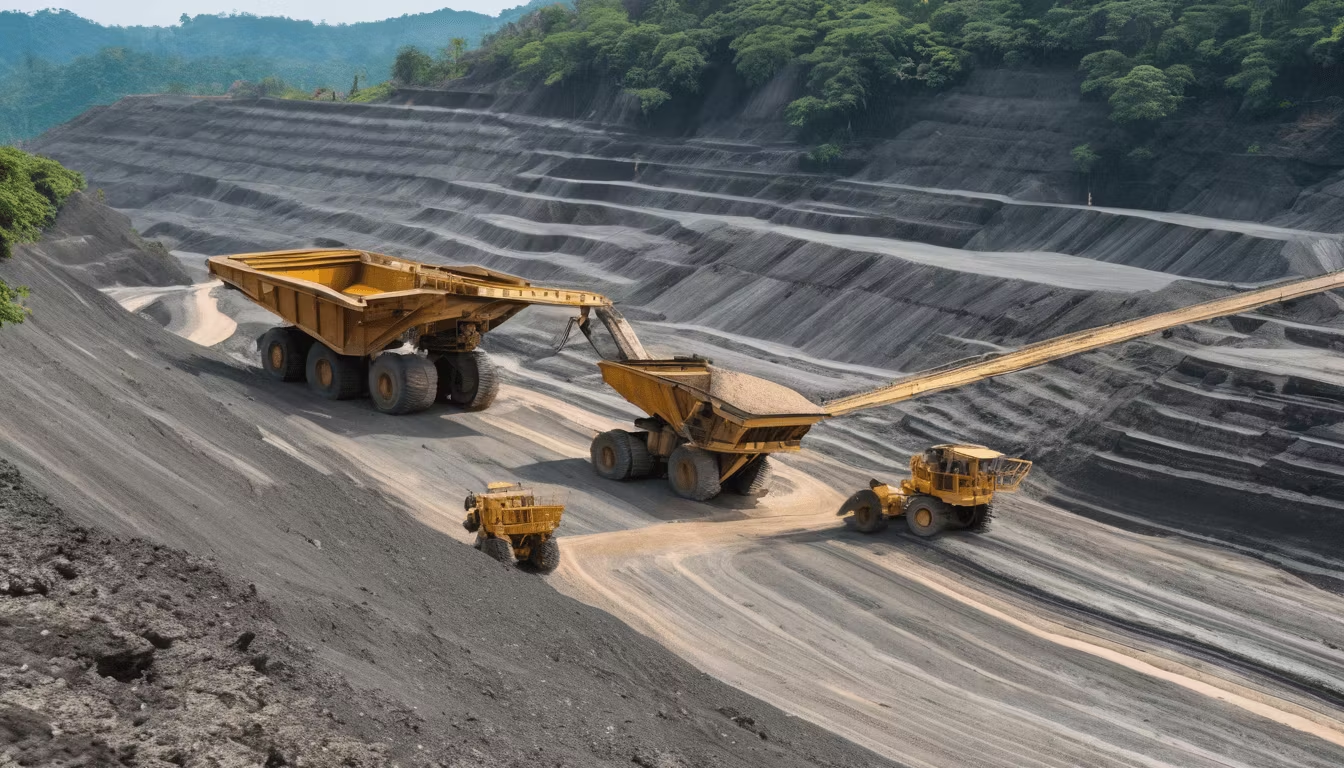
The provinces of North Sulawesi and Southeast Sulawesi, particularly the Morowali and Konawe districts, are globally significant nickel ore production zones. Here, AMDAL processes are particularly rigorous due to high biodiversity value and proximity to sensitive ecosystems. Nickel ore suppliers in this region face stringent water quality monitoring requirements and obligations to protect rainforest habitat.
Kalimantan: Diverse Mineral Production
Kalimantan's mining sector encompasses both metallic (coal, bauxite) and non-metallic operations. AMDAL requirements in Kalimantan emphasize watershed protection and peatland conservation, reflecting the region's ecological sensitivity.
Maluku (Halmahera) and Eastern Indonesia
Mining operations in Halmahera and other eastern Indonesian regions address unique environmental challenges, including coral reef protection, marine ecosystem safeguards, and indigenous land rights considerations. AMDAL processes in these areas incorporate marine environmental assessments and enhanced community consultation protocols.
Practical Implications for B2B Mining Buyers
Due Diligence Checklist for Supplier Evaluation
When evaluating Indonesian mineral suppliers, responsible sourcing practices require verification of environmental compliance credentials:
- Verify Current IUP Status: Request a copy of the active IUP certificate and confirm non-suspension status with the Ministry of Energy and Mineral Resources (MEMR)
- Obtain AMDAL Documentation: Request the AMDAL approval letter (Kelayakan Lingkungan) and current AMDAL monitoring reports
- Review Third-Party Audit Reports: Request SUCOFINDO or equivalent certification body audit reports within the past 12 months
- Examine RKAB Approvals: Verify that the supplier's current annual RKAB has been approved by MEMR
- Assess Supply Chain Transparency: Confirm that minerals are sourced from licensed IUP operations, not from artisanal or informal mining
Supply Chain Continuity and Regulatory Risk
Environmental non-compliance or IUP suspension poses direct risks to supply chain continuity. A mining operation under environmental investigation may face production curtailment, permit suspension, or costly remediation obligations that disrupt deliveries. By sourcing from fully compliant operators, buyers reduce supply chain vulnerability and regulatory exposure.
CV Indoalam Mineral Persada: A Compliant Indonesian Mining Supplier
CV Indoalam Mineral Persada exemplifies the operational standards expected of responsible Indonesian mining traders. The company holds comprehensive IUP OPK licenses covering mineral logam, non-logam, and bahan bakar categories, enabling diversified sourcing across multiple commodity lines. All mineral supplies undergo SUCOFINDO laboratory testing and certification to verify quality and purity specifications.
With annual silica sand production capacity of 2.5 million metric tons and sourcing operations across Sulawesi (Morowali, Konawe), Kalimantan, and Maluku (Halmahera), Indoalam maintains compliance with regional AMDAL requirements and submits annual RKAB approvals demonstrating operational planning and environmental investment commitments.
For B2B buyers seeking reliable, environmentally responsible sourcing of minerals including nickel ore, silica sand, aluminium ingot, and zircon sand, Indoalam's licensed operational status and third-party verification provide assurance that supply chains remain uninterrupted by regulatory complications.
Conclusion: Environmental Compliance as Competitive Advantage
Mining environmental compliance in Indonesia is not a regulatory burden to minimize—it's a strategic differentiator. Companies that maintain rigorous IUP and AMDAL compliance demonstrate operational maturity, community commitment, and long-term sustainability. For B2B mining buyers, these compliance credentials translate into reliable supply, reduced regulatory risk, and alignment with ESG (Environmental, Social, Governance) sourcing standards increasingly demanded by corporate purchasers and institutional investors.
As Indonesia's mining sector matures and international environmental standards converge with domestic regulations, suppliers that excel in environmental compliance will increasingly outcompete non-compliant competitors. Whether sourcing nickel ore for smelter operations, silica sand for industrial applications, or specialty minerals for manufacturing, verifying supplier compliance with IUP, AMDAL, and quality assurance protocols is essential due diligence.
CV Indoalam Mineral Persada stands ready to support your mineral sourcing needs with full environmental and operational compliance credentials. Contact us today to discuss your supply requirements and verify our licensing and certification documentation.