Aluminium Extrusion Process: From Ingots to Industrial Profiles
Understanding the Aluminium Extrusion Process
The aluminium extrusion process is one of the most critical manufacturing techniques in modern industrial production, transforming raw aluminium ingots into precise, complex profiles used across countless industries. From automotive components to architectural facades, extruded aluminium products form the backbone of contemporary manufacturing. For B2B buyers sourcing materials for production, understanding this transformation process is essential for quality assurance, cost optimization, and supply chain management.
At its core, aluminium extrusion involves forcing heated metal through a shaped die to create uniform cross-sections. This process has remained fundamentally similar for decades, yet technological advances continue to improve precision, speed, and material properties. Whether you're a foundry operator, construction material producer, or industrial manufacturer, knowing how ingots become profiles helps you select the right specifications and suppliers.
The Journey: From Raw Ingot to Finished Profile
1. Ingot Selection and Quality Assessment
The extrusion process begins long before metal enters the press. High-quality aluminium ingots form the foundation of superior extruded products. Industrial buyers should prioritize suppliers offering SUCOFINDO-tested materials, ensuring chemical composition, density, and mechanical properties meet international standards. The ingot's alloy composition—whether ADC12 for casting applications or A7 for structural use—directly influences the final profile's performance characteristics, corrosion resistance, and tensile strength.
Leading suppliers maintain strict quality control protocols, testing ingot batches before production begins. This preventive approach eliminates defects that could compromise extrusion quality, extending the lifespan of die tooling and reducing material waste during the production cycle.
2. Ingot Preheating and Temperature Management
Before extrusion, ingots must reach specific temperatures—typically between 400°C to 500°C depending on alloy type and die complexity. This heating phase, called soaking, serves multiple purposes: it homogenizes the ingot's internal structure, reduces mechanical resistance, and prepares the metal for plastic deformation. Inadequate preheating results in surface defects and inconsistent profiles; excessive heat causes grain coarsening and weakened mechanical properties.
Modern extrusion facilities employ sophisticated temperature control systems with thermocouples and automated heating chambers. This precision ensures every batch maintains consistency, critical for buyers requiring tight tolerances across large production runs. The preheating duration typically ranges from 12 to 24 hours, depending on ingot size and alloy composition.
3. The Billet Extrusion Press Operation
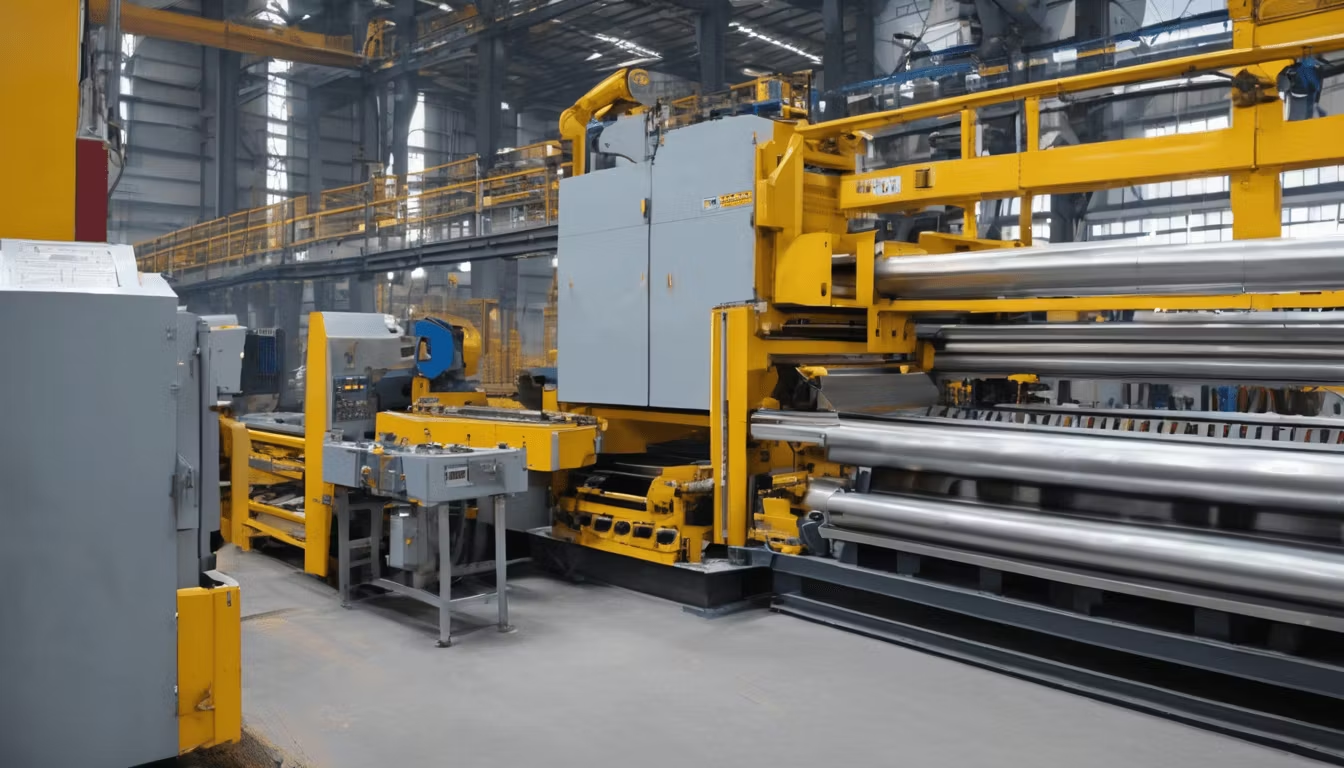
The actual billet extrusion occurs in hydraulic or mechanical presses, where heated ingots are forced through precision-engineered dies at pressures exceeding 600 MPa. As the metal flows through the die opening, it adopts the die's exact profile shape—whether that's a simple rectangular bar, complex structural channel, or specialized hollow section for industrial applications.
This critical phase transforms the ingot's random crystalline structure into an aligned grain structure, improving mechanical properties. The extrusion speed, controlled between 0.1 to 1.5 meters per second, depends on alloy composition and profile complexity. Complex, thin-walled sections extrude more slowly than simple, robust profiles, yet modern presses maintain remarkable consistency across production cycles.
4. Cooling and Stretching
Immediately after exiting the die, extruded profiles enter an air-cooling or water-cooling zone. This controlled cooling phase prevents residual stress buildup and stabilizes the profile's dimensional accuracy. Some facilities employ stretching benches that apply precise tensile loads, removing minor bending and ensuring profiles meet straightness specifications within 2-4 mm per 3-meter length.
For profiles destined for structural applications—particularly in construction material production or automotive manufacturing—this stretching phase proves essential. It improves mechanical properties, eliminates micro-internal stresses, and ensures dimensional consistency that buyers depend upon for seamless assembly and fabrication.
5. Artificial Aging (T6 Treatment)
Many industrial aluminium profiles undergo artificial aging, a heat treatment process that significantly enhances mechanical strength and hardness. This T6 process involves heating aged profiles to specific temperatures (typically 150-200°C) for controlled durations, creating precipitation hardening that improves tensile strength by 20-30% compared to naturally aged material.
For buyers sourcing profiles for high-stress applications—structural framing, heavy-duty machinery components, or aerospace-grade materials—T6-treated profiles offer superior performance. The investment in this treatment yields extended service life, reduced maintenance costs, and improved load-bearing capacity. Quality suppliers provide detailed metallurgical test reports confirming aging parameters and resulting mechanical properties.
6. Cutting, Inspection, and Surface Treatment
Following cooling and aging, profiles are cut to specified lengths using precision saws. Advanced facilities employ laser measurement systems and automated cutoff equipment, achieving length tolerances within ±1 mm. This precision proves critical for buyers requiring pre-cut components for immediate assembly.
Comprehensive inspection includes dimensional verification (length, width, thickness, profile uniformity), surface examination for defects or contamination, and mechanical testing of sample batches. Many profiles receive surface treatments—anodizing, powder coating, or polishing—before packaging and shipment. These finishing processes enhance corrosion resistance, aesthetic appeal, and compatibility with downstream manufacturing processes.
Key Variables Affecting Extrusion Quality
Alloy Selection and Composition
Different aluminium alloys exhibit vastly different extrusion characteristics. While ADC12 offers excellent castability for foundry applications, 6061 and 6063 alloys provide superior corrosion resistance and weldability for architectural and industrial uses. Understanding your application's specific requirements ensures material selection optimizes both performance and cost-efficiency.
Die Design and Complexity
Profile complexity directly impacts extrusion parameters and final quality. Simple rectangular profiles extrude quickly with minimal risk of defects; complex hollow sections or thin-walled profiles require slower extrusion speeds, sophisticated die designs, and expert operator control. Buyers specifying custom profiles should engage suppliers early in the design phase, ensuring manufacturability and cost-effectiveness.
Press Capacity and Technology
Modern extrusion presses range from 500 to 10,000 tons capacity. Larger presses accommodate bigger ingots and higher extrusion speeds, improving efficiency. Hydraulic presses offer superior control and flexibility for short runs and custom profiles; mechanical presses excel in high-volume, standardized production. When sourcing profiles, understanding your supplier's equipment capabilities ensures realistic lead times and pricing.
Industrial Applications for Extruded Aluminium Profiles
Extruded aluminium profiles serve diverse B2B sectors. Construction material producers utilize profiles for window frames, door systems, and structural components. Foundries and metal casters employ them as precision components in machinery and equipment manufacturing. Automotive manufacturers integrate aluminium profiles for lightweight chassis components, reducing vehicle weight and improving fuel efficiency.
Glass manufacturers benefit from aluminium profiles as framing and support structures in float glass production and solar panel manufacturing. Water treatment facilities use profiles in filtration equipment and piping systems. The versatility of aluminium extrusion reflects the process's ability to create precisely engineered components meeting stringent performance specifications.
Sourcing Quality Aluminium Ingots for Extrusion
The extrusion process succeeds only when beginning with superior raw materials. As a trusted B2B mineral and metals supplier, CV Indoalam Mineral Persada provides premium aluminium ingots in both ADC12 and A7 grades, meeting international standards with SUCOFINDO laboratory testing verification. Our direct-from-source supply model eliminates middlemen, ensuring consistent quality and competitive pricing for industrial manufacturers across Indonesia and international markets.
Beyond aluminium ingots, Indoalam supplies complementary materials supporting mineral processing and industrial manufacturing. Our silica sand and quartz products serve glass manufacturers and foundries, while our comprehensive product portfolio supports integrated supply chain solutions for large-scale industrial operations.
Ensuring Consistent Extrusion Results
Quality Control Best Practices
Reputable extrusion suppliers implement rigorous quality management systems including incoming material inspection, in-process monitoring, and finished product testing. Look for suppliers maintaining SUCOFINDO certification and demonstrating commitment to ISO standards, ensuring every batch meets documented specifications.
Documentation and Traceability
Professional suppliers provide detailed material certificates including alloy composition, mechanical properties, and heat treatment parameters. This traceability proves essential for buyers requiring full documentation of material lineage, particularly for aerospace, automotive, or critical infrastructure applications.
Customization and Flexibility
Your supplier should offer flexible production capabilities, accommodating trial orders from 100 metric tons to full-scale annual contracts. This flexibility supports business growth, enabling buyers to scale operations without excessive inventory investment or supply commitment risks.
Conclusion: Partnering with Reliable Materials Suppliers
The aluminium extrusion process transforms raw ingots into precision industrial components through carefully controlled heating, pressing, cooling, and finishing operations. Success depends upon every phase executing flawlessly—from initial ingot selection through final quality verification.
For B2B buyers seeking consistent, high-quality extruded profiles, material sourcing represents a critical first step. CV Indoalam Mineral Persada's commitment to quality, comprehensive testing, and flexible supply arrangements makes us an ideal partner for manufacturers nationwide. Whether you require standard profiles or custom specifications, our IUP OPK-licensed operations and SUCOFINDO-tested materials ensure reliability across every production cycle.
Contact us today to discuss your specific requirements and explore how Indoalam can support your manufacturing success with premium raw materials and trusted partnership.