Zircon Milling & Grinding: Complete Guide to Flour Production

Understanding Zircon Milling: From Raw Sand to Processed Flour
Zircon milling is a critical processing step that transforms raw zircon sand into fine, specialized products used across multiple industries. Whether your operation requires zircon flour for ceramics or opacifier-grade material for glass manufacturing, understanding the milling process is essential for sourcing high-quality materials and maintaining consistent production standards.
The journey from mining to finished product involves precise processing, rigorous quality control, and specialized equipment designed to achieve the specific particle sizes and purity levels your industry demands. This comprehensive guide walks you through every stage of zircon processing and explains how modern milling operations deliver the consistency that B2B buyers require.
What is Zircon Sand and Why Milling Matters
Zircon (zirconium silicate, ZrSiO₄) is a naturally occurring mineral with exceptional thermal and chemical stability, making it invaluable in industrial applications. Raw zircon sand extracted from mines typically contains particles of varying sizes and traces of impurities that must be removed to meet end-use specifications.
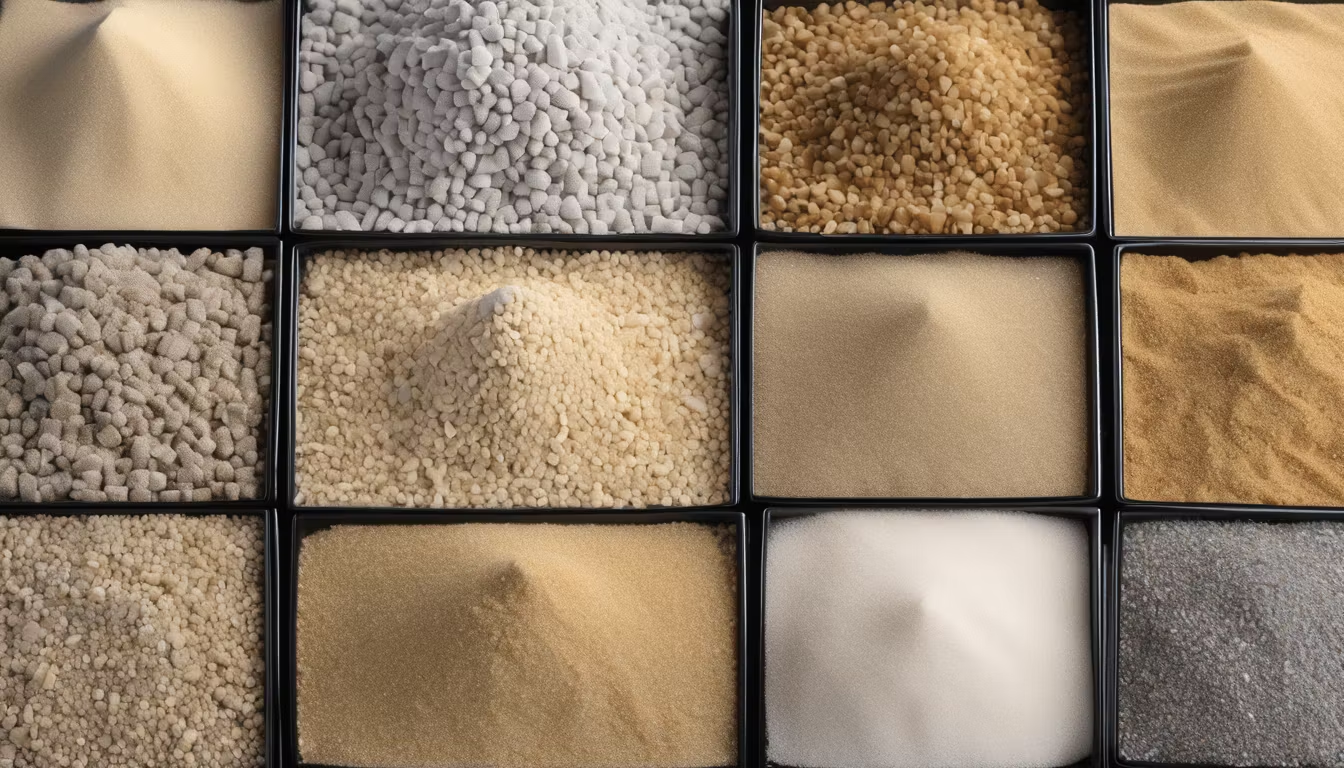
Milling transforms this raw material into uniformly sized particles—from coarse sand grades to ultra-fine flour with particle sizes measured in microns. This refinement process is not merely about size reduction; it's about creating a product that meets strict industrial standards for:
- Particle Size Distribution (PSD): Precise control ensures consistent performance in casting, glazing, and opacifier applications
- Purity and Impurity Removal: Iron oxide, silica contamination, and other unwanted minerals are eliminated through careful processing
- Surface Area Optimization: Fine milling increases surface area, improving reactivity in chemical and thermal applications
- Flowability: Properly milled zircon flour flows smoothly through automated production equipment, reducing equipment wear and production downtime
The Complete Zircon Milling Process Explained
1. Raw Material Preparation and Screening
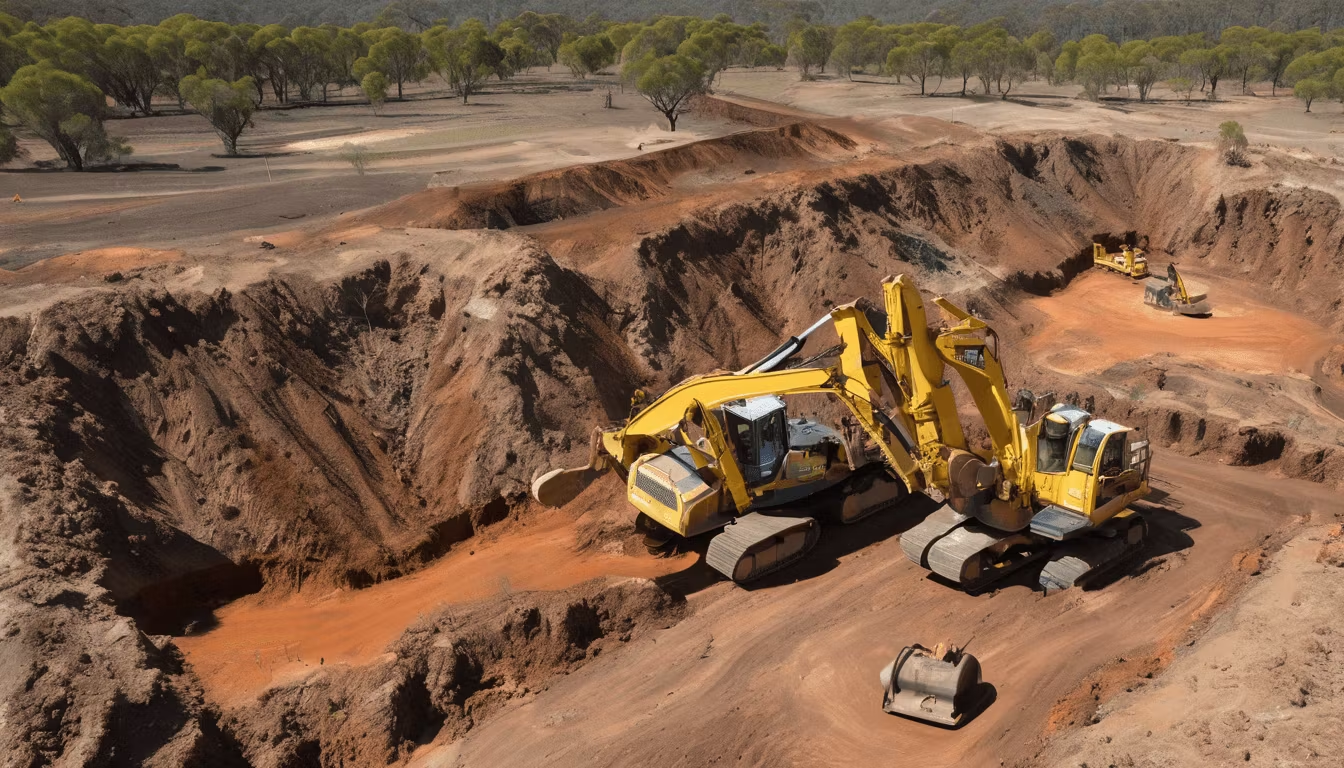
The milling process begins with raw zircon sand sourced from mining operations in regions like Sulawesi and Kalimantan. Before grinding, the material undergoes initial screening to remove oversized rocks, clay, and debris. Primary magnetic separation removes ferrous iron contamination, a critical step since iron oxide can compromise the final product's whiteness and purity—essential properties for glass and ceramic manufacturers.
Raw material is then subjected to rigorous SUCOFINDO laboratory testing to verify ZrO₂ content, typically 65% or higher for industrial-grade zircon.
2. Wet Milling vs. Dry Milling
Modern zircon milling operations employ two primary methods:
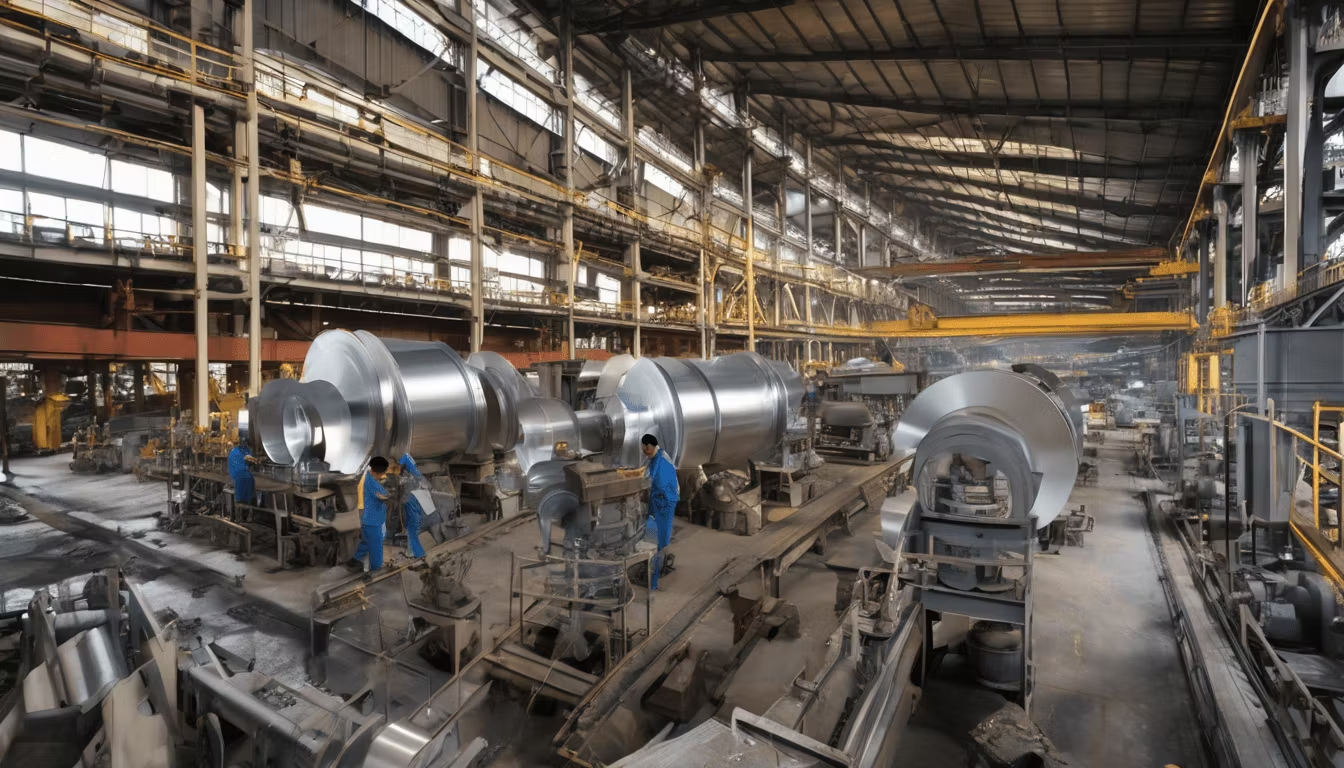
Wet Milling: The material is mixed with water to create a slurry processed through ball mills or bead mills. This method offers superior particle size control and reduces airborne dust, making it ideal for producing ultra-fine zircon flour destined for ceramics, refractories, and opacifier applications. Wet milling typically produces particles in the 2-10 micron range, meeting stringent specifications for advanced applications.
Dry Milling: Using air classification and roller mills, dry milling is more energy-efficient for coarser grades. This method suits applications requiring zircon sand in the 50-200 mesh range, commonly used in foundry cores and sand casting operations.
3. Classification and Separation
After milling, the material enters sophisticated air classifiers that separate particles by size with remarkable precision. Multi-stage classification systems ensure that:
- Fine flour (target micron range) proceeds to finishing
- Oversized particles return to the mill for additional grinding
- Ultrafine fractions are captured separately for specialized applications
This closed-loop classification ensures minimal material waste and maximum product consistency—critical factors when supplying large industrial customers with strict quality requirements.
4. Final Purification and Drying
For wet-milled zircon flour, the material is carefully dried to moisture content below 0.5% to prevent caking and ensure excellent flowability. Hydrocyclones remove remaining impurities, and final screening confirms that all particles meet the specified size distribution range.
Zircon Flour Production: Specifications and Industrial Applications
Zircon flour—the ultra-fine product resulting from advanced milling—represents the premium segment of processed zircon. This material typically exhibits:
- Particle Size: 2-10 microns (often 97-98% passing through 325 mesh)
- Purity: ZrO₂ minimum 65%, with iron oxide <0.3%
- Color: Bright white to ivory, indicating low iron contamination
- Bulk Density: 2.5-2.8 g/cm³ for optimal packing and flowability
Key Applications for Zircon Flour
Ceramic Manufacturing: Zircon flour serves as a key ingredient in high-performance ceramic glazes, providing hardness, chemical resistance, and thermal stability. Porcelain tile manufacturers rely on zircon flour to achieve glossy finishes and enhanced durability.
Refractory Production: Steel mills, foundries, and aluminum smelters depend on zircon flour for manufacturing refractory bricks and castables that withstand extreme temperatures (above 1700°C) without deformation or chemical degradation.
Foundry Cores: Precision metal casting operations use zircon flour in core binders and mold coatings to improve surface finish, reduce metal-mold reactions, and enhance dimensional accuracy for complex castings.
Electronics and Advanced Ceramics: High-purity zircon flour is essential in semiconductor manufacturing, insulated substrates, and thermal barrier coatings for aerospace applications.
Zircon Opacifier: Grinding Process and End-Use Specifications
One of the most commercially valuable applications of zircon milling is the production of zircon opacifier—a specialized product used primarily in ceramic glazes and glass manufacturing.
What Makes Opacifier-Grade Zircon Different?
While all zircon flour can technically serve as an opacifier due to its high refractive index, opacifier-grade material requires tighter specifications:
- Whiteness (L* value): Minimum 92-95 to ensure bright, opaque finishes without discoloration
- Ultra-Fine Particle Size: 0.5-5 microns for maximum light-scattering efficiency
- Iron and Other Impurities: Strictly controlled below 0.2% to prevent yellowish tints
- Consistent Batch Performance: Variation between batches must be <1% to maintain glaze consistency in production
The Zircon Opacifier Grinding Process
Producing opacifier-grade material requires additional refining steps beyond standard milling. Advanced wet-milling techniques using specialized bead mills with ceramic or zirconia media achieve the ultra-fine particles required. Multiple milling stages, separated by precise particle-size measurement, ensure that opacifier-grade zircon meets the demanding specifications of ceramic and glass manufacturers.
After milling, the material undergoes bleaching treatment to remove residual iron oxide stains, followed by careful drying that preserves the ultra-fine structure without agglomeration. Final quality verification includes:
- Particle size distribution analysis (laser diffraction)
- Whiteness measurement (spectrophotometry)
- Impurity elemental analysis (XRF—X-ray fluorescence)
- pH testing (important for glaze compatibility)
Industrial Applications Where Zircon Opacifier Excels
Ceramic and Tile Manufacturing
In ceramic tile production, zircon opacifier creates the white body effect that consumers expect in porcelain tiles, sanitaryware, and decorative glazes. Modern tile manufacturers typically blend zircon opacifier (5-15% by weight) with feldspathic glazes to achieve uniform whiteness, improved scratch resistance, and chemical durability—especially important for kitchen and bathroom tiles exposed to acidic cleaners.
Glass and Glassware Production
Container glass manufacturers use zircon opacifier to produce milky-white or opaque glass for specialty applications, including bathroom glassware, decorative vessels, and solar panel glass. The refractive index of zircon scatters light effectively, creating opacity without the brittleness associated with traditional opacifiers.
Float Glass Manufacturing
High-end float glass operations incorporate zircon opacifier to produce premium opal or milky glass for architectural and automotive applications. The material's thermal stability ensures consistent opacity across the range of temperatures experienced during the float-glass process (1600°C+).
Quality Control and Testing Standards
Professional zircon milling operations maintain rigorous quality control protocols to ensure batch consistency and compliance with industry standards.
Critical Quality Parameters
- Particle Size Distribution (PSD): Measured via laser diffraction; ensures 90% of particles fall within specified range
- ZrO₂ Content: XRF analysis confirms minimum purity levels; typically verified for each batch
- Moisture Content: Karl Fischer titration ensures material is completely dry for storage stability
- Bulk Density and Tap Density: Indicates packing efficiency and consistency
- Flowability Tests: Angle of repose and Hausner ratio confirm material will flow smoothly through automated equipment
Leading suppliers invest in ISO 9001 certification and maintain certified laboratories with SUCOFINDO or equivalent testing verification to provide customers with comprehensive test certificates accompanying each shipment.
Why Sourcing Quality Zircon Milling Matters for Your Business
For manufacturers in ceramics, glass, refractories, and foundries, zircon milling quality directly impacts your production efficiency, product quality, and customer satisfaction. When you source from suppliers who employ modern milling technology and strict quality control—operators like CV Indoalam Mineral Persada with IUP OPK licensing and SUCOFINDO certification—you gain several competitive advantages:
- Consistent Particle Size: Eliminates batch-to-batch variation that causes glazing inconsistencies or refractory performance issues
- Lower Iron Contamination: Ensures your end products achieve desired color and brightness without additional purification steps
- Improved Production Efficiency: Fine-milled, flowable zircon reduces equipment wear and production slowdowns
- Scalable Supply: Reliable suppliers can provide small trial quantities (100 MT) or large-volume contracts (up to 2.5 million metric tons annually), adapting to your growth
- Direct Sourcing Advantage: Purchasing directly from milling operations eliminates middlemen markups and ensures you're working with quality-conscious suppliers who invest in modern equipment
Comparing Zircon with Alternative Materials
While other opacifiers and grinding materials exist—including titanium dioxide, tin oxide, and alternative silicates—zircon offers unique advantages:
- Superior Thermal Stability: Unlike many alternatives, zircon maintains performance at the extreme temperatures required in refractory and glass applications
- Neutral pH: Doesn't interfere with glaze chemistry like some titanium-based opacifiers
- Cost-Performance Balance: More economical than premium alternatives while delivering superior results in demanding applications
- Abundance and Supply Security: Indonesia's significant zircon reserves and established mining infrastructure ensure stable, long-term supply
Related mineral products like silica sand are often used alongside zircon in ceramic formulations, creating complementary supply relationships that specialized suppliers can optimize for your facility.
Selecting a Zircon Milling Supplier: What to Look For
Not all zircon suppliers employ equivalent milling technology or maintain consistent quality. When evaluating potential suppliers, prioritize:
- Certifications and Licensing: Verify IUP OPK (mining license) and RKAB (approved mining business plan) credentials, ensuring legal, sustainable sourcing
- Laboratory Testing: Insist on SUCOFINDO-certified test reports accompanying samples and shipments
- Milling Technology: Ask about equipment specifications, milling method (wet vs. dry), and air classification sophistication
- Quality Consistency: Request multiple previous batches' test reports to verify they maintain consistent specifications batch-to-batch
- Scalability: Ensure your supplier can grow with your business, from initial trials to large-volume production supply
- Technical Support: A quality supplier provides guidance on product selection, particle size optimization, and troubleshooting
Zircon Milling at CV Indoalam: Meeting Your Precision Requirements
CV Indoalam Mineral Persada specializes in sourcing, milling, and supplying premium zircon products to leading manufacturers throughout Indonesia and internationally. Our operation combines:
- Direct Mining Access: Long-term contracts with mining operations in Sulawesi, Kalimantan, and Maluku provide consistent raw material supply
- Advanced Milling Facilities: Modern equipment enables precise particle size control, from coarse sand to ultra-fine flour and opacifier-grade products
- Quality Verification: Every batch undergoes SUCOFINDO laboratory testing, with results provided to customers before shipment
- Flexible Supply Options: Trial quantities starting at 100 MT for new customers, scaling to 2.5+ million metric tons annually for established partnerships
- Complete Documentation: IUP OPK licensing, RKAB approval, and ET Batubara compliance ensure your supply chain meets regulatory requirements
Getting Started: Next Steps for Sourcing Premium Zircon
Whether you need zircon flour for ceramic glazing, opacifier-grade material for glass manufacturing, or specialized particles for refractory production, CV Indoalam offers the expertise, equipment, and supply capacity to support your requirements.
The zircon milling process is far more sophisticated than simply grinding ore into powder. It demands precision equipment, rigorous quality control, and deep industry knowledge to deliver the consistent, high-purity products that modern manufacturers require. Contact us to discuss your specific zircon requirements, request samples, or establish a supply agreement that supports your production goals.
To learn more about our complete range of mineral products and sourcing capabilities, discover more about Indoalam and our commitment to quality, reliability, and customer partnership in the mining industry.