Silica Sand for Water Treatment: Complete Filtration Media Guide
Introduction: Why Silica Sand Matters in Water Treatment
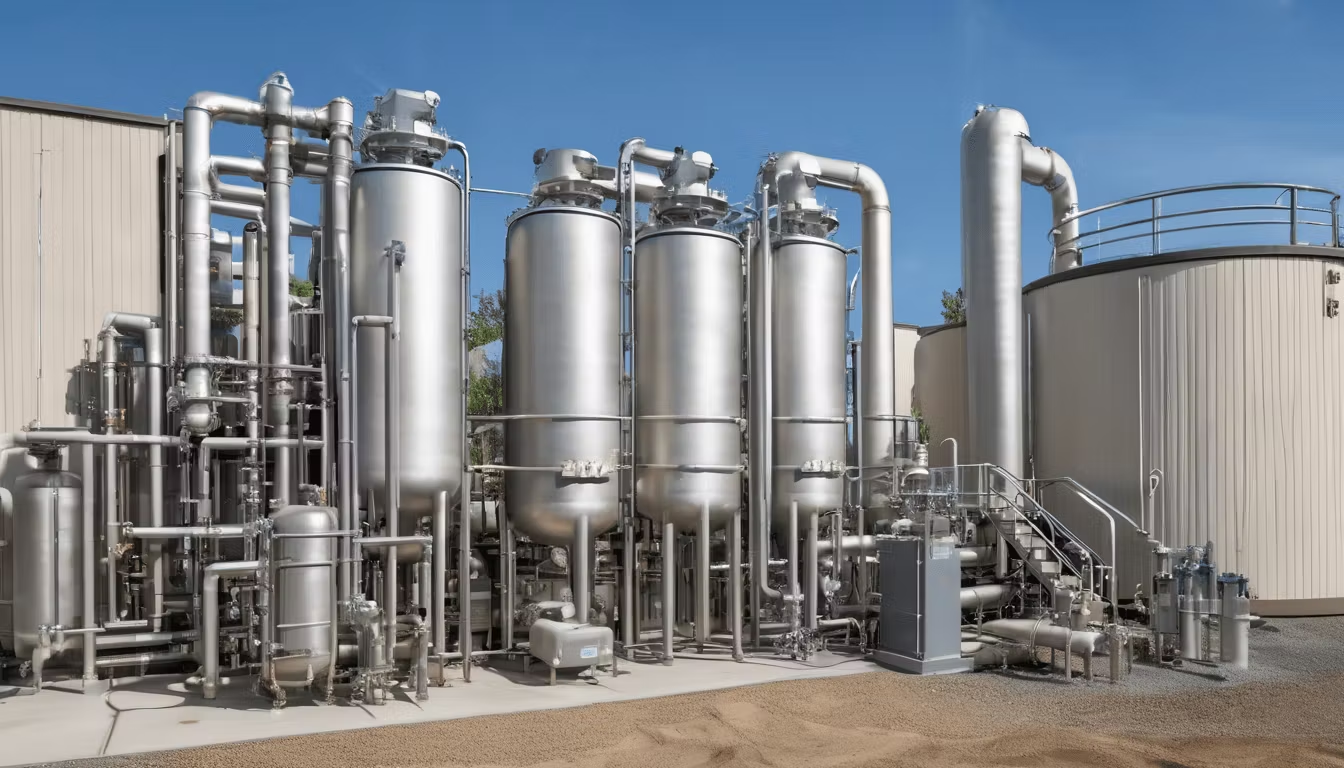
Water treatment facilities worldwide depend on high-quality filtration media to remove suspended solids, turbidity, and contaminants. Among the most effective and economical solutions is silica sand—a naturally occurring mineral that has become the industry standard for rapid sand filters, slow sand filters, and multi-stage treatment systems.
As industrial demand for clean water intensifies across manufacturing, beverage production, and municipal water systems, selecting the right silica sand filtration media has become critical to operational efficiency and regulatory compliance. This comprehensive guide explores the science behind silica sand selection, quality parameters, and practical applications for water treatment professionals.
Understanding Silica Sand as Filtration Media
What Makes Silica Sand Ideal for Water Filtration?
Silica sand, or quartz sand, is composed primarily of silicon dioxide (SiO₂) crystals. Its effectiveness as a filtration medium stems from several inherent properties:
- Porous Structure: The granular composition creates pathways for water flow while trapping particles
- High Hardness: Silica maintains structural integrity through repeated backwashing cycles, ensuring longevity
- Chemical Stability: Resistant to acids, alkalis, and common water treatment chemicals
- Inertness: Does not dissolve or leach harmful substances into treated water
- Affordability: Cost-effective compared to alternative filtration media
These characteristics make silica sand the preferred choice for municipal water treatment plants, industrial cooling systems, swimming pool filtration, and aquaculture operations.
Silica Sand vs. Other Filtration Media
While various materials can serve as filtration media, silica sand outperforms alternatives in specific applications. Anthracite coal filters offer faster flow rates but lack the fine particle capture of silica. Garnet media provides superior density but costs significantly more. Activated carbon excels at removing chemical contaminants but requires frequent replacement. For balanced performance across turbidity reduction, particle removal, and cost-effectiveness, silica sand remains the industry benchmark.
Key Quality Parameters for Water Treatment Silica Sand
SiO₂ Content and Purity
The silicon dioxide content directly affects filtration efficiency and durability. Premium water treatment silica sand typically contains SiO₂ levels of 99% or higher. At CV Indoalam Mineral Persada, our quartz sand achieves 99.74% SiO₂ purity, exceeding industry standards. This exceptional purity ensures:
- Minimal dissolution during operation
- Reduced iron oxide content that could stain water
- Longer filter life and reduced replacement frequency
- Compliance with stringent drinking water regulations
Particle Size Distribution and Mesh Grades
Granule size is perhaps the most critical parameter for filtration performance. Water treatment applications require different mesh grades depending on the treatment stage and contaminant type:
- Coarse Sand (8-12 mesh): Used in pre-filtration stages for rapid sediment removal; allows high flow rates but captures larger particles only
- Medium Sand (12-20 mesh): Standard for multi-media filters; balances filtration efficiency with flow rate
- Fine Sand (20-40 mesh): Employed in slow sand filters and polishing stages; removes fine particles and turbidity
- Ultra-Fine Sand (40-200 mesh): Specialized applications including ceramic membrane pre-treatment and tertiary filtration
A properly sized sand bed typically contains a range of particle sizes (effective size 0.5-1.0 mm, uniformity coefficient less than 1.5) to optimize both flow rates and contaminant removal.
Hardness, Density, and Durability
Mohs hardness rating of 7 makes silica sand resistant to attrition during backwashing—the process where water is pumped upward through the filter to remove accumulated contaminants. High-quality sand experiences less than 5% volume loss after 1,000 backwash cycles, maintaining filtration effectiveness over years of operation. Apparent density typically ranges from 1.5 to 1.6 g/cm³, providing optimal settling characteristics during filter operation.
Iron Content and Trace Elements
Iron oxides, manganese, and other trace elements must be minimized in water treatment applications. Excessive iron content can cause:
- Water discoloration and aesthetic issues
- Increased turbidity in treated water
- Potential staining of fixtures and surfaces
- Regulatory non-compliance for drinking water applications
SUCOFINDO-tested materials ensure trace element concentrations remain within acceptable limits, typically less than 0.5% combined iron and other impurities.
Filter Bed Design and Silica Sand Selection
Single-Media Filters
Traditional single-media filters use a uniform bed of silica sand typically 24-36 inches deep. This design works well for:
- Municipal water treatment plants with moderate turbidity (under 10 NTU)
- Industrial pre-filtration systems
- Swimming pool circulation
Effective size of 0.5-0.6 mm with uniformity coefficient around 1.3-1.4 provides optimal performance in single-media applications.
Dual-Media Filters
Two-layer filter beds combining silica sand with anthracite coal above it significantly improve filtration capacity and run length. The lighter anthracite (specific gravity 1.4-1.5) floats above denser silica sand (specific gravity 2.65) during backwashing, preventing mixing. This configuration:
- Increases dirt capacity by 150-200% compared to single-media
- Extends filter run times from hours to days
- Reduces backwashing frequency and water waste
- Improves turbidity removal to less than 0.1 NTU
In dual-media applications, silica sand typically occupies the bottom 12-18 inches with medium effective size (0.6-0.8 mm).
Multi-Media Filters
Advanced treatment systems employ three or more layers: anthracite (top), silica sand (middle), and garnet or magnetite (bottom). Silica sand in multi-media beds is carefully selected for compatibility with adjacent layers, maintaining separation during backwashing while ensuring efficient contaminant removal across the entire depth.
Applications and Industry-Specific Requirements
Municipal Drinking Water Treatment
Municipal water utilities process raw water containing natural turbidity, algae, and microorganism precursors. Silica sand filtration achieves 95-99% removal of suspended solids and turbidity down to 0.1 NTU when properly designed and operated. Medium to fine sand grades (0.5-1.0 mm effective size) are standard, with dual-media designs increasingly adopted for enhanced performance and regulatory compliance.
Industrial Process Water
Manufacturing facilities requiring process water—including electronics, textiles, and food & beverage producers—utilize silica sand in pre-filtration and polishing stages. Cooling tower water, boiler feed water, and product-contact water all benefit from silica sand's cost-effectiveness and reliability. Industrial applications often employ higher flow rates, requiring coarser sand grades and frequent backwashing protocols.
Swimming Pool and Recreational Water
Pool circulation systems depend on silica sand filters to maintain clarity and remove chlorine-resistant contaminants. Standard pool filter sand operates at 15-20 gallons per minute per square foot of filter area. Fine to medium grades (12-20 mesh) provide the balance necessary for crystal-clear water while supporting commercial pool chemical programs.
Wastewater Treatment and Recycling
Municipal wastewater treatment plants and industrial effluent systems employ silica sand in secondary and tertiary treatment stages. When combined with biological treatment, silica sand filtration removes remaining suspended solids before water reuse or discharge. Coarser grades often precede finer sand in multi-stage wastewater systems.
Installation, Operation, and Maintenance Best Practices
Sand Bed Preparation
Proper installation directly impacts filtration performance. Sand should be:
- Pre-washed to remove fine dust particles (clay, silt) that reduce permeability
- Sized according to water analysis and flow requirements
- Carefully placed in filter vessels to avoid segregation
- Submerged gradually with air bleed-off to eliminate trapped air pockets
Backwashing Protocols
Regular backwashing maintains sand bed permeability and extends filter life. Backwash frequency depends on influent quality, filter size, and run-to-waste cycles. Most systems require backwashing when pressure drop exceeds 15-20 psi across the sand bed. Proper backwashing expands the bed by 20-30%, fluidizing sand particles to dislodge trapped contaminants. Under-backwashing reduces efficiency; over-backwashing causes sand loss.
Monitoring and Quality Control
Operational excellence requires continuous monitoring:
- Turbidity Testing: Measure treated water turbidity daily; target less than 0.1 NTU for drinking water
- Pressure Drop Monitoring: Track differential pressure across the sand bed to schedule backwashing
- Flow Rate Verification: Ensure actual flow matches design specifications
- Sand Inspection: Annually remove samples to verify sand integrity and identify degradation
- Particle Size Analysis: Every 2-3 years, conduct sieve analysis to confirm effective size and uniformity coefficient remain within specifications
Sourcing Quality Silica Sand: What to Look for in Suppliers
Certifications and Testing Standards
Reputable silica sand suppliers provide:
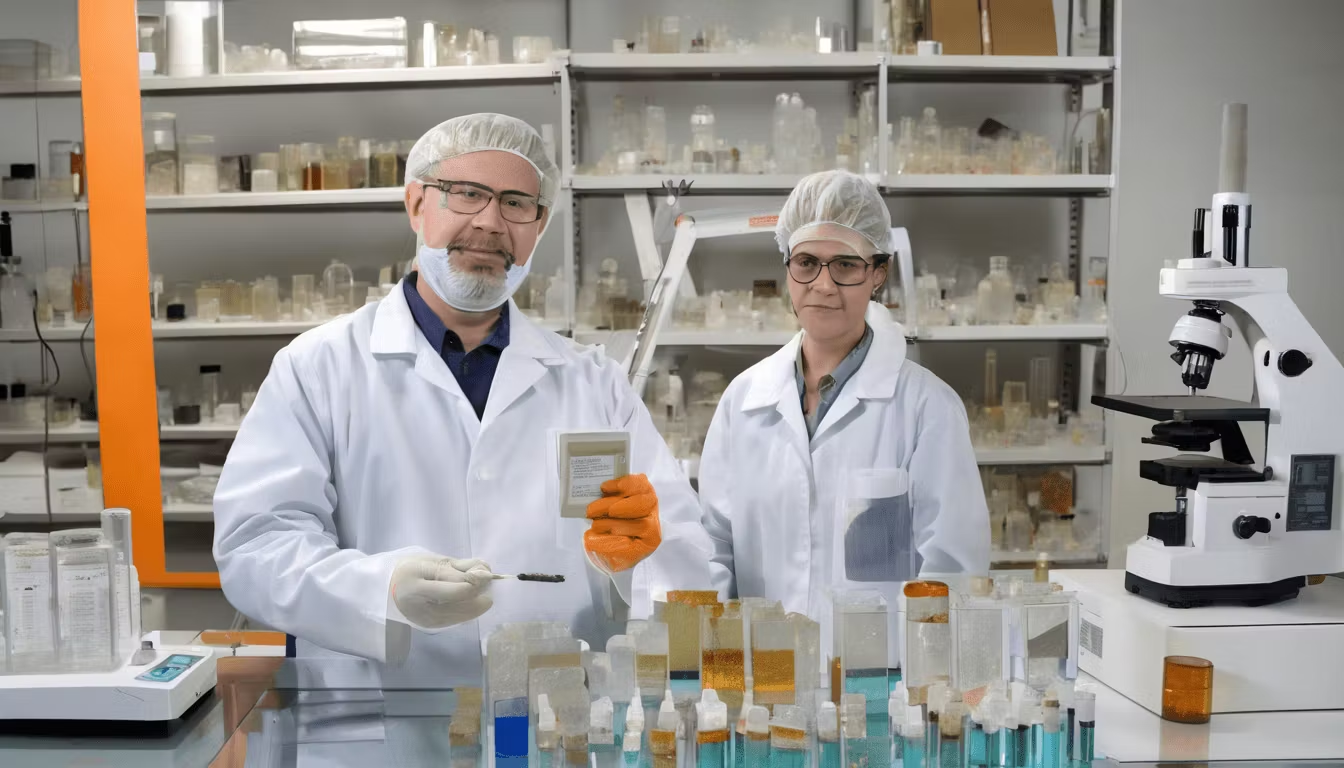
- Third-Party Lab Testing: Independent analysis confirming SiO₂ content, particle size distribution, and trace elements
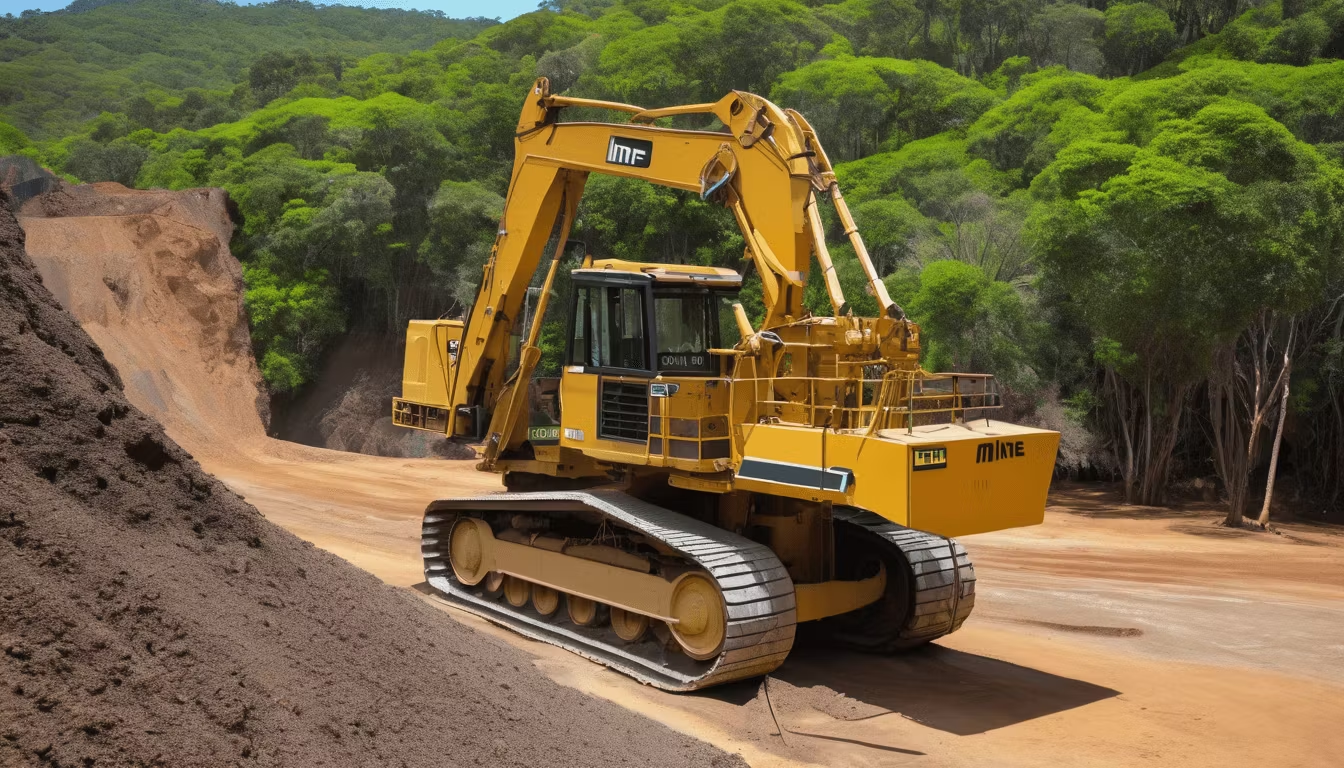
- Mining Licenses: IUP (Izin Usaha Pertambangan) or equivalent permits demonstrating legal, responsible sourcing
- Quality Certificates: Batch-specific documentation verifying specifications match purchase orders
- Environmental Compliance: Evidence of sustainable mining practices and regulatory adherence
Supply Chain Reliability
Water treatment facilities cannot tolerate supply interruptions. Preferred suppliers demonstrate:
- Direct sourcing from established mining operations
- Consistent annual capacity supporting long-term contracts
- Multiple sourcing regions enabling flexible logistics
- Responsive customer service and technical support
Cost vs. Quality Considerations
While cost matters in operational budgets, the lowest-priced silica sand often carries hidden expenses: shorter filter life, increased backwashing frequency, more frequent replacement, and potential regulatory violations. Premium-grade silica sand with documented purity and durability delivers superior total cost of ownership through extended filter cycles and reliable performance.
CV Indoalam Mineral Persada: Your Silica Sand Partner
For water treatment professionals seeking reliable, high-quality silica sand sourced directly from Indonesia's premier mining regions, CV Indoalam Mineral Persada delivers consistent excellence. Our silica sand meets the demanding specifications required for municipal drinking water, industrial process water, and specialized treatment applications.
With SUCOFINDO laboratory testing, IUP OPK licensing, and RKAB approval, every shipment meets international quality standards. Our annual capacity of 2.5 million metric tons ensures reliable supply for projects ranging from 100-ton trials to multi-year supply agreements. Sourced from proven deposits in Sulawesi, Kalimantan, and Maluku regions, our quartz sand achieves 99.74% SiO₂ purity with optimal particle size distribution for your specific application.
Whether you operate a municipal water treatment plant, industrial facility, or specialized water purification system, we provide the filtration media foundation for consistent, cost-effective performance. Contact us today to discuss your silica sand requirements and discover how Indoalam can support your water treatment excellence.
Conclusion: Making Informed Filtration Decisions
Selecting the appropriate silica sand for water treatment requires balancing multiple technical parameters—SiO₂ purity, particle size distribution, hardness, and trace element content—against operational requirements and budget constraints. By understanding filter bed design principles, application-specific demands, and supplier capabilities, water treatment professionals can optimize performance while minimizing lifecycle costs.
High-quality silica sand remains the foundation of effective water treatment. Choose a supplier who combines mining expertise with rigorous quality control, and your filtration systems will deliver the clean water your operations depend on.