Silica Sand in Water Treatment: Complete Filtration Media Guide

Introduction: The Critical Role of Silica Sand in Water Filtration
Water treatment facilities worldwide depend on high-quality filtration media to ensure safe, clean drinking water and industrial process water. Among the most effective and economical filtration solutions, silica sand remains the gold standard in the industry. With its proven track record, cost-efficiency, and superior filtration capabilities, silica sand continues to be the preferred choice for municipal water treatment plants, industrial facilities, and commercial water purification systems.
The global water treatment industry faces mounting pressure to improve water quality while maintaining operational efficiency and cost-effectiveness. Silica sand filtration media addresses these challenges by providing reliable, consistent performance across diverse water treatment applications. Whether treating surface water, groundwater, or reclaimed water, the right silica sand selection can dramatically improve filtration efficiency, reduce operational costs, and extend equipment lifespan.
This comprehensive guide explores the technical specifications, selection criteria, and practical considerations for choosing optimal silica sand filtration media for your water treatment operations.
Understanding Silica Sand as Filtration Media
What Makes Silica Sand Ideal for Water Filtration?
Silica sand, scientifically known as silicon dioxide (SiO2), possesses several characteristics that make it exceptional for water filtration applications. High-purity quartz sand with SiO2 content of 99.74% or higher provides superior chemical stability, ensuring minimal dissolution or contamination during extended filtration cycles. The naturally angular grain structure creates an intricate network of void spaces that effectively trap suspended solids, sediment, clay particles, and organic matter while allowing treated water to flow through efficiently.
Unlike some alternative filtration media, silica sand is non-reactive with most water types and chemical treatment processes. This stability ensures consistent performance whether treating acidic, neutral, or slightly alkaline water sources. The material's durability withstands repeated backwashing cycles, pressure variations, and temperature fluctuations without degrading, resulting in a longer operational lifespan and reduced replacement frequency compared to competing filtration materials.
Chemical and Physical Properties
Premium silica sand for water treatment must meet strict specifications. The ideal filtration media exhibits SiO2 content exceeding 99.5%, with minimal iron oxide (Fe2O3) content to prevent water discoloration. The sand's bulk density typically ranges from 1.55 to 1.65 g/cm³, while its uniformity coefficient should remain below 1.5 for optimal filtration performance and backwashing efficiency.
The hardness rating (typically 7 on the Mohs scale) ensures silica sand resists mechanical degradation during installation, operation, and maintenance procedures. This hardness characteristic prevents the formation of fine particles that could pass through the filter bed and compromise treated water quality. Additionally, silica sand's low solubility in water—approximately 0.006 g/100ml at room temperature—guarantees that the filtration media itself doesn't introduce contaminants into the treated water.
Silica Sand Mesh Grades and Their Applications
Understanding Mesh Size Classification
Silica sand for water filtration comes in various mesh grades, measured in micrometers (μm) or mesh numbers (Tyler mesh scale). Each mesh grade serves specific filtration objectives, and selecting the appropriate grade is crucial for optimizing treatment efficiency. The mesh size directly influences filtration rate, turbidity removal, and backwashing requirements.
Coarser mesh grades (8-16 mesh, approximately 1000-2000 μm) serve as pre-filtration layers or support media in multi-stage filtration systems. These larger particles create higher void spaces and allow faster flow rates, making them ideal for removing larger suspended solids and sediment. Medium grades (20-40 mesh, approximately 400-850 μm) represent the most common choice for conventional water filtration, balancing filtration efficiency with acceptable flow rates. Fine mesh grades (100-200 mesh, approximately 75-150 μm) provide superior turbidity and color removal but require more frequent backwashing and result in slower filtration rates.
Multi-Layer Filtration Design Strategy
Advanced water treatment systems employ stratified filtration beds combining multiple silica sand grades to optimize both filtration quality and operational efficiency. A typical three-layer configuration utilizes 8-12 mesh silica sand as the bottom support layer, 20-40 mesh as the primary filtration layer, and 100-150 mesh as the top polishing layer. This graduated approach intercepts contaminants at multiple levels while distributing hydraulic load efficiently across the filter bed depth.
The support layer prevents finer sand from escaping during backwashing while maintaining adequate drainage. The primary filtration layer performs the majority of particle removal work. The polishing layer captures fine suspended solids, turbidity, and color-causing compounds that escaped the primary layer. This multi-stage approach typically achieves turbidity reduction to less than 0.1 NTU (nephelometric turbidity units) while maintaining filtration rates of 4-6 gallons per minute per square foot of filter area.
Filtration Media Selection Criteria for Water Treatment
Assessing Your Raw Water Characteristics
Effective filtration media selection begins with comprehensive analysis of your source water quality. Critical parameters include turbidity levels, particle size distribution, suspended solids concentration, organic matter content, pH, temperature, and presence of specific contaminants. Surface waters typically exhibit higher turbidity (10-100+ NTU) and seasonal variation, requiring robust filtration with periodic media replacement. Groundwater sources, though generally cleaner, may contain iron, manganese, or silica that influences media selection and backwashing frequency.
Industrial process water sources present unique challenges with variable contamination profiles. Cooling tower water, wastewater reclamation, and recycled process water often contain fine colloidal particles, algae, biofilm precursors, and chemical residues that demand more frequent backwashing and potentially shorter media life. Understanding these source water characteristics determines optimal mesh grade selection, filter bed depth, and operational parameters.
Filtration Rate and Throughput Requirements
Design filtration rates typically range from 2 to 8 gallons per minute per square foot (gpm/ft²), with 5 gpm/ft² representing a common industrial standard balancing efficiency and cost. Coarser mesh grades support higher filtration rates, while finer grades reduce rate to achieve superior water quality. Your facility's production demands and quality requirements determine optimal design rate selection. Municipal systems treating high-volume surface water often operate at 5-6 gpm/ft², while specialized applications like pharmaceutical manufacturing or electronics production water may specify 2-4 gpm/ft² for maximum polishing.
Filter bed depth significantly impacts performance. Standard depth ranges from 24 to 36 inches, with deeper beds providing extended run times between backwashing cycles and improved turbidity removal. Deeper filters tolerate higher initial turbidity and reduce membrane fouling in systems incorporating membrane treatment stages downstream.
Backwashing Frequency and Media Loss Considerations
Silica sand performance degrades as fine particles accumulate within the filter bed, reducing void space and increasing pressure drop. Typical backwashing intervals range from 24 to 72 hours of continuous operation, though high-turbidity applications may require more frequent cycles. Each backwashing event removes accumulated solids and briefly fluidizes the media, restoring filtration capacity.
Media loss through backwashing represents a crucial operational cost factor. Quality silica sand with tight size distribution and high durability minimizes attrition, reducing annual replacement requirements. Poor-quality media with irregular shapes or inconsistent grain sizes experiences accelerated degradation, requiring complete media replacement every 3-5 years. Premium-grade silica sand can maintain performance for 7-10 years with proper maintenance, significantly reducing total cost of ownership.
Technical Specifications for Industrial Water Treatment
Quality Standards and Testing Protocols
Reputable filtration media suppliers conduct rigorous quality testing conforming to ASTM D1141 (Standard Practice for the Preparation of Substitute Ocean Water), ASTM D422 (Particle Size Analysis), and ISO 13503-2 standards. These protocols verify SiO2 content purity, particle size distribution, hardness, density, and contaminant levels. Third-party laboratory testing, such as SUCOFINDO certification, provides independent verification that silica sand meets specified quality parameters and remains suitable for potable water applications.
For facilities requiring NSF/ANSI 61 certification (materials in contact with drinking water), suppliers must demonstrate that the silica sand doesn't leach harmful substances into treated water. This certification becomes essential for municipal and commercial potable water systems. All filtration media undergoes testing for leachable lead, cadmium, chromium, and other regulated substances to ensure public health safety.
Pressure Drop and Flow Rate Calculations
Engineers design filtration systems using Ergun's equation and empirical correlations to predict pressure drop across the filter bed as a function of filtration rate and media characteristics. Initial pressure drops at startup typically range from 3-5 inches of water column at normal operating rate. As the filter bed loads with suspended solids, pressure drop increases gradually, signaling the need for backwashing when it reaches 8-12 inches of water column, depending on system design parameters.
Coarser media produces lower pressure drops and extends run times between backwashing events. Finer media increases water quality but generates higher pressure drops and requires more frequent backwashing. Design engineers balance these competing factors based on facility capabilities and water quality objectives. Systems with limited backwater storage capacity may necessitate coarser media and more frequent regeneration cycles.
Best Practices for Silica Sand Filter Installation and Maintenance
Proper Media Installation and Stratification
Installation quality significantly impacts filter performance and lifespan. Media should be placed in dry conditions with careful layer-by-layer stratification, ensuring each grade reaches uniform density and proper positioning. Improper installation creates bridging, uneven flow distribution, and premature media segregation. Professional installation includes thorough media grading to remove fines, followed by slow water introduction to avoid agitation and grade mixing.
Pre-filtration procedures remove dust, clay, and manufacturing residue from fresh silica sand before placement in filters. Conducting initial backwashing cycles at water startup removes remaining fines and establishes proper media settlement. This preparation prevents turbidity leakage during initial filtration cycles and ensures the filter bed stabilizes at optimal density for operational performance.
Regular Monitoring and Preventive Maintenance
Effective filter operation requires continuous monitoring of pressure differential, filtration rate, turbidity levels, and water quality parameters. Most modern systems incorporate pressure gauges and automated backwashing triggers to maintain optimal performance. Regular testing of treated water ensures the filter delivers specified quality and identifies potential problems before they compromise system integrity.
Seasonal inspection and maintenance reduce unexpected failures. Spring and fall inspection protocols should include physical media examination for bridging, preferential channeling, or excessive compaction. Any visible degradation suggests media replacement requirements. Annual complete media replacement, even in well-maintained systems, provides assurance of optimal filtration performance and extends overall system lifespan.
Comparing Silica Sand with Alternative Filtration Media
While numerous alternative filtration materials exist, silica sand remains superior for most water treatment applications. Anthracite coal media, sometimes used in dual-media filters, provides slightly lower density enabling better stratification but exhibits higher cost and greater environmental concern. Garnet media, employed in some high-performance systems, offers superior density and particle removal but significantly exceeds silica sand pricing. Ceramic media and synthetic polymers address specialized applications but prove economically prohibitive for high-volume municipal treatment.
Silica sand's established performance record, widespread availability, cost-effectiveness, and proven reliability across thousands of installations worldwide make it the optimal choice for the vast majority of water treatment facilities. Its compatibility with all conventional treatment chemistries, coagulants, and disinfectants ensures versatility across diverse operational scenarios.
Sourcing High-Quality Filtration Media: CV Indoalam Mineral Persada
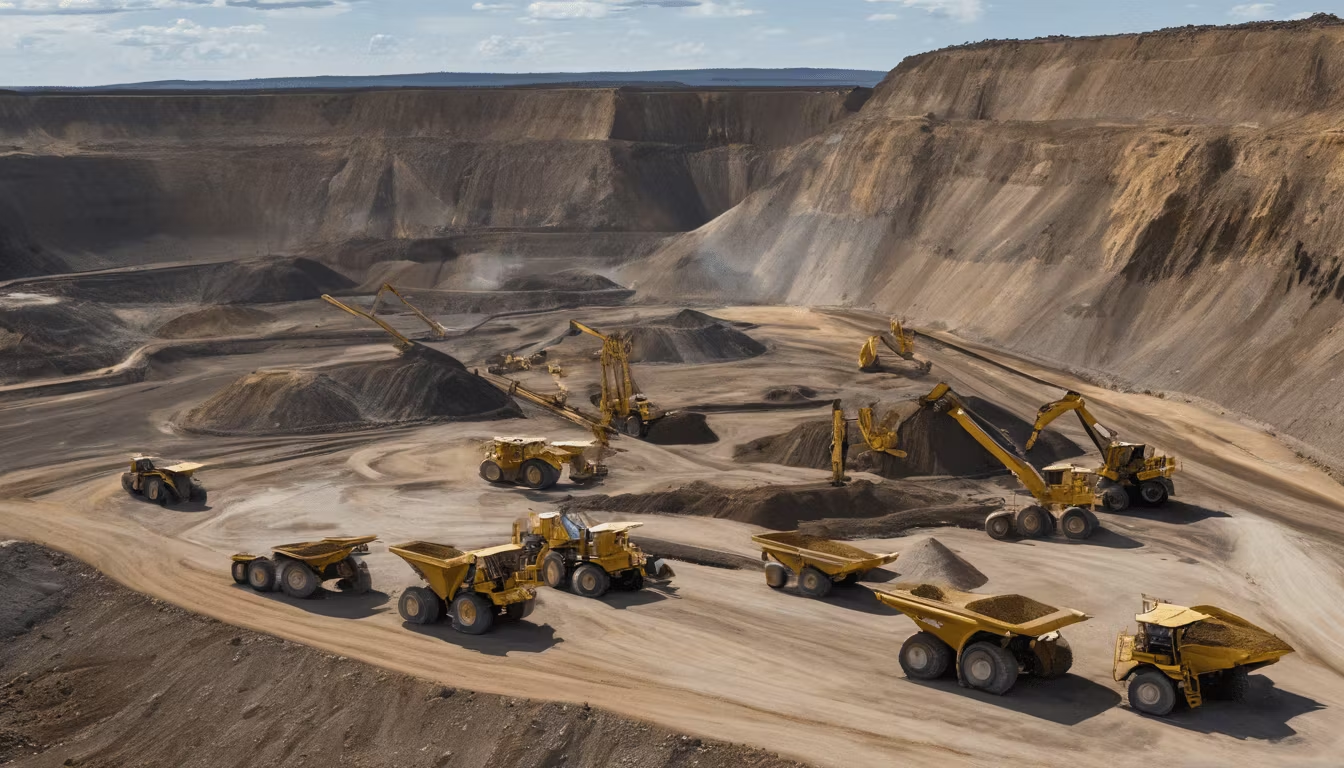
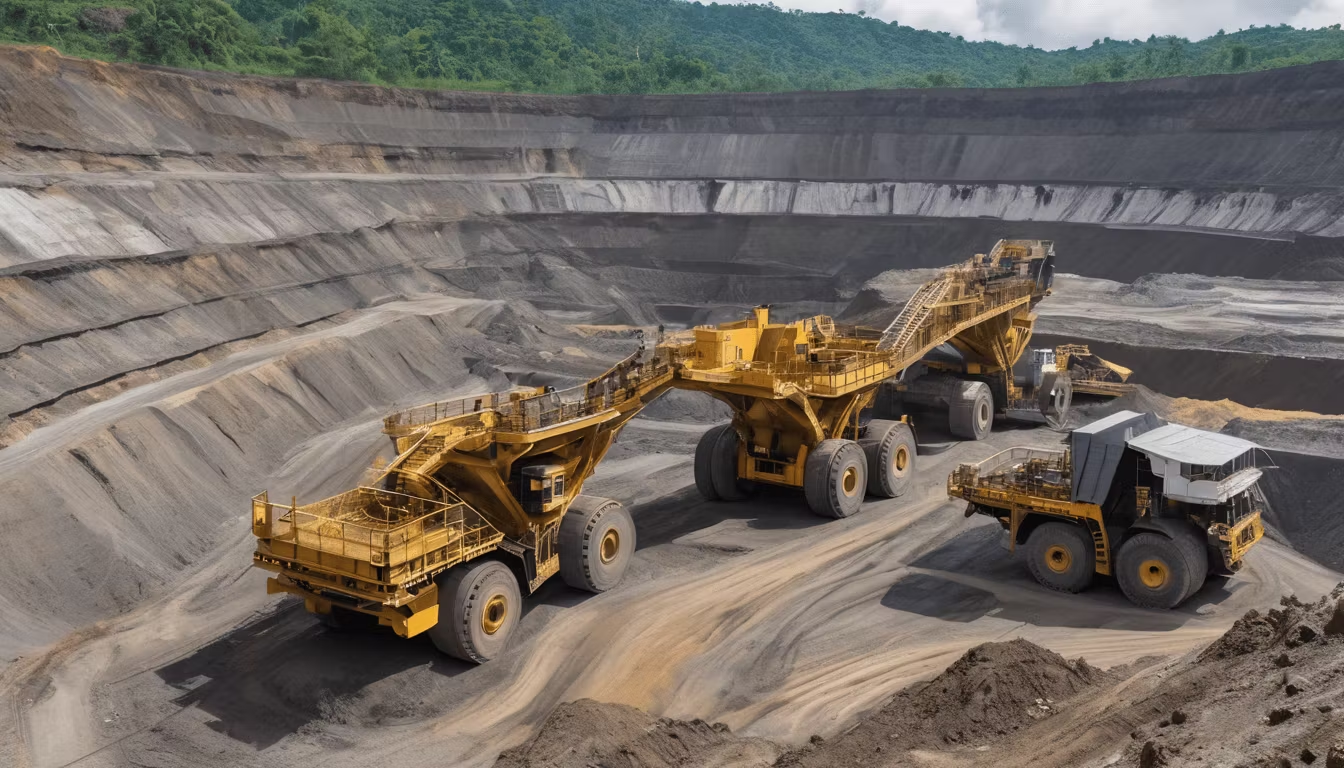
Selecting a reliable silica sand supplier proves critical for ensuring consistent water treatment performance and operational success. CV Indoalam Mineral Persada, a leading Indonesian mineral trading company, specializes in providing premium-grade silica sand meeting international quality standards for water treatment applications. With direct sourcing from carefully managed mining operations across Sulawesi, Kalimantan, and Maluku regions, Indoalam delivers SiO2 99.74% purity with multiple mesh grades (8-200) specifically selected for filtration media applications.
As a fully licensed operator with IUP OPK certification, SUCOFINDO laboratory testing, and RKAB approval, Indoalam guarantees that all filtration media meets rigorous quality specifications and international standards. The company's annual capacity of 2.5 million metric tons ensures reliable supply for facilities ranging from small commercial operations to large industrial complexes. Whether requiring 100 metric ton trial shipments for system testing or multi-year supply contracts exceeding 2.5 million metric tons annually, Indoalam provides flexible sourcing solutions and consistent quality assurance.
Indoalam's deep expertise in water treatment filtration, combined with direct-from-mine sourcing eliminating middlemen markups, positions the company as an ideal partner for facilities seeking premium filtration media at competitive pricing. The company's proven track record supplying major industrial parks, cement manufacturers, and water treatment facilities across Indonesia demonstrates commitment to reliability and customer success.
Conclusion: Optimizing Your Water Filtration System
Silica sand remains the gold standard in water treatment filtration media, offering superior performance, proven reliability, and cost-effectiveness across municipal, industrial, and commercial applications. Successful filtration system design requires careful analysis of raw water characteristics, thoughtful selection of appropriate mesh grades and filter bed configuration, rigorous adherence to quality standards, and diligent operational maintenance.
By understanding the technical principles governing filtration media performance and applying best practices in system design and operation, water treatment professionals can achieve excellent treated water quality while optimizing operational costs and equipment lifespan. Whether addressing challenging surface water turbidity, industrial process water recycling, or specialized water purification requirements, properly selected and maintained silica sand filtration systems deliver consistent, reliable performance.
For facilities in Indonesia and international markets seeking premium-grade silica sand filtration media, contact CV Indoalam Mineral Persada to discuss your specific requirements. Indoalam's expert technical team works with your engineers to specify optimal filtration media grades, provide comprehensive quality documentation, and ensure reliable supply supporting your water treatment success.