Silica Sand for Solar Panels: Essential Guide to PV Manufacturing

Introduction: Silica Sand as the Foundation of Solar Energy
The global solar energy revolution is accelerating, with photovoltaic (PV) installations reaching record levels each year. Yet behind every efficient solar panel lies a critical material that often goes unnoticed: high-purity silica sand. As demand for renewable energy continues to surge, the solar manufacturing industry requires increasingly sophisticated raw materials to achieve the efficiency and durability standards that modern markets demand.
Silica sand, also known as quartz sand, is far more than construction fill or industrial abrasive. In solar panel manufacturing, it serves as a fundamental component in multiple production stages, directly influencing the performance characteristics and longevity of photovoltaic systems. Understanding the connection between material quality and solar output has become essential knowledge for procurement professionals, manufacturing engineers, and project developers in the renewable energy sector.
This comprehensive guide explores the critical role of silica sand in photovoltaic production, the specific quality requirements that distinguish solar-grade materials, and how strategic sourcing decisions impact your production costs and output quality.
The Role of Silica Sand in Photovoltaic Manufacturing
Direct Applications in Solar Panel Production
Silica sand serves several critical functions in the PV manufacturing process. The primary application is as a raw material for silicon purification and crystalline solar cell production. Manufacturers use high-purity quartz sand to produce metallurgical-grade silicon, which is then further refined into solar-grade silicon for wafer manufacturing.
Beyond direct silicon production, silica sand appears in multiple supporting roles within the solar panel ecosystem. It functions as a key component in glass manufacturing for solar panel covers—the transparent glass sheets that protect silicon cells while optimizing light transmission. Float glass production for photovoltaic applications requires exceptionally pure silica sand to ensure optical clarity and minimize light absorption losses.
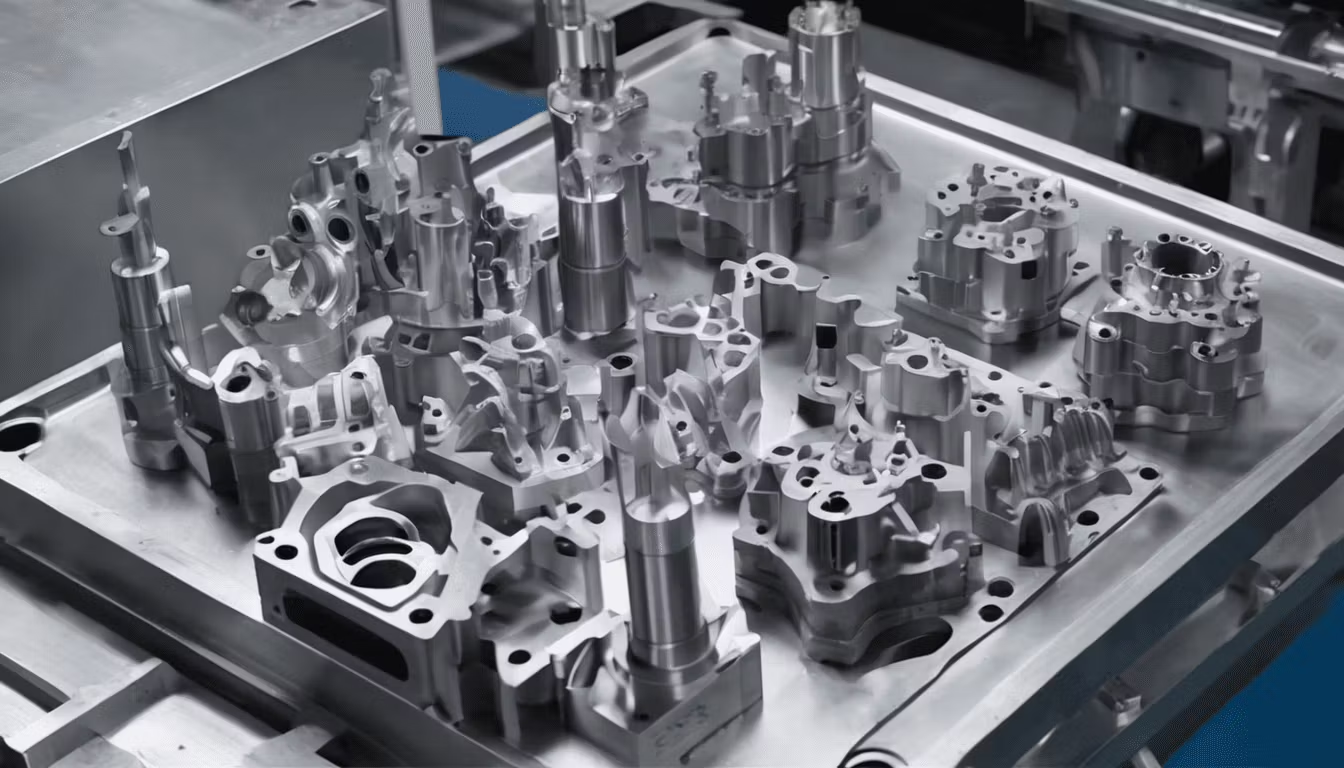
The manufacturing process also employs silica sand in casting and molding applications for aluminum frames and mounting structures. As solar installations grow more sophisticated, the auxiliary components demand equally stringent material specifications as the panels themselves.
Why Solar Grade Silica Differs from Standard Industrial Sand
Not all silica sand meets the demanding requirements of solar panel manufacturing. Standard industrial quartz sand, suitable for construction or general manufacturing, contains impurities and compositional variations that would compromise solar efficiency metrics.
Solar-grade silica sand must achieve several critical specifications:
- SiO₂ Purity: 99.5% minimum — Industry leaders often specify 99.74% or higher to eliminate trace contaminants that reduce electrical efficiency
- Iron Content: <100 ppm — Iron impurities create unwanted electronic pathways that increase resistive losses
- Aluminum and Titanium: Strictly limited to prevent color discoloration and optical property degradation
- Particle Size Distribution: Precise mesh grades (typically 100-200) ensure consistent processing behavior in silicon refineries
- Moisture Content: <0.1% — Excess moisture interferes with high-temperature silicon processing stages
- Heavy Metals & Radioactive Elements: Must be absent or present only in trace, certified quantities
These specifications are far more stringent than standard industrial applications. Achieving them requires advanced beneficiation techniques, rigorous quality control, and supply chain transparency from ore source through final delivery.
Global Solar Panel Market Demand and Silica Sand Supply
Market Growth Dynamics
The International Energy Agency projects that solar capacity will triple between 2022 and 2027, reaching over 2,600 GW cumulatively. This explosive growth translates directly into exponential demand for high-quality raw materials. China currently dominates silicon production and accounts for approximately 80% of global wafer manufacturing, creating intense competition for premium-grade silica sand supplies.
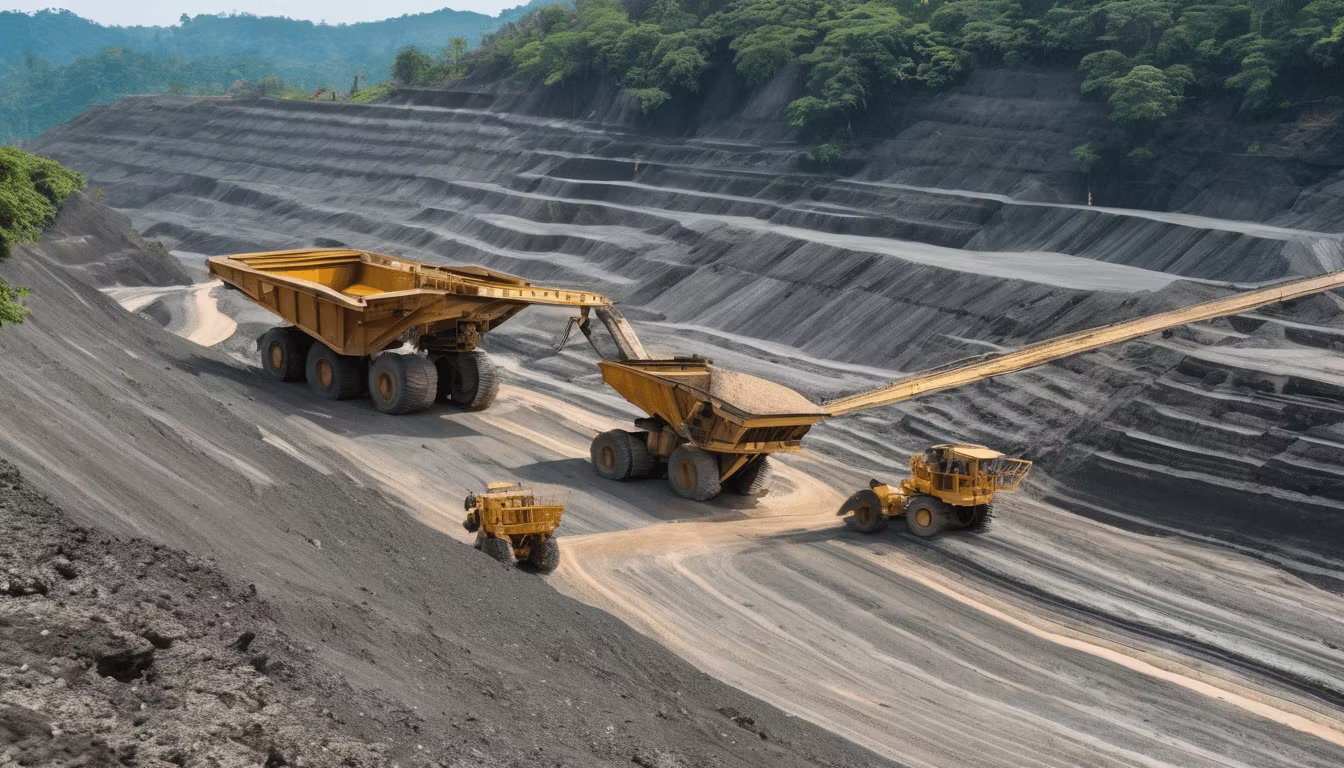
Southeast Asia, particularly Indonesia, has emerged as a critical source region for photovoltaic material supplies. Indonesian mineral deposits offer geographic advantages, established mining infrastructure, and favorable cost structures that appeal to silicon manufacturers seeking supply chain diversification away from traditional sources.
Supply Chain Challenges and Solutions
The solar manufacturing supply chain faces increasing scrutiny regarding material sourcing transparency and sustainability. Major panel manufacturers now require certified traceability documentation proving that silica sand originates from responsibly managed operations with proper environmental oversight.
Strategic buyers are shifting away from spot market purchases toward long-term partnership models with verified suppliers. This trend favors established mining companies with proper licensing, laboratory certification, and demonstrated supply reliability. Direct sourcing from mining operations, rather than through multiple trading intermediaries, reduces cost and ensures quality consistency that end-product manufacturers increasingly demand.
Technical Specifications for Solar-Grade Quartz Sand
Chemical Composition Standards
Solar-grade quartz sand specifications vary slightly between major silicon manufacturers, but most reference international standards including ASTM C119 (crushed quartz sand) and customized internal specifications. The fundamental requirement across all manufacturers is exceptional purity combined with minimal trace element contamination.
At Indoalam, our silica sand products consistently achieve 99.74% SiO₂ purity, positioning them at the premium end of industrial specifications. This level of purity is verified through SUCOFINDO laboratory testing, Indonesia's most recognized independent testing authority, ensuring that every shipment meets international buyer requirements without additional beneficiation costs.
Critical impurity limits for solar applications include:
- Iron (Fe₂O₃): <50-100 ppm (varies by manufacturer preference)
- Aluminum (Al₂O₃): <30-50 ppm
- Titanium (TiO₂): <20 ppm
- Calcium (CaO): <50 ppm
- Magnesium (MgO): <30 ppm
- Potassium + Sodium: <100 ppm combined
Particle Size and Distribution
Mesh grade selection directly impacts processing efficiency in silicon refineries. Solar manufacturers typically specify grades between 100-200 mesh (150-75 microns), though some specialized applications request narrower distributions or custom sizing.
Consistent particle size distribution (PSD) reduces processing variance and minimizes dust generation during material handling. Indoalam supplies multiple mesh grades with documented particle size analysis, enabling customers to select specifications optimized for their specific processing equipment.
Sourcing Strategy: Direct Mining vs. Intermediary Procurement
Advantages of Direct Source Procurement
Purchasing directly from mining operations rather than through trading intermediaries offers substantial advantages for solar manufacturers and component suppliers. Direct sourcing eliminates margin layering that can increase material costs by 15-25% while introducing unnecessary supply chain complexity.
More importantly, direct relationships with licensed mining operations provide access to product traceability documentation, production control oversight, and quality consistency that multiple intermediary transactions cannot guarantee. For solar manufacturers facing increasing ESG (Environmental, Social, Governance) scrutiny, direct sourcing from IUP OPK-licensed operations demonstrates responsible supply chain management to stakeholders and regulatory bodies.
Flexibility and Scalability in Supply Agreements
Leading solar manufacturers operate across multiple facility scales, from pilot production runs testing new technologies through established mega-factories. Effective supply partners must accommodate this range without penalizing smaller initial volumes or creating artificial minimum purchase constraints.
Indoalam's supply model supports customers from initial trial shipments of 100 metric tons through multi-year contracts exceeding 2.5 million metric tons annually. This flexibility enables manufacturers to validate material performance in their specific processes before committing to large-volume relationships, reducing procurement risk for new supplier evaluations.
Quality Assurance and Certification
Laboratory Testing and Third-Party Verification
Solar-grade material purchases must be supported by independent laboratory analysis confirming specification compliance. SUCOFINDO testing, Indonesia's recognized independent testing authority, provides the analytical validation that international buyers require. All Indoalam silica sand shipments include SUCOFINDO laboratory certificates detailing chemical composition, particle size distribution, moisture content, and heavy metal screening.
This third-party verification eliminates buyer concerns about self-certification bias and provides the documentary evidence needed for quality assurance departments, procurement auditors, and regulatory compliance teams. For companies manufacturing panels destined for grid-connected utility applications or rooftop installations, certified material traceability represents essential due diligence documentation.
Compliance with International Standards
Beyond Indonesian regulatory requirements (IUP OPK licensing and RKAB approval), Indoalam's operations maintain alignment with international mineral trading standards. Our company practices emphasize supply chain transparency, environmental responsibility, and professional integrity that resonate with Western industrial buyers accustomed to strict compliance frameworks.
Cost Optimization Without Quality Compromise
Competitive Pricing in the Indonesian Supply Market
Indonesian silica sand benefits from lower extraction costs compared to traditional Australian or Norwegian sources, combined with proximity to Asian silicon manufacturing hubs. This geographic and cost advantage translates into competitive pricing while maintaining quality specifications that satisfy discerning industrial customers.
However, not all Indonesian suppliers offer equivalent value. Smaller trading operations lacking proper licensing, laboratory capabilities, and consistent supply infrastructure often compete primarily on price, creating hidden risks through inconsistent quality, supply interruptions, or regulatory complications that far exceed any margin savings.
Long-Term Value Through Supply Reliability
Solar manufacturing operates on tight production schedules where material delays cascade into finished goods production delays and customer delivery commitments. Establishing relationships with geographically diversified, properly licensed suppliers reduces supply chain vulnerability while maintaining cost competitiveness.
Indoalam's sourcing regions span Sulawesi (Morowali, Konawe), Kalimantan, and Maluku (Halmahera), providing geographic redundancy that protects against localized disruptions. This diversified sourcing base ensures reliable fulfillment of large-volume contracts even during regional operational challenges.
Expanding Applications: Beyond Traditional Silicon Production
Glass Substrate Manufacturing for Advanced PV Technologies
Emerging photovoltaic technologies, including perovskite solar cells, thin-film photovoltaics, and next-generation tandem cell architectures, require specialized glass substrates with enhanced optical and thermal properties. These applications demand even higher purity silica sand than traditional silicon wafer production, positioning premium suppliers as critical partners in technology advancement.
Supporting Industries in the Solar Supply Chain
Beyond direct panel manufacturing, silica sand supports numerous adjacent industries within the broader solar ecosystem. Aluminum frame manufacturers (producing mounting structures), electrical connector producers, and inverter housing manufacturers all utilize high-quality quartz sand in their production processes. As solar installations become more sophisticated, demand for quality materials extends across the entire supply ecosystem.
Sustainability and Environmental Considerations
Responsible Mining Practices
The renewable energy industry's commitment to sustainability extends beyond final product performance to encompass responsible raw material sourcing. Buyers increasingly scrutinize mining operations for environmental stewardship, habitat protection, and community impact mitigation.
Indoalam's IUP OPK licensing and RKAB (Rencana Kerja dan Anggaran Biaya) approval represent compliance with Indonesia's comprehensive mining regulations, including environmental protection requirements, reclamation obligations, and community benefit agreements. These regulatory frameworks ensure that material sourcing supports both production efficiency and environmental responsibility.
Supply Chain Transparency and Impact Reduction
Modern supply chain management increasingly emphasizes material origin documentation and environmental impact metrics. Sourcing from established, regulated mining operations rather than artisanal or unregistered producers ensures that your procurement decisions align with corporate sustainability commitments and ESG reporting requirements.
Getting Started: Procurement Guidelines for Solar Manufacturers
Specification Development and Testing Protocols
Before initiating procurement relationships, solar manufacturers should establish clear internal specifications based on their specific processing equipment, target efficiency metrics, and quality assurance requirements. These specifications should be developed collaboratively with your manufacturing engineering and quality assurance teams to ensure alignment with production realities.
Request trial shipments from potential suppliers, then conduct comprehensive testing within your actual production environment. Laboratory analyses are essential, but real-world performance in your specific processing conditions ultimately determines material suitability.
Supplier Evaluation and Partnership Development
Evaluate potential suppliers across multiple dimensions: technical capability (meeting specifications), supply reliability (consistent delivery), geographic positioning (sourcing redundancy), and cultural alignment (professional standards and communication). Request references from existing customers in your industry and verify their satisfaction with both product quality and service consistency.
How Indoalam Supports Your Solar Manufacturing Operations
CV Indoalam Mineral Persada brings specialized expertise to silica sand supply specifically within the context of Asian industrial manufacturing. Our direct mining relationships in Sulawesi, Kalimantan, and Maluku provide access to high-quality reserves while our proper licensing and laboratory certification ensure specification compliance without compromise.
We understand that solar manufacturers require both technical excellence and operational reliability. Our supply model accommodates the full spectrum of customer needs, from initial trial shipments enabling careful supplier evaluation through large-scale multi-year contracts supporting established production facilities.
Whether you're a silicon refinery optimizing raw material inputs, a glass manufacturer producing solar panel covers, or a foundry supplying aluminum components for mounting structures, Indoalam can serve as your reliable source for high-purity silica sand that meets the exacting demands of photovoltaic manufacturing.
Our commitment extends beyond product delivery to partnership development. We invest time in understanding your specific requirements, developing customized supply agreements aligned with your operational realities, and maintaining transparent communication throughout our relationship.
Conclusion: Strategic Material Sourcing for Solar Innovation
The solar energy revolution demands increasingly sophisticated industrial materials, and silica sand represents one of the most critical inputs in photovoltaic manufacturing. High-purity quartz sand sourced from properly managed operations with comprehensive quality verification has become essential to competitive advantage in solar manufacturing.
Strategic procurement decisions regarding material sourcing impact not only production costs but also supply reliability, quality consistency, regulatory compliance, and alignment with sustainability commitments. Choosing suppliers based solely on price eliminates the value-add services, technical expertise, and operational reliability that distinguished partners provide.
As solar energy continues its exponential growth trajectory, partnerships with reliable, qualified suppliers become increasingly valuable. Indoalam's combination of technical capability, regulatory compliance, supply chain transparency, and customer-focused service positioning makes us an ideal partner for solar manufacturers seeking competitive advantage through strategic material sourcing.
Ready to optimize your silica sand sourcing? Contact Indoalam today to discuss your specific requirements, request technical specifications, or arrange trial shipments. Our team is prepared to develop customized supply solutions that enhance your manufacturing efficiency while supporting your sustainability and quality objectives. Let's build the renewable energy future together.