Silica Sand Shipping: Container vs Bulk Carrier Logistics Guide
Introduction: Choosing the Right Silica Sand Shipping Method
For B2B buyers and suppliers in the mining and mineral trading industry, selecting the optimal shipping method for silica sand is a critical decision that impacts both profitability and operational efficiency. Whether you're sourcing high-purity SiO2 sand for glass manufacturing, ceramics production, or industrial applications, the choice between containerized and bulk carrier transport can make a significant difference in your supply chain costs and delivery timelines.
The mineral logistics sector has evolved considerably, and modern operations require a nuanced understanding of when to use each transport method. This comprehensive guide explores the advantages, disadvantages, and practical applications of both container and bulk carrier shipping for silica sand, helping you make informed decisions for your business.
Understanding Silica Sand Specifications and Shipping Requirements
Quality Standards for Global Trade
Before evaluating shipping methods, it's essential to understand the specifications that drive logistics decisions. High-quality silica sand typically features SiO2 content of 99.74% and is available in multiple mesh grades ranging from 8 to 200. These specifications require careful handling to maintain quality throughout the supply chain.
Industrial buyers—including glass manufacturers producing float glass and solar panels, ceramic tile producers, and foundries—demand consistent quality that only proper logistics can ensure. Moisture content, particle size distribution, and iron oxide levels must remain within specification from mine to final destination.
Volume Considerations and Annual Capacity
The volume of silica sand you're shipping significantly influences the cost-effectiveness of your chosen logistics method. Operations handling 2.5 million metric tons annually must develop scalable logistics strategies that can accommodate both trial shipments of 100 metric tons and sustained contracts of multiple million tons per year.
Container Shipping for Silica Sand: Advantages and Applications
When to Choose Container Transport
Container shipping remains the preferred method for several specific scenarios in silica sand logistics. This approach is ideal when:
- Smaller volumes are required: Shipments under 500 metric tons are typically more economical via 20ft and 40ft containers than securing partial bulk vessel capacity.
- Destination ports lack bulk handling facilities: Smaller ports and inland terminals often lack the specialized equipment required for bulk discharge, making containers the only practical option.
- Frequent, regular shipments are needed: Container lines offer more frequent service schedules than bulk vessels, reducing inventory holding periods.
- High-value specialty grades are involved: Premium silica sand for electronics or specialty glass benefits from the controlled environment and lower contamination risk of containerization.
- Multiple destinations require consolidation: Container freight stations can break bulk for distribution to multiple end-users without additional handling costs.
Container Specifications and Packing Methods
Silica sand is typically shipped in 20ft (TEU) or 40ft (FEU) containers, with each 40ft container accommodating approximately 24-28 metric tons of sand depending on moisture content and density. Professional packing involves:
- Lining containers with kraft paper to prevent moisture migration
- Using desiccant packets for overseas shipments where humidity is a concern
- Securing cargo with lashing belts to prevent shifting during transit
- Applying proper labeling and documentation for customs clearance
Cost Structure for Container Shipping
Container freight costs comprise several components: base ocean freight rates (typically $800-2,500 per TEU depending on route and season), terminal handling charges ($100-300 per container), documentation fees, and inland transportation. For a 40ft container carrying 25 metric tons, the all-in logistics cost ranges from $1,200-3,500, translating to $48-140 per metric ton depending on destination and service level.
While these per-metric-ton costs may seem high, they prove economical for specialty grades or small-volume commitments where bulk vessel efficiency cannot be achieved.
Bulk Carrier Shipping: Economy of Scale for Large Volumes
The Economics of Bulk Vessel Transport
For larger shipments exceeding 1,000 metric tons, bulk carrier vessels offer substantially lower per-metric-ton costs. A Handymax bulk vessel (capacity 35,000-40,000 deadweight tons) can transport silica sand at costs as low as $15-45 per metric ton depending on the shipping route, fuel surcharges, and current market conditions.
This dramatic cost advantage—typically 60-75% lower than container shipping—makes bulk carriers the preferred method for sustained, high-volume supply agreements. Major nickel smelters, cement manufacturers, and industrial parks relying on regular silica sand deliveries almost exclusively utilize bulk vessel transport.
Bulk Handling Infrastructure Requirements
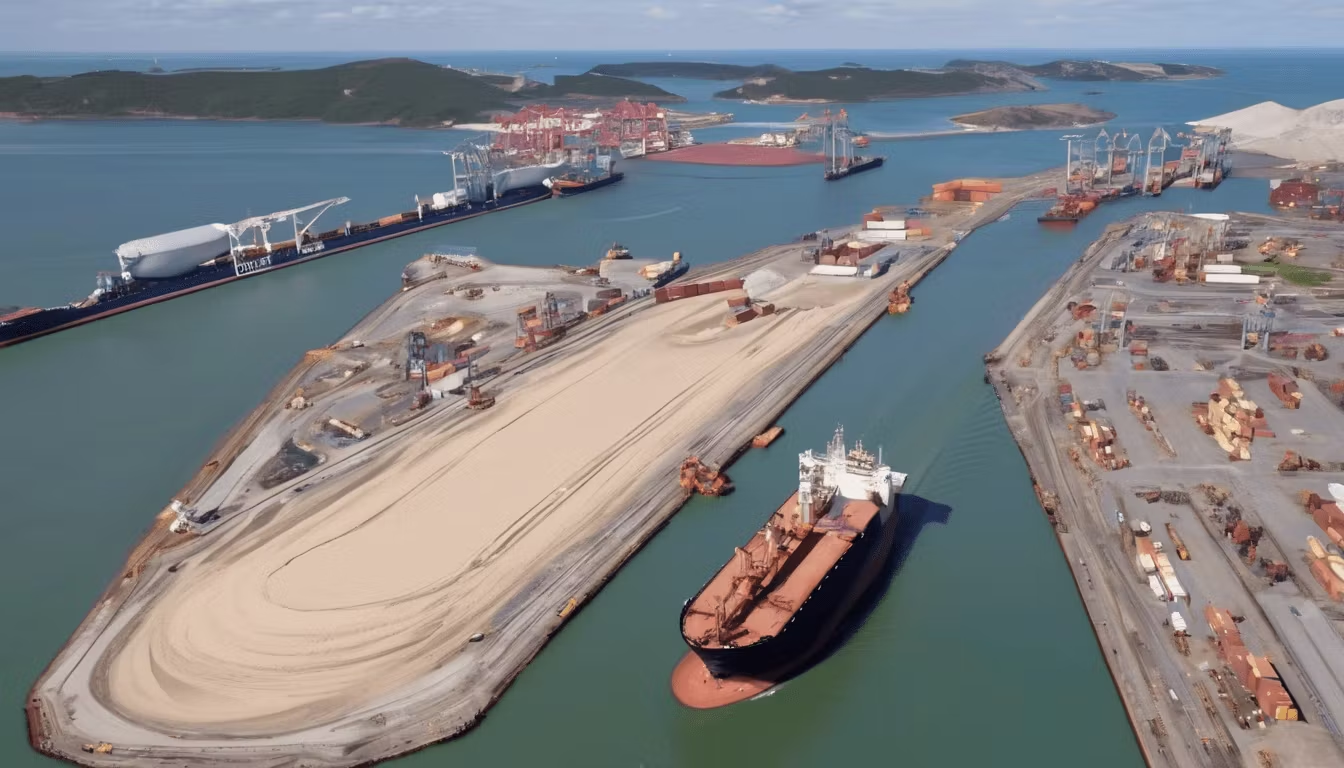
Bulk carrier shipping demands specific port infrastructure at both origin and destination. Origin ports require:
- Shiploaders or conveyor systems: Mechanized loading equipment capable of loading 500-2,000 metric tons per hour
- Stockpile management: Weather-protected or covered storage to maintain product quality
- Draft depth: Adequate water depth to accommodate Handymax and Panamax vessels
- Environmental controls: Dust suppression systems and water management infrastructure
Destination ports require equivalent discharge capabilities—typically mobile crane systems, grab unloaders, or pneumatic discharge equipment depending on local infrastructure.
Specialized Considerations for Silica Sand Bulk Shipping
Silica sand presents unique challenges for bulk shipping. The fine particle size means:
- Dust generation: Proper ventilation and dust suppression during loading/discharge prevents environmental violations and product loss
- Cargo hold preparation: Vessels must have clean holds free from previous cargo residue to maintain SiO2 purity specifications
- Moisture management: Silica sand absorbs moisture during transit; sealed holds or desiccant treatment may be required for sensitive applications
- Weather protection: Open-hatch vessels require cargo covers to prevent rain contamination
Comparative Analysis: Container vs Bulk Carrier Decision Matrix
Cost Comparison Across Volume Ranges
The inflection point where bulk carrier shipping becomes more economical than containers typically occurs around 800-1,200 metric tons. Here's how the comparison breaks down:
- 100-300 MT: Containers are 20-30% cheaper (approximately $80-120 per MT all-in)
- 300-800 MT: Containers remain competitive if consolidation is possible; bulk vessel costs become viable for direct shipments
- 800-2,000 MT: Breakeven zone; bulk vessels offer slight advantages if destination infrastructure supports bulk discharge
- 2,000+ MT: Bulk vessels are 60-70% cheaper per metric ton
Service Level and Transit Time Considerations
Container lines typically offer scheduled services with transit times of 14-35 days depending on route. Bulk vessel scheduling is more flexible but less predictable—charter times can vary from 20-60 days depending on vessel availability and port congestion.
For industries with just-in-time manufacturing requirements (such as glass producers), container predictability may justify the premium cost. For bulk consumers with adequate working inventory, bulk vessel economy outweighs scheduling flexibility.
Quality Preservation and Risk Assessment
Both methods preserve silica sand quality when properly executed. Containers offer better protection against environmental contamination and moisture ingress, particularly valuable for premium grades. Bulk vessels require more rigorous hold preparation but ultimately protect cargo equally well in sealed vessels.
Insurance and liability considerations favor containers slightly—damage claims are easier to substantiate and settle—but in practice, properly managed bulk shipments experience minimal quality degradation.
Regulatory, Compliance, and Documentation Factors
Indonesian Export Regulations and Certification
As a licensed mineral supplier with IUP OPK authorization and SUCOFINDO testing certification, compliance with Indonesian export requirements is non-negotiable. Both container and bulk shipments must include:
- Mineral export permits and regulatory documentation
- SUCOFINDO lab test certificates confirming SiO2 specifications
- Packing lists and commercial invoices
- Origin certificates for preference-based trade agreements
- Environmental compliance documentation
Container shipments may require additional customs procedures at loading and discharge ports, while bulk vessels often qualify for expedited processing if proper documentation precedes the shipment.
International Standards and Port Authority Requirements
Destination countries increasingly require compliance with ISO standards for mineral specifications, environmental documentation, and chain-of-custody records. Both shipping methods support these requirements equally; the logistics method itself doesn't affect compliance capability.
Practical Recommendations for Different Customer Segments
For Glass Manufacturers and Float Glass Producers
These high-volume consumers typically benefit from bulk vessel contracts for base supply (1,500-5,000 MT per shipment) with supplemental container shipments (200-500 MT) for inventory management and specification variations. This hybrid approach optimizes cost while ensuring supply flexibility.
For Ceramic and Tile Producers
Mid-volume users (400-1,200 MT per order) should evaluate container consolidation options through freight forwarders. Grouping multiple smaller orders into full container loads often reduces per-metric-ton costs below partial bulk vessel rates.
For Foundries and Industrial Processors
These operations typically use specialty grades and smaller volumes (100-400 MT). Container shipping provides better price predictability and eliminates minimum volume commitments that bulk vessel charter brokers often impose.
Future Trends in Mineral Logistics and Silica Sand Shipping
Sustainability and Environmental Considerations
The maritime industry's IMO 2030/2050 carbon reduction targets are gradually shifting costs. Bulk vessels offer inherent environmental advantages (lower carbon per metric ton) and increasingly qualify for preferential rates under decarbonization programs. This trend will further favor bulk shipping for high-volume contracts.
Digitalization and Supply Chain Transparency
Blockchain-based documentation and IoT tracking are becoming standard in mineral supply chains. Both shipping methods integrate equally well with these technologies, though bulk vessel tracking still lags container technology adoption.
Conclusion: Strategic Shipping Selection for Silica Sand Supply
The choice between container and bulk carrier shipping for silica sand isn't one-size-fits-all. Volume requirements, destination infrastructure, budget constraints, and supply chain flexibility all influence the optimal decision for your business.
For trial shipments and specialty grades, containers excel. For sustained, high-volume supply agreements, bulk vessels deliver unmatched economy. Leading suppliers often employ both methods strategically—using containers for market development and bulk vessels for mature supply relationships.
At CV Indoalam Mineral Persada, we leverage both shipping methods to serve diverse customer requirements. Whether you're sourcing 100 metric tons for initial product evaluation or 2.5 million tons annually for continuous operations, our logistics expertise ensures your silica sand arrives on-spec, on-time, and cost-effectively.
Our fully licensed operations (IUP OPK, SUCOFINDO-tested) across premium sourcing regions—Sulawesi's Morowali and Konawe deposits, Kalimantan, and Halmahera—guarantee consistent quality regardless of shipping method.
Ready to optimize your silica sand logistics? Contact us to discuss your specific shipping requirements, volume commitments, and destination infrastructure. Our logistics specialists will recommend the most cost-effective and reliable shipping strategy for your business.