Silica Sand for Sandblasting: Grades, Safety & Best Practices

Silica Sand for Sandblasting: Grades, Safety & Best Practices
Sandblasting remains one of the most effective surface preparation methods in industrial manufacturing, shipbuilding, automotive restoration, and metal fabrication. However, selecting the right abrasive blasting sand is critical for both operational efficiency and worker safety. This comprehensive guide explores silica sand specifications, safety considerations, and industry best practices for sandblasting applications.
Understanding Silica Sand for Sandblasting Applications
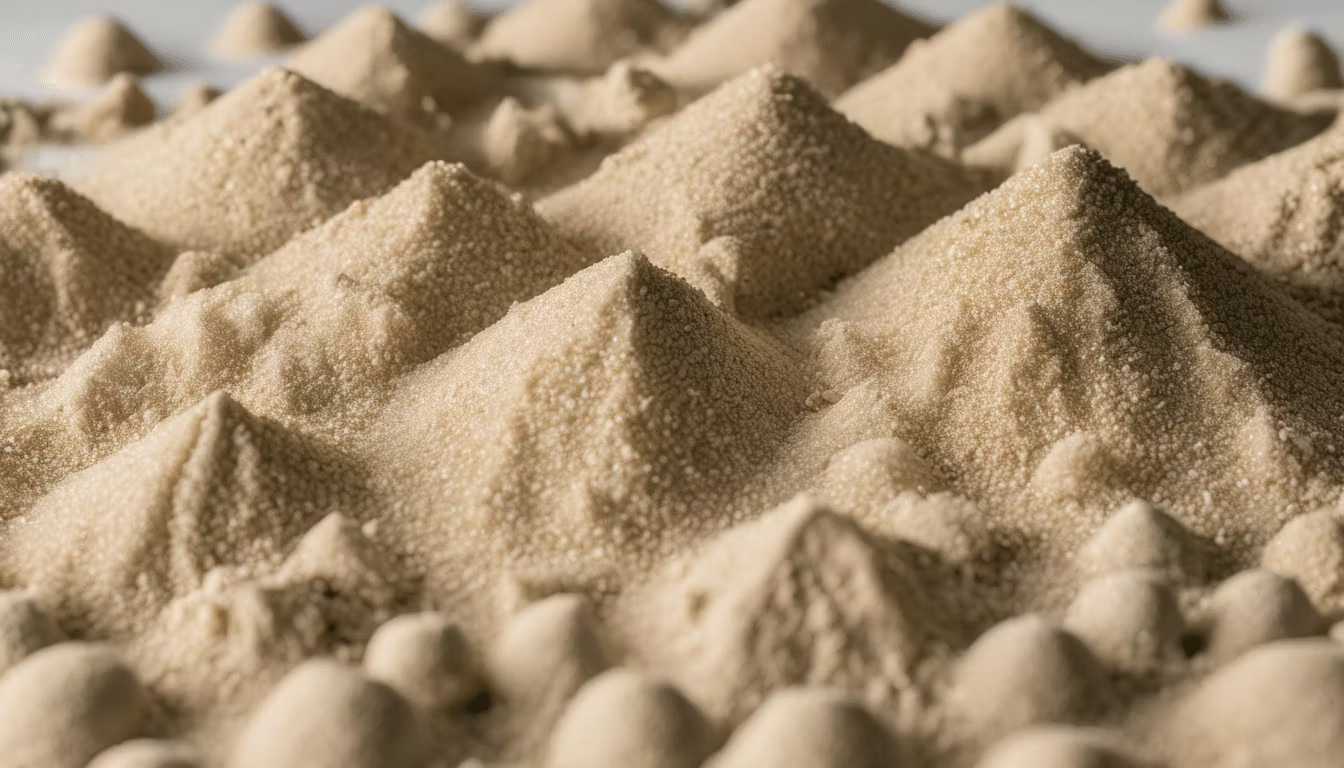
Silica sand, composed primarily of silicon dioxide (SiO2), has been the traditional abrasive material for decades. Its hardness, angular particle structure, and cost-effectiveness made it the default choice for surface preparation across multiple industries. When properly graded and sourced from licensed suppliers, silica sand delivers consistent results in removing rust, old coatings, scale, and contaminants from metal surfaces.
At CV Indoalam Mineral Persada, we supply industrial-grade silica sand with SiO2 content exceeding 99.74%, meeting stringent quality standards required by fabrication shops, foundries, and manufacturing facilities throughout Indonesia and internationally. Our SUCOFINDO-tested materials ensure consistency and reliability for high-volume sandblasting operations.
Chemical Composition and Purity Standards
High-quality silica sand for sandblasting must meet specific purity requirements. The ideal composition includes:
- SiO2 content: 95-99.8% minimum
- Iron oxide (Fe2O3): Less than 0.5%
- Aluminum oxide (Al2O3): Less than 1.5%
- Moisture content: Below 0.5%
- Clay and silt: Minimal presence
These specifications prevent equipment clogging, ensure consistent blasting velocity, and reduce dust generation during application. Impurities can compromise surface finish quality and accelerate equipment wear, making supplier certification essential.
Silica Sand Grades and Mesh Sizes for Sandblasting
Different sandblasting applications require different particle sizes. Understanding mesh grades is fundamental to achieving optimal results and cost efficiency.
Mesh Size Classifications
Mesh classification indicates particle size, measured in micrometers or by mesh count (openings per linear inch). Common grades for abrasive blasting sand include:
- 8-16 Mesh: Coarse grade; rapid material removal; heavy rust and scale; aggressive cutting; steel fabrication and shipbuilding
- 16-30 Mesh: Medium-coarse; balanced removal and finish; general fabrication; surface preparation before painting or coating
- 30-60 Mesh: Medium; fine finishing; precision work; aerospace components; automotive surfaces
- 60-120 Mesh: Fine grade; delicate materials; finishing work; glass and ceramic applications
- 120-200 Mesh: Very fine; ultra-smooth finishes; precision cleaning; computer electronics and optical components
Selecting the appropriate mesh grade directly impacts productivity, material consumption, and final surface quality. Coarser grades remove material quickly but leave visible micro-scratches, while finer grades produce smoother finishes at slower removal rates.
Application-Specific Recommendations
Industrial buyers should match mesh grades to their specific requirements:
Heavy Industrial Applications: Shipyards, bridge fabrication, and heavy machinery manufacturing typically use 8-20 mesh silica sand for rapid substrate preparation. The aggressive cutting action efficiently removes thick rust layers and old coatings.
General Metal Fabrication: Most job shops and foundries operate effectively with 16-40 mesh abrasive blasting sand, balancing productivity with acceptable surface finish for primer application.
Precision Manufacturing: Automotive components, aerospace parts, and precision castings require 40-120 mesh materials to achieve surface cleanliness specifications (typically SSPC-AB 2.5 or better) without excessive substrate removal.
Safety Protocols and Regulatory Compliance
Crystalline silica dust poses serious respiratory health risks, including silicosis, lung cancer, and chronic obstructive pulmonary disease (COPD). Modern sandblasting operations must implement comprehensive safety measures.
Respiratory Protection and Engineering Controls
Occupational safety standards in most jurisdictions now restrict crystalline silica exposure. Critical safety measures include:
- Enclosed Blasting Cabinets: Contained systems with integrated dust collection minimize airborne particle exposure
- HEPA Filtration: High-efficiency particulate air filters capture ultrafine silica particles before air release
- Respiratory Equipment: PAPR (Powered Air-Purifying Respirator) systems with appropriate cartridges for workers in open-air blasting
- Wet Blasting Methods: Adding water to the abrasive stream suppresses dust generation significantly
- Local Exhaust Ventilation: Properly designed ductwork directing dust away from breathing zones
Workers should undergo regular health screening, including baseline and periodic spirometry testing, to monitor respiratory function. Many operations now transition toward alternative abrasives like garnet, glass beads, or steel shot to reduce silica exposure, though silica sand remains cost-effective for many applications when proper controls are implemented.
Regulatory Requirements
Indonesia's occupational health regulations, aligned with international standards, establish permissible exposure limits (PEL) for crystalline silica. Employers must:
- Conduct exposure assessments in sandblasting work areas
- Implement engineering controls as primary protection
- Provide appropriate PPE when engineering controls are insufficient
- Maintain exposure records and worker health documentation
- Provide safety training to all personnel handling silica sand
CV Indoalam supplies materials from fully licensed operations with IUP OPK certification and SUCOFINDO testing, ensuring traceability and compliance documentation required by regulatory bodies.
Best Practices for Sandblasting Operations
Equipment Optimization
Proper equipment setup maximizes efficiency while minimizing waste and health risks. Key considerations include:
Blast Pressure Settings: Operating pressures typically range from 40-100 PSI, depending on substrate hardness and desired finish. Higher pressure increases removal rate but generates more dust and consumes abrasive faster.
Nozzle Selection: Ceramic or tungsten carbide nozzles withstand silica sand abrasion better than steel alternatives. Proper nozzle orifice sizing (typically 0.25-0.375 inches) maintains optimal velocity and material flow.
Abrasive Feed Rate: Consistent material metering prevents equipment stress and ensures uniform surface preparation. Gravity-fed hoppers work well for continuous operations; pressure vessels suit intermittent or portable applications.
Surface Preparation Techniques
Effective sandblasting requires systematic approaches:
Pre-blasting Inspection: Examine surfaces for loose debris, surface contaminants, and coating adhesion. Remove heavy loose rust or flaking paint mechanically before blasting to maximize abrasive efficiency.
Blasting Pattern: Maintain consistent nozzle distance (typically 6-12 inches) and angle (45-90 degrees depending on substrate) for uniform coverage. Overlapping passes ensure complete contamination removal.
Surface Cleanliness Standards: Industry specifications like SSPC-AB (Surface Preparation Standard) define acceptable cleanliness levels:
- SSPC-AB 1: Light cleaning (visible rust remains)
- SSPC-AB 2: Commercial cleaning (some staining acceptable)
- SSPC-AB 2.5: Near-white cleaning (minimal staining)
- SSPC-AB 3: White metal (complete rust removal)
Most industrial applications target SSPC-AB 2.5 to 3 for optimal coating adhesion.
Material Handling and Storage
Proper silica sand storage preserves material quality and workplace safety:
- Store in sealed containers or covered bins to prevent moisture absorption
- Maintain inventory rotation (FIFO principle) to prevent material degradation
- Keep storage areas well-ventilated to minimize dust accumulation
- Use absorbent floor treatments to contain dust
- Implement wet sweeping rather than dry sweeping to minimize airborne particles
Cost-Effectiveness and Material Selection Strategies
While silica sand offers excellent cost advantages compared to premium alternatives like garnet or steel shot, smart procurement practices further optimize spending.
Grade Selection for Maximum Efficiency
Matching mesh size precisely to application requirements reduces material waste. Over-specifying fine grades increases costs unnecessarily; under-specifying coarse grades requires additional blasting time and labor. Consulting with experienced suppliers helps identify optimal grades.
Supply Chain Reliability
Working with established suppliers offering consistent quality and reliable delivery prevents production delays. CV Indoalam maintains capacity for both small trial orders (100 MT minimum) and large-scale contracts (up to 2.5 million metric tons annually), accommodating growth and seasonal demand fluctuations.
Our direct mine-to-customer sourcing from licensed operations in Sulawesi, Kalimantan, and Maluku eliminates middleman markups while ensuring material traceability and compliance documentation.
Why Choose Indoalam for Your Silica Sand Needs
CV Indoalam Mineral Persada represents a trusted partnership for industrial buyers requiring consistent, high-quality abrasive blasting sand. Our advantages include:
- Premium silica sand (SiO2 99.74%) meeting international industrial standards
- Multiple mesh grades (8-200) for diverse applications
- SUCOFINDO laboratory testing certifying material purity and specifications
- IUP OPK and RKAB licensing ensuring regulatory compliance
- Flexible supply options from 100 MT trials to 2.5M MT annual contracts
- Direct mine sourcing eliminating intermediary costs
- Reliable delivery supporting your production schedules
Beyond silica sand, we also supply complementary materials including zircon sand (ZrO2 65%+) for specialized foundry and ceramic applications, and aluminium ingot for metal casting operations.
Conclusion
Selecting appropriate silica sand grades and implementing comprehensive safety protocols ensures productive sandblasting operations while protecting worker health. Understanding mesh classifications, matching materials to specific applications, and working with reliable suppliers transforms surface preparation into an efficient, controlled process.
Whether your operation requires aggressive rust removal using coarse 8-20 mesh material or precision surface finishing with fine 100-200 mesh abrasive, CV Indoalam delivers quality materials backed by rigorous testing and regulatory compliance.
Contact us today to discuss your silica sand requirements and receive detailed product specifications, pricing, and delivery options tailored to your production needs. Our experienced team is ready to support your surface preparation operations with reliable, cost-effective materials.