Silica Sand for Oil & Gas: Frac Sand Specs & Market Guide
Understanding Frac Sand in Oil & Gas Operations
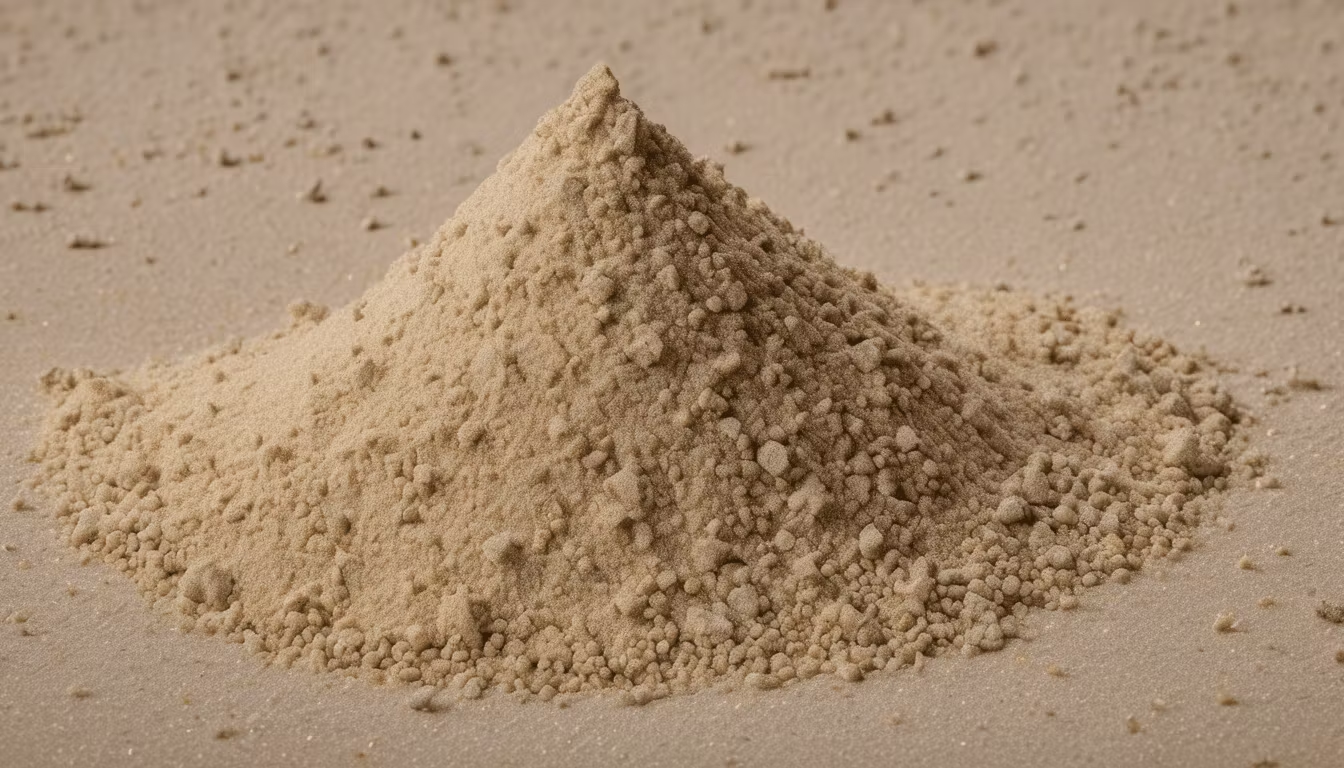
The global oil and gas industry relies heavily on hydraulic fracturing (fracking) to unlock hydrocarbon reserves from unconventional sources like shale formations. At the heart of this process lies silica sand—a critical material that serves as a proppant to keep fractures open and allow oil and gas to flow to the wellbore. For industry professionals, understanding frac sand specifications, market dynamics, and supplier reliability is essential to optimizing production economics and operational efficiency.
Hydraulic fracturing has fundamentally transformed energy production over the past two decades, making low-permeability reservoirs commercially viable. However, the success of any fracturing operation depends not only on engineering design but also on the quality and consistency of the proppant materials used. This comprehensive guide explores what makes quality frac sand, current market trends, and how to source reliable supplies.
What Is Frac Sand and Why It Matters
The Role of Proppants in Hydraulic Fracturing
When operators pump high-pressure fluid into a wellbore, the pressure creates fractures in the rock formation. Once the pressure is released, these fractures would naturally close, sealing off the newly exposed reservoir surface. Proppants—materials like silica sand—remain suspended in the fracturing fluid and lodge inside the fractures, physically preventing them from closing. This allows hydrocarbons to flow from the formation into the wellbore continuously over the well's productive life.
The proppant essentially becomes a permanent flow conductor within the reservoir. Without adequate proppant coverage and quality, fracture conductivity degrades, reducing production rates and ultimate recovery. In some cases, poor proppant performance can result in 20-40% production loss compared to optimized designs.
Why Silica Sand Dominates the Frac Sand Market
While various materials serve as proppants—including ceramic beads, bauxite, and resin-coated sands—conventional silica sand remains the most widely used due to its:
- Cost-effectiveness: Silica sand is abundant and less expensive than specialty proppants
- Availability: High-quality deposits exist globally, ensuring supply security
- Proven performance: Decades of operational data confirm reliability in diverse geological conditions
- Sustainability: Recyclable and environmentally compatible with most formation types
For mid-depth and vertical wells where crush resistance demands are moderate, silica sand proppants deliver excellent economics. Even in deeper applications, operators often use silica sand in combination with other materials to optimize cost-benefit ratios.
Frac Sand Specifications and Quality Requirements
Critical Physical and Chemical Properties
Frac sand must meet rigorous specification standards to ensure consistent performance. The primary frac sand specifications include:
- API RP 56 Standards: The American Petroleum Institute established industry-wide quality benchmarks that govern frac sand production and testing
- Particle Size Distribution (PSD): Frac sand typically falls within defined mesh ranges (16/30, 20/40, 30/60, 40/70 mesh), with tight size distributions critical for conductivity
- Roundness and Sphericity: Particles should be well-rounded (>0.6 roundness) to pack efficiently and maximize porosity within fractures
- Crush Resistance: Sand must withstand closure stresses without breaking down; typically measured as percentage fines under specific pressure loads
- Solubility: Frac sand should have minimal solubility in fracturing fluids and formation water to maintain long-term conductivity
Chemical Composition Requirements
High-purity silica content (SiO2 ≥99%) is essential. Contaminants such as feldspar, clay minerals, iron oxides, and mica can compromise performance:
- Clay content: Even small amounts (>0.5%) can cause swelling when exposed to water-based fracturing fluids, reducing permeability
- Iron oxide: Can cause corrosion issues in production tubing and damage to sophisticated downhole equipment
- Feldspar: Increases reactivity with certain acid treatments used post-fracturing
Professional operators require third-party laboratory testing (such as SUCOFINDO certification) to verify chemical purity and consistency batch-to-batch.
Grain Size Mesh Designations
Frac sand specifications use standardized mesh sizes that define particle diameter ranges:
- 16/30 mesh: Larger grains (590-1190 micrometers); used in high-conductivity, higher-cost applications
- 20/40 mesh: Medium-large grains (420-840 micrometers); popular for balanced cost-performance
- 30/60 mesh: Medium grains (250-590 micrometers); used in deeper wells requiring finer placement
- 40/70 mesh: Small grains (210-420 micrometers); for fine-grained formations or ultra-precise placement
Operators select mesh sizes based on reservoir depth, closure stress, desired conductivity, and pumping constraints. Multi-stage completions often use staged meshes—larger grains near the wellbore transitioning to smaller grains deeper into the fracture—to optimize flow geometry.
Hydraulic Fracturing Fluid Compatibility
Water-Based Fracturing Fluids
Most onshore operations use water-based systems containing salt, gels, and various additives. Frac sand must demonstrate:
- Compatibility with potassium chloride or sodium chloride brines
- Minimal clay swelling response
- Stability across the temperature range encountered in the wellbore
Oil-Based and Synthetic Fluids
Deepwater and high-temperature applications sometimes employ non-aqueous fluids. While these reduce clay swelling risk, frac sand must still be free of water-soluble salts and reactive minerals that could degrade fluid properties.
Acid Treatment Compatibility
Post-fracturing acid treatments (matrix acidizing or acid wash) are common in carbonate formations. Frac sand must withstand exposure to hydrochloric acid without significant dissolution or grain destabilization. High-purity silica sand shows excellent acid resistance, whereas sands contaminated with carbonate or feldspar minerals may suffer degradation.
Oil & Gas Frac Sand Market Trends
Global Market Dynamics
The frac sand market is closely tied to crude oil prices and drilling activity levels. Key trends include:
- Consolidation in supply: Major frac sand producers have consolidated, reducing supplier diversity and increasing pressure on independent operators to secure long-term contracts
- Regional sourcing: Operators increasingly prefer regional suppliers to reduce transportation costs; Asian markets have seen growing demand for premium frac sand
- Price volatility: Frac sand pricing has swung significantly with oil price fluctuations; current market conditions favor buyers seeking diversified supply chains
- Quality premiums: Specialized sands (resin-coated, larger mesh sizes, ultra-high purity) command 30-100% premiums over standard grades
Regulatory and Environmental Considerations
Increasingly stringent environmental regulations—particularly in the United States and Europe—have elevated quality standards and documentation requirements. Operators now require:
- Full traceability and chain-of-custody documentation
- Crystalline silica dust control certifications
- Environmental impact assessments for mining and processing
- Compliance with local labor and safety regulations
These trends favor established, professionally licensed suppliers with robust quality management systems and transparent operations.
Sourcing Quality Frac Sand: What to Look For
Supplier Credentials and Certifications
When evaluating frac sand suppliers, prioritize those with:
- Mining licenses: Valid IUP (Izin Usaha Pertambangan) or equivalent permits ensuring legal operations
- Quality certifications: Third-party testing from recognized laboratories; ISO 9001 or similar quality management certifications
- Regulatory compliance: Environmental permits (RKAB), export authorizations, and industry standard adherence
- Technical expertise: Staff capable of understanding your specific application requirements and providing tailored solutions
Testing and Verification Standards
Insist on independent laboratory testing covering:
- Particle size distribution (via sieve analysis)
- Roundness and sphericity (optical or automated image analysis)
- Crush resistance under simulated closure stresses (API RP 56 methods)
- Solubility testing in formation water and fracturing fluids
- Chemical composition via X-ray fluorescence (XRF) or wet chemistry
Supply Reliability and Scale
Verify the supplier's capacity to:
- Deliver consistent volumes over multi-year contracts
- Provide rapid turnaround for emergency supply needs
- Maintain inventory buffers against supply disruptions
- Scale production in response to seasonal or cyclical demand spikes
CV Indoalam Mineral Persada: Your Trusted Frac Sand Partner
Why Choose Indoalam for Oil & Gas Applications
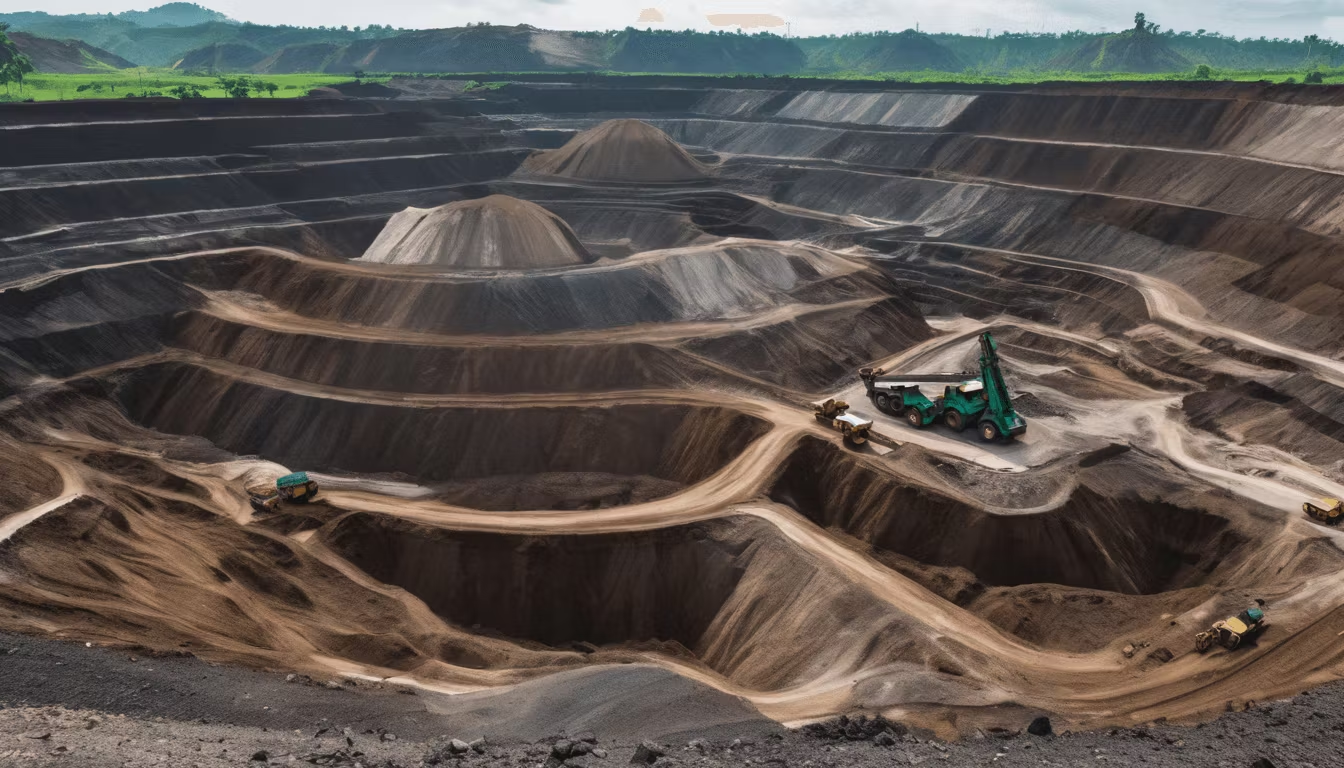
CV Indoalam Mineral Persada stands as a leading supplier of premium silica sand for hydraulic fracturing and other demanding oil & gas applications. With operations across Indonesia's richest mineral deposits—Sulawesi, Kalimantan, and Maluku—Indoalam delivers consistent, high-purity silica sand meeting or exceeding API RP 56 specifications.
Our advantages include:
- Direct-from-mine sourcing: Eliminate middlemen and intermediaries; deal directly with licensed operators ensuring transparency and quality control
- SUCOFINDO certification: All products undergo rigorous third-party laboratory testing, guaranteeing chemical purity (SiO2 ≥99.74%) and physical performance
- Full regulatory compliance: IUP OPK licensed, RKAB approved, ET Batubara certified—meeting all Indonesian and international standards
- Flexible supply agreements: From trial shipments of 100 MT to strategic contracts exceeding 2.5 million metric tons annually
- Technical support: Expert guidance on mesh selection, application optimization, and supply chain integration
Product Range for Oil & Gas Operations
Indoalam offers multiple silica sand grades and mesh sizes optimized for:
- Onshore unconventional plays requiring high-conductivity proppants
- Deepwater completions demanding ultra-pure, crush-resistant sands
- Multi-stage fracturing designs utilizing staged mesh progression
- Custom blends and specialty applications requiring tailored specifications
Competitive Advantages in the Global Market
Indoalam's strategic position in Southeast Asia offers oil & gas operators:
- Cost efficiency: Asian sourcing reduces transportation costs compared to US or European suppliers for Asia-Pacific operations
- Supply security: Diversified sourcing across multiple regions ensures supply continuity and price stability
- Rapid delivery: Proximity to major oil & gas producing regions (Vietnam, Thailand, Malaysia) enables faster turnaround
- Export capability: Licensed for international sales with established logistics networks across Asia and beyond
Conclusion: Optimizing Your Frac Sand Strategy
Frac sand quality directly impacts well economics, production performance, and long-term asset value. By understanding specifications, market conditions, and supplier capabilities, operators can make informed decisions that optimize both technical outcomes and financial returns.
Whether you're evaluating new fracturing designs, securing multi-year supply contracts, or sourcing specialized mesh grades, partnering with an experienced, fully licensed supplier like CV Indoalam Mineral Persada ensures access to premium-quality silica sand backed by rigorous testing, regulatory compliance, and technical expertise.
Contact us today to discuss your frac sand requirements, request product specifications, or arrange trial shipments. Indoalam's team stands ready to support your hydraulic fracturing operations with reliable, cost-effective solutions tailored to your unique geological and operational challenges.