Silica Sand for Artificial Turf Infill: Premium Quality for Sports & Landscaping
Silica Sand for Artificial Turf Infill: Complete Guide for Sports & Landscaping Professionals
The global artificial turf market has experienced exponential growth over the past decade, with synthetic playing surfaces now standard in professional sports facilities, municipal recreation areas, and premium residential landscaping projects. At the heart of this expansion lies a critical material: high-quality silica sand. As infill material, silica sand serves as the foundation that determines turf performance, player safety, durability, and long-term maintenance costs.
For facility managers, sports construction firms, and landscaping contractors, selecting the right silica sand supplier directly impacts project success. This comprehensive guide explores the technical requirements, application benefits, and sourcing considerations for artificial turf infill materials in today's competitive market.
Understanding Silica Sand as Turf Infill Material
What Makes Silica Sand Ideal for Artificial Turf?
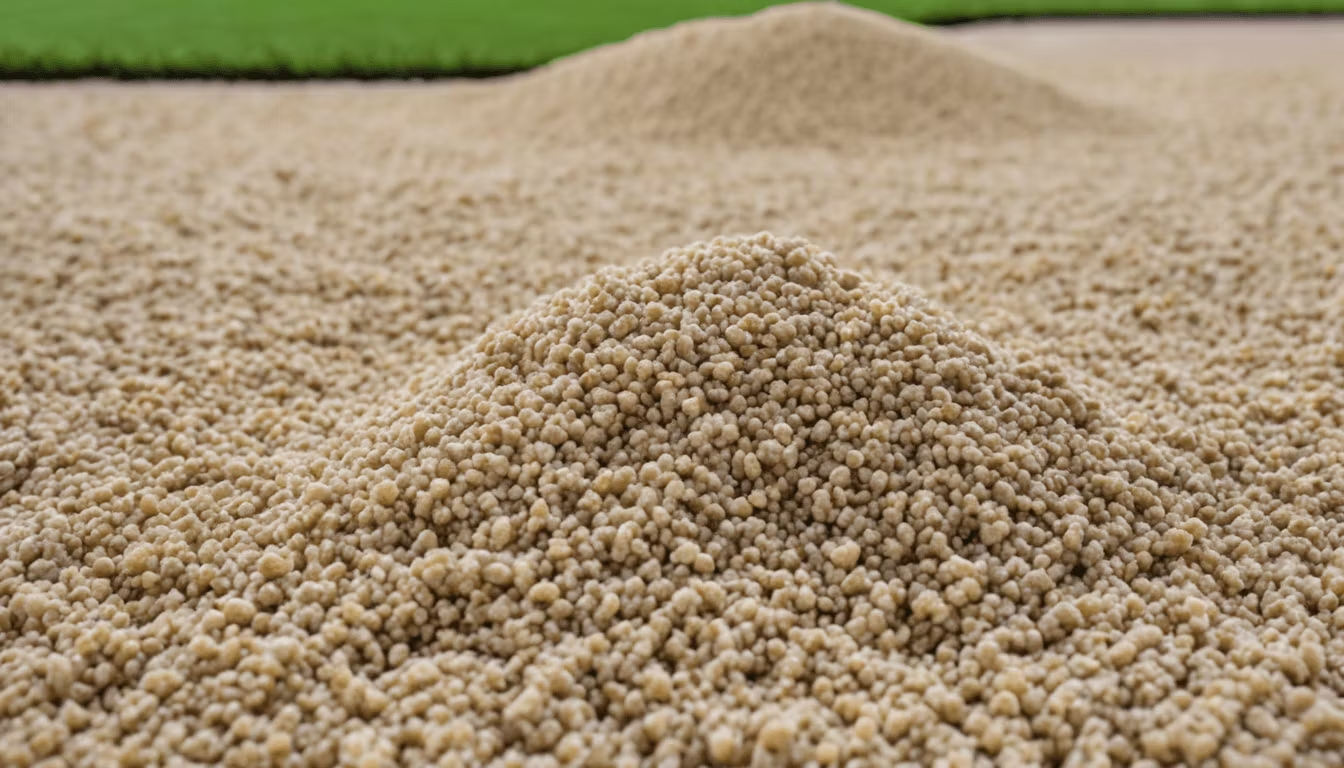
Silica sand (SiO2) has become the industry standard for artificial turf infill due to its unique physical and chemical properties. Unlike natural soil or alternative infill materials, silica sand provides consistent particle size distribution, excellent drainage characteristics, and proven long-term stability in outdoor environments.
The primary advantages include:
- Particle Uniformity: Consistent sizing ensures even weight distribution and prevents premature compaction
- Drainage Performance: Silica sand's porous structure prevents water pooling, reducing injury risk and extending turf lifespan
- Thermal Stability: Unlike rubber-only systems, silica infill moderates surface temperatures, improving player comfort
- Chemical Inertness: SiO2 resists environmental degradation, UV exposure, and microbial growth
- Cost Efficiency: Silica sand offers superior value compared to premium alternatives like zeolite or specialty polymers
Technical Specifications for Sports-Grade Silica Sand
Not all silica sand meets artificial turf requirements. Professional sports facilities and quality-conscious landscapers specify turf-grade silica with strict parameters:
- SiO2 Content: Minimum 99.5% purity (industrial grade); ideally 99.74% or higher
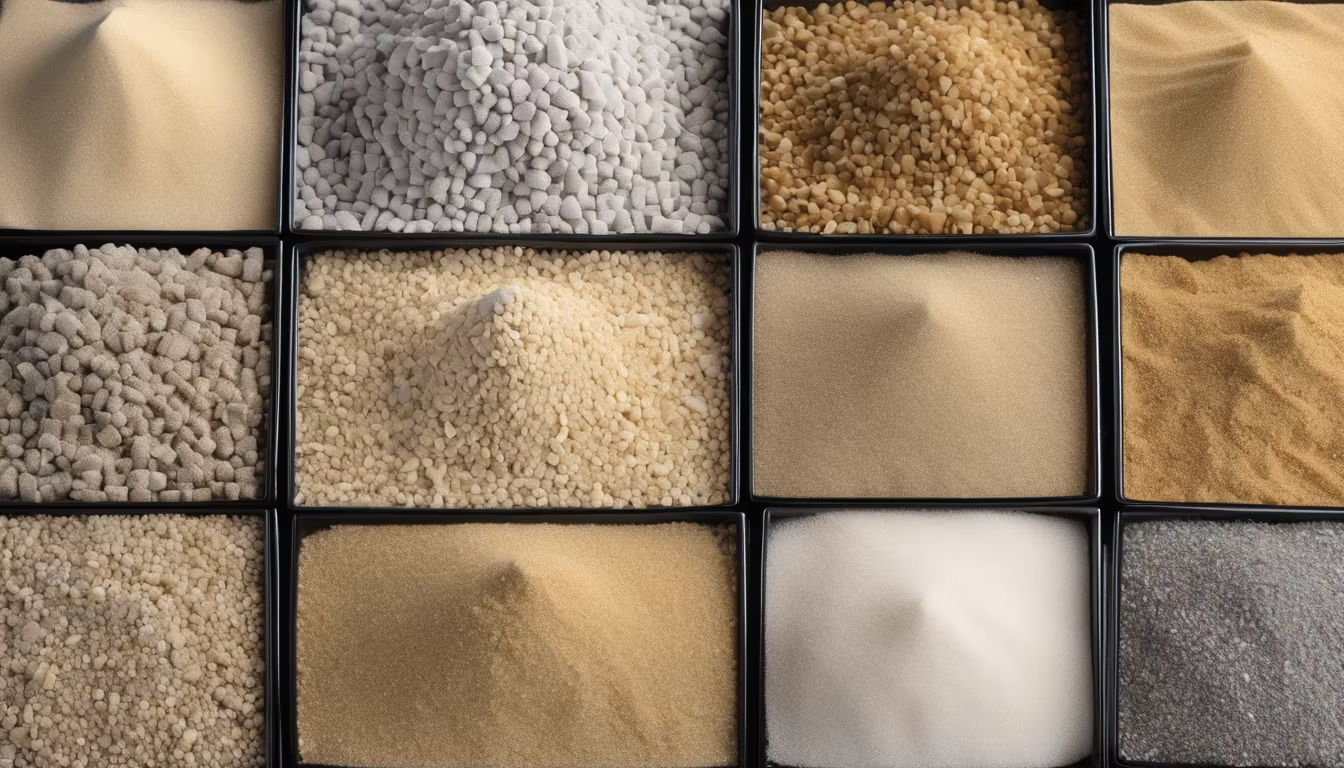
- Grain Size: Mesh range 8-200 (typically 30-120 mesh for turf applications)
- Moisture Content: Less than 0.5% for optimal flow and compaction
- Iron Oxide (Fe2O3): Below 0.1% to prevent staining and discoloration
- Acid Solubility: Maximum 2% (indicates clay and silt contamination)
- Color: White to off-white (indicates purity and minimal heavy metals)
These specifications ensure the silica sand performs consistently across temperature variations, heavy foot traffic, and multiple seasons of use.
Applications of Silica Sand in Artificial Turf Systems
Professional Sports Fields
Professional and collegiate athletic facilities represent the largest market segment for turf-grade silica sand. Soccer fields, American football stadiums, field hockey venues, and lacrosse pitches all rely on properly engineered infill systems.
In these applications, silica sand typically comprises 40-60% of the total infill volume, often blended with crumb rubber or other materials. The silica layer anchors synthetic fibers, stabilizes the pile height, and provides biomechanical feedback essential for athletic performance.
Professional specifications often require regular infill analysis and replacement, with many facilities refreshing 10-20% of their silica sand annually to maintain optimal performance characteristics.
Residential and Municipal Landscaping
Beyond professional sports, artificial turf with silica sand infill has transformed residential landscaping, reducing water consumption, maintenance labor, and pesticide applications. Residential installations typically use lighter silica sand grades (100-200 mesh) for aesthetic appeal while maintaining functional performance.
Municipal parks, school athletic fields, and community recreation centers increasingly adopt artificial turf systems, with silica sand infill reducing life-cycle costs compared to natural grass maintenance.
Golf Course and Specialty Turf Applications
Premium golf courses and specialty turf environments require specialized silica sand products. Putting green surfaces, tee boxes, and fairway alternatives demand finer mesh grades and exceptionally pure silica to ensure consistent ball roll and player experience.
Performance Benefits of Quality Silica Sand Infill
Drainage and Water Management
Superior drainage is perhaps the most critical benefit of quality silica sand infill. Professional-grade silica maintains open percolation rates of 20+ inches per hour, preventing surface water accumulation that creates unsafe playing conditions and accelerates synthetic fiber degradation.
Quality infill sand allows rainwater and irrigation to drain through the turf system while maintaining adequate moisture for fiber resilience and player comfort. This drainage efficiency is particularly important in climates with heavy precipitation or in facilities requiring year-round playability.
Foot Traffic and Impact Attenuation
The weight and particle structure of quality silica sand absorb impact energy, providing cushioning that reduces player fatigue and joint stress. This impact attenuation, combined with synthetic fiber properties, creates playing surfaces comparable to natural grass while requiring minimal maintenance.
Facilities using inadequate or contaminated infill materials experience accelerated fiber matting, reduced impact protection, and increased injury risk—problems that proper silica sand selection prevents.
Temperature Regulation
Silica sand's thermal mass provides moderate temperature regulation. Unlike all-rubber systems that can reach dangerous surface temperatures (140°F+ in direct sunlight), silica-blended infill maintains more moderate conditions while retaining adequate warmth during cooler seasons.
This thermal moderation extends synthetic fiber life and improves player safety across seasonal temperature variations.
Long-Term Durability and ROI
Investment-grade silica sand ensures consistent performance across 8-10+ years of heavy use. Facilities using premium-grade silica experience minimal infill degradation, reduced replacement frequency, and superior return on capital investment in turf infrastructure.
Sourcing Quality Silica Sand: What B2B Buyers Should Know
Supply Chain Considerations
The global silica sand supply chain involves extraction, processing, testing, certification, and logistics. B2B buyers should prioritize suppliers offering:
- Direct Mine Access: Suppliers controlling production from extraction through processing eliminate middlemen markup and quality control gaps
- Third-Party Testing: Independent laboratory analysis (SUCOFINDO, SGS, or equivalent) verifies specifications before shipment
- Quality Certifications: IUP (Izin Usaha Pertambangan) licensing and RKAB approval ensure regulatory compliance and operational legitimacy
- Flexible Volume Options: Reputable suppliers accommodate trial shipments (100 MT) through full contracts (2.5M MT/year+)
- Traceability Documentation: Complete supply chain records and test certificates provide compliance assurance
Selecting the Right Supplier for Your Project
Choosing a silica sand supplier extends beyond price comparison. Consider:
- Consistency: Suppliers maintaining strict quality control reduce variation between shipments
- Geographic Sourcing: Premium silica deposits in Southeast Asia (particularly Indonesia and Malaysia) offer high purity and cost advantages
- Processing Capabilities: Suppliers with advanced washing and classification equipment deliver more precise mesh grades
- Logistics Network: Established shipping and distribution infrastructure reduces delivery times and handling damage
- Technical Support: Knowledgeable suppliers assist with specification selection and troubleshooting installation issues
Indonesia has emerged as a leading silica sand source for Asia-Pacific and global markets, with significant deposits in Sulawesi, Kalimantan, and Maluku regions. Local suppliers with proper licensing and quality controls can provide competitive pricing without sacrificing material specifications.
Installation and Maintenance Best Practices
Infill Depth and Application Rates
Proper silica sand infill depth depends on turf pile height and intended use. Professional sports fields typically require 2-3 inches of infill material, while residential installations may use 1-2 inches. Installation contractors should:
- Conduct soil compaction tests before infill application
- Use drag brooms or power brooms for even distribution
- Avoid over-compaction, which reduces drainage and fiber resilience
- Document baseline infill volume for future maintenance reference
Long-Term Maintenance Protocols
Quality silica sand systems require periodic maintenance to maintain performance:
- Annual Infill Assessment: Test samples for contamination, particle degradation, and moisture content
- Regular Dragging: Quarterly power broom maintenance redistributes compressed infill and restores fiber height
- Partial Replacement: Annual top-dressing with fresh silica sand (10-20% of original volume) compensates for material loss
- Debris Removal: Regular vacuum collection prevents organic accumulation and contamination
Facilities following these protocols achieve 10+ years of consistent turf performance with minimal safety concerns.
Environmental and Sustainability Considerations
Modern silica sand sourcing increasingly emphasizes environmental responsibility. Sustainable suppliers implement:
- Approved mining permits within designated reserves
- Reclamation plans for post-extraction land restoration
- Water management systems minimizing ecological impact
- Community engagement and benefit-sharing arrangements
Specifying silica sand from responsibly-managed sources supports environmental stewardship while ensuring supply chain legitimacy and long-term availability.
Cost Analysis: Silica Sand vs. Alternative Infill Materials
While zircon sand and specialty polymer infills offer premium performance characteristics, silica sand remains the most cost-effective option for most applications. Total cost of ownership comparison:
- Silica Sand Systems: $15-30/ton material cost; 8-10 year lifespan; $3-8K per 10,000 sq ft field
- Premium Alternatives: $50-150/ton material cost; comparable lifespan; 3-5x higher capital investment
For facilities prioritizing value without compromising performance, quality silica sand represents optimal return on investment.
Why Choose Indonesian Silica Sand Suppliers
Indonesia's geographic position, geological richness, and established processing infrastructure make it an ideal silica sand sourcing destination. The country's significant deposits in Sulawesi (Morowali and Konawe regions), Kalimantan, and Maluku (Halmahera) provide abundant supply without supply chain constraints affecting other global regions.
Reputable Indonesian suppliers operating under proper IUP OPK licensing and SUCOFINDO testing regimes deliver world-class material at competitive pricing, with flexible sourcing accommodating projects from trial shipments through multi-million ton annual contracts.
Conclusion: Investing in Premium Silica Sand for Superior Turf Performance
Artificial turf systems have revolutionized sports facility management and landscaping aesthetics, with silica sand infill emerging as the cornerstone material ensuring consistent performance, player safety, and long-term durability. For B2B buyers—whether facility managers, construction firms, or distributors—selecting premium-grade silica sand from reliable suppliers represents a critical investment decision impacting project success.
Quality specifications (99.74% SiO2, proper mesh grades, low contamination), third-party testing verification, and reliable supply chains distinguish industry-leading solutions. Whether sourcing domestically or internationally, prioritizing suppliers with proper certifications, direct mine access, and proven track records ensures consistent performance across every season and every installation.
The artificial turf market's continued expansion reinforces silica sand's essential role in modern sports and landscaping infrastructure. By understanding technical requirements, application benefits, and supplier evaluation criteria, facility managers and procurement professionals can make informed decisions ensuring optimal turf system performance and maximum return on infrastructure investment.
Ready to source premium silica sand for your artificial turf project? CV Indoalam Mineral Persada supplies world-class silica sand meeting international specifications, with SUCOFINDO laboratory testing, full IUP OPK licensing, and flexible supply options from trial quantities to 2.5M metric tons annually. Our direct mine access in Indonesia's premium deposits ensures competitive pricing without compromising quality. Contact us today to discuss your project requirements and receive detailed specifications and pricing information.