Resin Bonded Proppants: Manufacturing, Quality Standards & Applications
Understanding Resin Bonded Proppants: Definition and Market Importance
Resin bonded proppants represent a critical advancement in hydraulic fracturing technology, designed to maintain reservoir permeability and maximize hydrocarbon production. These engineered particles consist of high-quality silica sand coated with thermosetting or thermoplastic resin systems that bind individual grains together, creating a consolidated pack structure within fracture networks.
The global market for resin bonded proppants continues to expand as operators seek improved performance under high-temperature, high-pressure (HTHP) conditions. Unlike conventional uncoated sand proppants, resin bonded variants offer superior embedment resistance, reduced fines generation, and enhanced flowback control—critical factors for maximizing well productivity and reserve recovery.
In Indonesia's upstream oil and gas sector, demand for premium coated proppants has grown alongside deepwater and unconventional exploration activities. Companies requiring consistent, lab-tested materials turn to reliable mineral suppliers who understand the exacting specifications demanded by fracturing operators.
Raw Material Specifications for Proppant Manufacturing
Silica Sand Quality Requirements
Manufacturing high-performance resin bonded proppants begins with sourcing exceptional raw silica sand. The feedstock must meet strict geometric, chemical, and physical parameters:
- SiO₂ Content: Minimum 99.5% purity ensures optimal resin adhesion and prevents contamination-related performance degradation
- Particle Size Distribution: Precise mesh gradation (typically 20/40, 40/70, 70/140 mesh) determines proppant behavior in fracture geometry
- Roundness & Sphericity: Angular particles increase fines production and embedment; resin coating partially compensates but source material roundness remains essential
- Crush Strength: Base sand crush resistance of 200+ PSI ensures the substrate withstands closure stresses before resin matrix activation
- Acid Solubility: Less than 5% dissolution in hydrochloric acid confirms mineralogical purity
Premium suppliers like CV Indoalam Mineral Persada provide SUCOFINDO-tested silica sand meeting international ISO and API standards, with transparent laboratory documentation supporting each shipment's quality credentials.
Moisture and Contamination Control
Moisture content must remain below 0.5% to ensure proper resin coating adhesion and prevent hydrolysis during curing. Iron oxide, clay minerals, and other contaminants interfere with resin polymerization and weaken final bond strength. Sourcing from established deposits in Sulawesi and Kalimantan with proven geological homogeneity reduces batch-to-batch variability.
Resin Coating Technology and Manufacturing Processes
Thermosetting vs. Thermoplastic Resin Systems
Two primary resin chemistries dominate the proppant coatings market:
Thermosetting Resins (Epoxy, Phenol-Formaldehyde, Polyurethane): These systems irreversibly cross-link upon heating, creating permanent bonds between sand grains. Epoxy-coated proppants deliver exceptional embedment resistance at closure stresses exceeding 8,000 PSI, making them ideal for deep wells and high-stress reservoirs. The curing process typically requires 2-4 hours at 150-250°C, depending on resin chemistry and part geometry.
Thermoplastic Resins (Polystyrene, Polyethylene): Lower-cost alternatives that soften under heat and refirmly upon cooling. Thermoplastic systems suit moderate-stress applications (closure < 5,000 PSI) and offer faster production cycles, though temperature stability diminishes above 200°F reservoir conditions.
Coating Application Methods
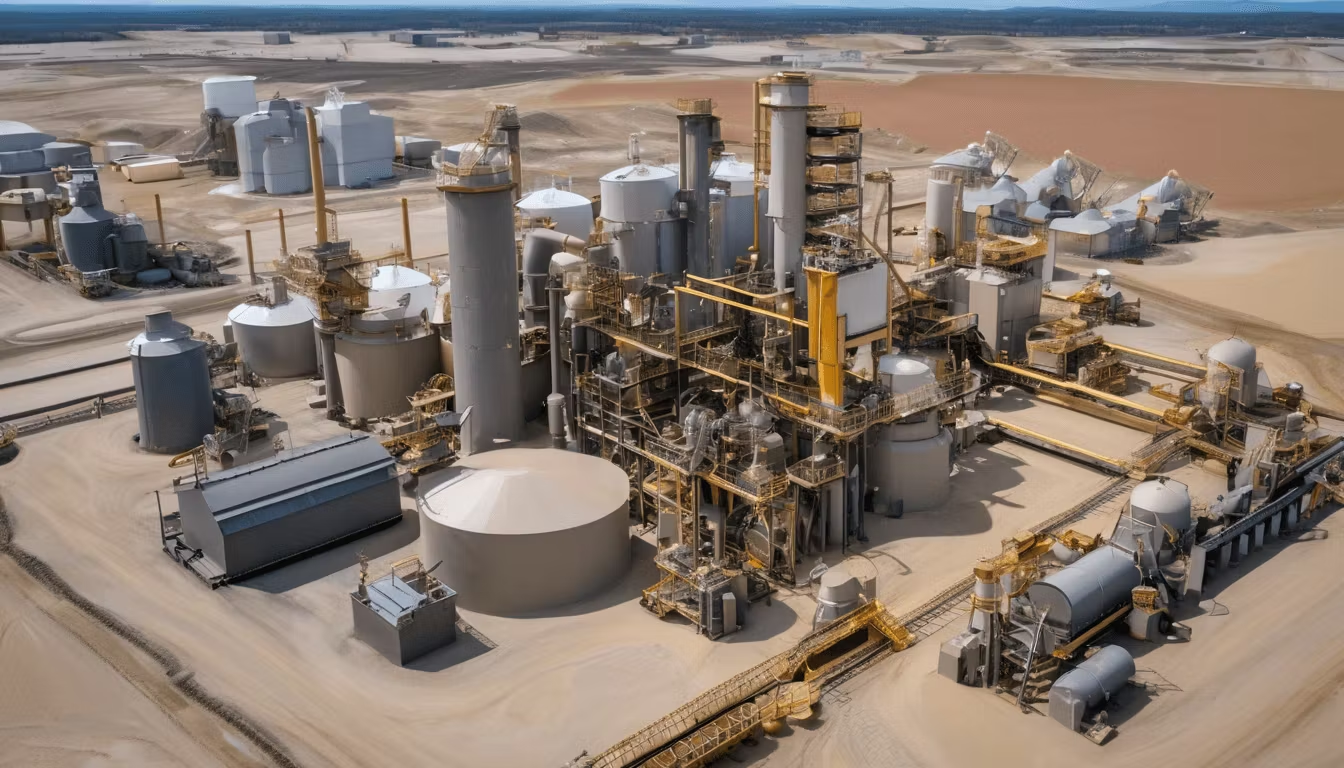
Rotary Drum Coating: The industry standard for high-volume production. Silica sand enters a rotating drum where liquid resin sprays uniformly onto grain surfaces. Residence time in the heated drum allows controlled curing while mechanical tumbling ensures even distribution. Typical production rates reach 10-50 metric tons per hour, depending on resin viscosity and curing kinetics.
Fluidized Bed Coating: Superior for coating uniform particle sizes. Sand particles suspend in upward-flowing hot air while resin atomizes into the bed, coating each grain individually. This method minimizes over-coating and produces proppants with tighter strength distributions.
Vibratory Coaters: Suitable for smaller-scale production or specialty applications. Vibration-induced tumbling combined with resin application produces consistent coatings on premium grade materials.
Quality Control During Manufacturing
Successful proppant coating requires continuous process monitoring:
- Resin viscosity and temperature control within ±2°C tolerance
- Particle residence time optimization to prevent over-curing or under-curing
- Dust collection systems protecting operator safety and preventing air contamination
- In-process coating thickness measurement (typically 15-50 microns for optimum performance)
- Final product wash and drying cycles preventing resin agglomeration
Performance Testing and Specification Compliance
Critical Performance Metrics
Resin bonded proppants must undergo rigorous testing aligned with ISO 13503-2 and American Petroleum Institute (API) RP 19C standards:
Crush Resistance Testing: Samples undergo controlled pressure cycles in confined compressive testers, measuring permanent deformation at closure stresses. Premium resin coated proppants show less than 5% permanent deformation at design closure stress, compared to 10-15% for uncoated alternatives.
Embedment and Flowback Tests: Simulated core samples expose coated proppants to reservoir fluids and closure stress. Resin bonds resist embedment into softer formation rocks while minimizing grain loss during production flowback phases.
Permeability Characterization: High-speed sieve analysis measures fines generation (particles <100 mesh) under simulated reservoir conditions. Superior coated proppants maintain permeability exceeding 10,000 millidarcies after 72-hour stress cycles.
Thermal Stability: Samples age in high-temperature fluids (up to 300°F) for extended periods, confirming resin integrity under deepwater and geothermal operating conditions.
Documentation and Traceability
Industrial proppant buyers require comprehensive test reports documenting material origin, processing parameters, and performance results. Suppliers holding proper IUP OPK licensing and SUCOFINDO certification provide the assurance critical for E&P operators managing well integrity and regulatory compliance across multiple jurisdictions.
Industrial Applications and End-Market Demand
Oil and Gas Hydraulic Fracturing
Resin bonded proppants address specific production challenges across diverse reservoir geometries:
- Unconventional Tight Gas/Oil: High conductivity proppants maintain flow pathways in low-permeability shales and tight sandstones
- Deep Water Developments: HTHP resistance prevents formation damage in deepwater reservoirs where closure stresses exceed 10,000 PSI
- Geothermal Wells: Thermally stable coatings preserve fracture conductivity in high-temperature (>250°C) geothermal applications
- Coal Bed Methane: Fines control prevents formation water blockage in coal seams sensitive to mineral invasion
Alternative Industrial Applications
Beyond petroleum, resin coated silica sand finds specialized uses in manufacturing sectors:
- Foundry Applications: Coated sand cores resist thermal shock and improve surface finish in aluminum and iron castings
- Water Treatment Systems: Proppant-grade silica serves as high-flow media in industrial filtration, particularly for suspended solids removal in cooling tower and process water applications
- Ceramics Manufacturing: Premium quartz sand grades support tile body formulations and specialty ceramic production
Supply Chain Logistics and Commercial Considerations
Sourcing and Production Capacity
Reliable proppant supply chains require mining operations with substantial proven reserves and consistent production infrastructure. Indonesian mineral suppliers with operations across Sulawesi, Kalimantan, and Maluku regions access diverse geological settings, enabling portfolio flexibility for different application requirements.
Modern suppliers maintain annual processing capacities of 2.5 million metric tons or higher, accommodating both steady-state demand and sudden surge requirements during active drilling campaigns. Trial quantities (100+ metric tons) allow operators to qualify new suppliers before committing to long-term contracts.
Quality Assurance and Certification
B2B buyers should verify supplier credentials including:
- Valid IUP OPK (operational licenses) for mineral extraction and processing
- SUCOFINDO or equivalent third-party laboratory testing and certification
- RKAB (environmental management) compliance documentation
- ISO 9001 or equivalent quality management system certification
- Traceability systems linking finished product to specific mining blocks and processing batches
Pricing and Contract Structures
Resin bonded proppant pricing reflects raw material costs, coating chemistry, processing complexity, and certification overhead. Bulk contracts (500+ metric tons) typically command 10-15% discounts versus smaller shipments. Long-term supply agreements (12-24 months) provide both operators and suppliers price stability while enabling production planning optimization.
Transportation logistics merit careful consideration; maritime freight from Indonesian origins costs 15-25% less than overland shipments from alternative suppliers in South Asia or the Middle East, creating competitive advantages for regional operators.
Sustainability and Environmental Considerations
Modern proppant manufacturing increasingly emphasizes environmental stewardship. Responsible suppliers minimize water consumption during processing, implement dust control systems protecting worker health, and manage chemical waste streams from resin coating operations. Indonesian regulatory frameworks increasingly mandate environmental impact assessments and restoration planning for active mining operations.
The shift toward resin bonded technologies itself offers environmental benefits; superior proppant performance reduces fracturing fluid volumes and associated chemical additives per productive well, lowering overall operational environmental footprint.
Choosing a Trusted Resin Bonded Proppant Supplier
Successful proppant sourcing requires partnerships with suppliers demonstrating technical expertise, regulatory compliance, and consistent quality delivery. CV Indoalam Mineral Persada represents a modern Indonesian mineral trading entity, bringing direct mining relationships, comprehensive product testing capabilities, and flexible commercial terms to international operators and domestic industrial consumers.
Whether you require traditional silica sand feedstock for in-house coating operations or finished coated proppant products, establishing relationships with licensed, certified suppliers ensures access to materials meeting API and ISO specifications while optimizing total-landed costs across your supply chain.
Next Steps: Qualifying Your Proppant Supplier
Organizations planning proppant procurement programs should request detailed product specifications, third-party test reports, and references from existing industrial customers. Trial shipments allow laboratory qualification and compatibility testing before committing to production-scale orders.
CV Indoalam Mineral Persada welcomes inquiries from operators, service companies, and specialty manufacturers seeking premium mineral inputs. Contact us today to discuss your specific proppant requirements and explore how our sourcing capabilities and quality assurance programs support your operational objectives. Whether your application demands specialized zircon sand products or high-volume silica supply arrangements, our team brings industry expertise and commitment to customer success.