Primary vs Secondary Aluminium Ingot: Quality & Cost Analysis

Understanding Primary and Secondary Aluminium Ingots
The aluminium industry relies on two distinct production pathways: primary aluminium (virgin aluminium) and secondary aluminium (recycled aluminium). For B2B buyers in foundries, automotive, construction, and manufacturing sectors, understanding these differences is critical to making informed procurement decisions. Both serve different applications, cost structures, and quality requirements, and the choice between them can significantly impact your production efficiency and bottom line.
At CV Indoalam Mineral Persada, we supply high-grade aluminium ingots that meet international standards for various industrial applications. This comprehensive guide explores the fundamental differences between primary and secondary aluminium ingots, helping you determine which option best suits your operational needs.
What is Primary Aluminium?
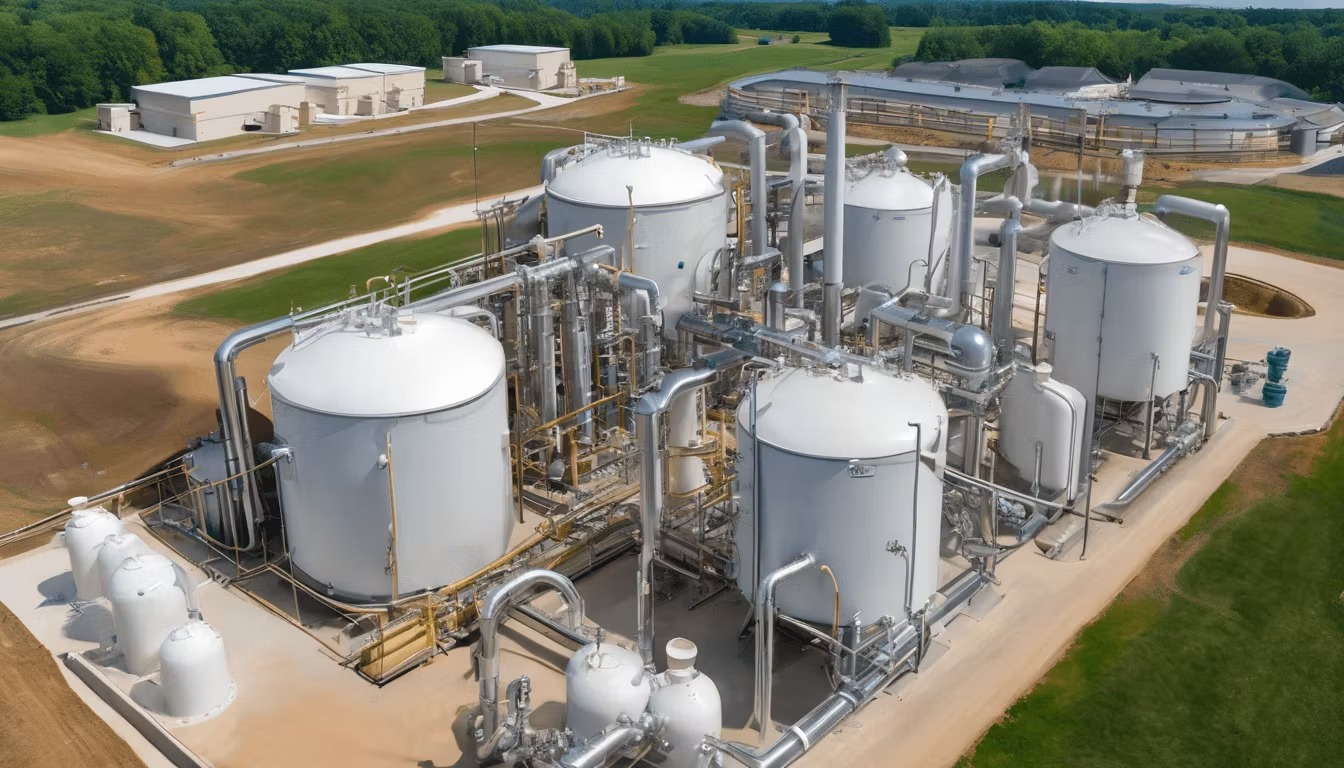
Primary aluminium, also known as virgin aluminium, is produced directly from bauxite ore through the Hall-Héroult electrolytic process. This method involves extracting alumina from bauxite, then smelting it using high-voltage electrical current to produce pure metallic aluminium. The result is metal with superior purity levels, typically exceeding 99.7% aluminium content.
Primary aluminium ingots are manufactured under controlled conditions in dedicated smelters, ensuring consistent composition and minimal impurities. The production process is energy-intensive and capital-heavy, requiring specialized infrastructure and expertise. However, this rigorous approach guarantees a product with predictable metallurgical properties, making primary aluminium the preferred choice for demanding applications.
Key Characteristics of Primary Aluminium Ingots
- High Purity: Generally 99.5-99.99% aluminium content with minimal impurities
- Consistent Quality: Standardized composition across batches ensures reliable performance
- Superior Mechanical Properties: Better tensile strength, ductility, and thermal conductivity
- Traceability: Full documentation of origin and production parameters
- Premium Grades: Available in specialized alloy compositions (ADC12, A7, etc.) for specific applications
Understanding Secondary Aluminium
Secondary aluminium, commonly called recycled aluminium, is produced by melting and reprocessing aluminium scrap and post-consumer waste. This includes industrial offcuts, beverage cans, automotive components, and manufacturing trim. The recycling process is significantly less energy-intensive than primary production, requiring only about 5% of the energy needed for virgin aluminium smelting.
Secondary aluminium ingots represent a more sustainable and cost-effective alternative to primary aluminium. However, the recycled nature of the material introduces variables that affect quality consistency. Depending on the source material and processing methods, secondary aluminium may contain higher levels of impurities and alloying elements carried over from mixed scrap streams.
Key Characteristics of Secondary Aluminium Ingots
- Lower Cost: Typically 20-30% cheaper than primary aluminium due to reduced energy requirements
- Environmental Benefits: Reduces landfill waste and carbon footprint significantly
- Variable Composition: Impurity levels depend on source material and sorting quality
- Requires Refining: Often needs secondary processing to meet strict purity standards
- Faster Production: Lower melting temperatures enable quicker turnaround times
Quality Comparison: Virgin Aluminium vs Recycled Aluminium
Purity and Composition
The most significant quality differentiator between primary and secondary aluminium lies in material purity. Primary aluminium typically achieves 99.7% or higher purity levels with carefully controlled trace element content. Secondary aluminium, depending on scrap source segregation, may range from 95% to 99.5% purity.
Mixed scrap streams often contain iron, copper, zinc, silicon, and magnesium residues. While these elements are sometimes beneficial as alloy constituents, uncontrolled levels can compromise mechanical properties. Manufacturers requiring strict composition specifications—such as automotive or aerospace component makers—typically demand primary aluminium or highly refined secondary material.
Mechanical Properties
Primary aluminium ingots deliver superior and more predictable mechanical properties. The controlled production process ensures consistent grain structure, resulting in uniform tensile strength, elongation, and hardness values across batches. This consistency is essential for high-precision casting applications where material variability could affect product quality.
Secondary aluminium ingots can perform comparably in many applications, especially when processed through advanced refining techniques. However, achieving equivalent mechanical properties often requires additional processing steps, including grain refinement, degassing, and filtering—which add to the final cost.
Castability and Processing
Primary aluminium generally demonstrates superior castability due to lower gas and inclusion content. This results in fewer casting defects, reduced porosity, and improved surface quality in finished components. Foundries working with high-volume precision casting often prefer primary aluminium to minimize rework and scrap rates.
Secondary aluminium may exhibit higher gas absorption and inclusion content, particularly if not properly degassed and filtered. However, modern foundries equipped with advanced melting furnaces, grain refiners, and in-line filtration systems can effectively process secondary aluminium with minimal quality loss.
Cost Analysis: Primary vs Secondary Aluminium Ingots
Raw Material Acquisition Costs
The most obvious cost advantage belongs to secondary aluminium ingots. Scrap aluminium costs 60-70% less than primary aluminium feedstock, primarily because secondary producers avoid the expense of bauxite mining, alumina refining, and electrolytic smelting. This translates directly to lower ingot prices.
Current market dynamics show secondary aluminium typically priced 20-30% below primary material, depending on global commodity prices, scrap availability, and logistical factors. For large-volume buyers in commodity-oriented industries like construction materials, this cost differential can represent millions of dollars in annual savings.
Processing and Quality Control Expenses
While secondary aluminium ingots have lower base costs, buyers must account for additional processing expenses. Many secondary producers require extra refining steps—including hydrogen removal, grain refinement, and inclusion filtration—to meet buyer specifications. These processes add 10-15% to the final product cost.
Primary aluminium, conversely, arrives ready for use with minimal additional processing required. For buyers with sophisticated in-house quality control systems, this can offset the higher initial material cost through improved operational efficiency and reduced waste.
Total Cost of Ownership
True cost comparison must extend beyond ingot purchase price. Factors affecting total cost of ownership include:
- Scrap Generation Rates: Secondary aluminium may produce higher scrap percentages during processing
- Rework Requirements: Quality issues may necessitate expensive component rework or rejection
- Production Downtime: Processing inconsistencies could interrupt manufacturing schedules
- Storage and Handling: Primary aluminium's stability reduces storage costs versus temperature-sensitive secondary stock
- Supplier Reliability: Consistent supply of primary material versus variable secondary material availability
Aluminium Ingot Grades and Applications
ADC12 Grade Aluminium
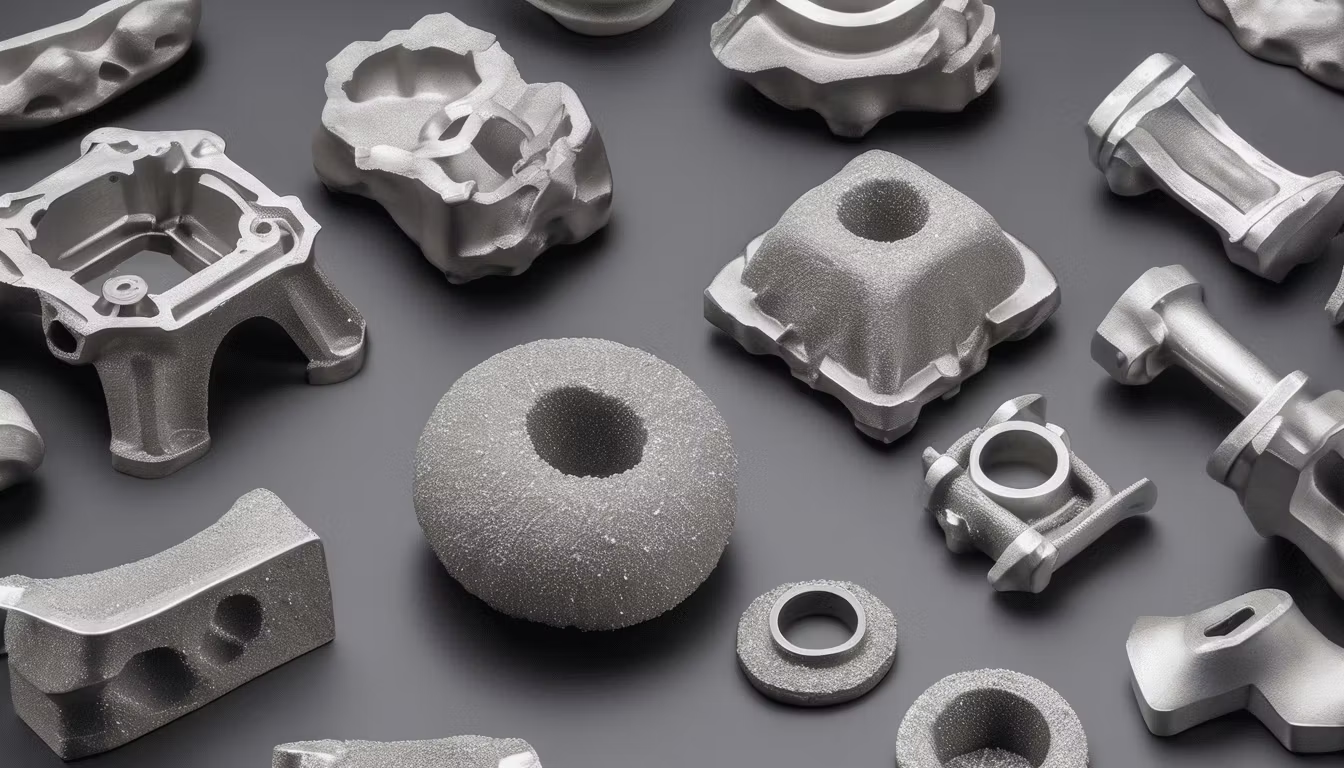
ADC12 (aluminium die-casting alloy) is a premium grade aluminium ingot widely used in automotive, electronics, and machinery manufacturing. This specification requires high purity primary material or rigorously processed secondary aluminium. ADC12 grades deliver excellent castability, corrosion resistance, and surface finish quality essential for visible components.
A7 Grade Aluminium
A7 grade represents standard industrial-purity aluminium suitable for general casting, forging, and wrought applications. This grade tolerates slightly higher impurity levels and is cost-effective for non-critical applications in construction, consumer goods, and industrial equipment manufacturing.
Application-Specific Selection
The choice between primary and secondary aluminium should align with specific application requirements:
- Automotive Components: Primary or high-grade secondary (ADC12)
- Architectural Products: Primary or A7-grade secondary
- General Casting: Secondary aluminium (cost-optimized)
- Precision Electronics: Primary aluminium (purity critical)
- Structural Applications: Primary or certified secondary material
Environmental and Sustainability Considerations
Secondary aluminium production generates substantially lower environmental impact compared to primary production. The energy savings are dramatic—recycling aluminium requires approximately 95% less energy than primary smelting from bauxite ore. This translates to significant carbon footprint reductions and lower operational costs for environmentally conscious manufacturers.
For companies with sustainability targets or ESG commitments, secondary aluminium ingots provide legitimate pathways toward reduced environmental impact without sacrificing performance in most applications. Many manufacturers are increasingly specifying recycled content requirements for components destined for environmentally conscious markets.
Sourcing Quality Aluminium Ingots in Indonesia
Indonesia's strategic position in Southeast Asian manufacturing makes it an ideal sourcing location for aluminium ingots. Local suppliers like CV Indoalam Mineral Persada offer direct access to both primary and secondary material, with full quality certification and compliance documentation.
When selecting an aluminium ingot supplier, verify the following credentials:
- SUCOFINDO lab testing certification
- Full IUP (mining license) and operational compliance documentation
- Transparent quality control procedures
- Capacity to handle trial orders (100 MT) through full-scale contracts (2.5M+ MT annually)
- Flexible delivery terms and logistics support
Making the Right Choice for Your Operation
Choose Primary Aluminium When:
- Precision and consistency are paramount
- Manufacturing high-visibility or safety-critical components
- Existing processes are optimized for primary material
- Quality specifications demand >99.5% purity
- Long-term supply reliability is essential
Choose Secondary Aluminium When:
- Cost optimization is a primary driver
- Applications tolerate minor compositional variation
- Your facility has advanced refining/filtering capabilities
- Sustainability credentials are strategically important
- Material volume requirements are very large
Conclusion and Next Steps
Both primary and secondary aluminium ingots serve legitimate roles in modern manufacturing. The decision between virgin aluminium quality and recycled aluminium cost efficiency depends entirely on your specific application requirements, production capabilities, and business objectives. Neither option is universally superior—each presents distinct advantages suited to different operational contexts.
For manufacturers seeking reliable aluminium ingot supplies with documented quality assurance, CV Indoalam Mineral Persada provides both primary and secondary material options with full SUCOFINDO certification, IUP licensing, and flexible supply arrangements. Whether you require trial quantities or million-ton annual contracts, our team can support your aluminium sourcing strategy with competitive pricing and consistent quality.
Ready to optimize your aluminium procurement? Contact us today to discuss your specific requirements and receive a customized quotation. Our mineral trading experts will help you determine the optimal aluminium ingot grade and sourcing strategy for your manufacturing operation.