Nickel Ore Moisture Content: Impact on Quality and Pricing
Understanding Nickel Ore Moisture Content and Its Impact on Pricing
In the global nickel supply chain, one factor often determines the true value of your ore shipment: moisture content. Whether you're sourcing nickel ore from Indonesia or anywhere else, understanding ore moisture content is critical for accurate cost accounting, quality assurance, and successful negotiations with smelters and processors. This comprehensive guide explores how moisture affects nickel pricing, industry standards, and practical strategies for managing this variable in your supply agreements.
What Is Nickel Ore Moisture Content?
Defining Ore Moisture
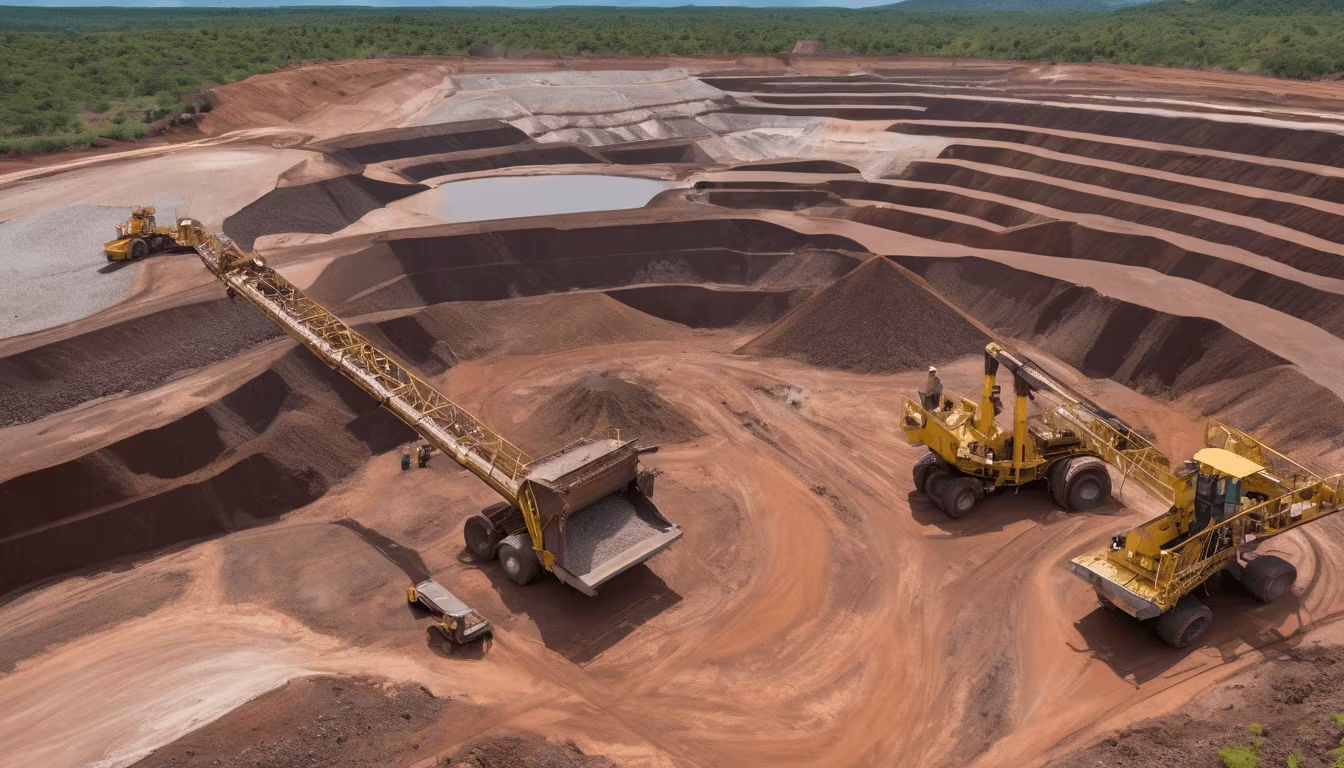
Nickel ore moisture content refers to the percentage of water present in the ore sample at the time of measurement or delivery. This moisture exists in two forms: surface moisture (water coating the ore particles) and inherent moisture (water trapped within the crystalline structure of the ore itself). In tropical mining regions like Indonesia's Sulawesi and Kalimantan operations, moisture content is particularly significant due to high humidity and rainfall in mining areas.
For saprolite nickel ore—the laterite variety mined in Indonesia with typical nickel grades of 1.5–2.0%—moisture content typically ranges from 25% to 35% depending on weather conditions and ore handling. Limonite nickel ore, with lower nickel grades of 0.8–1.2%, may contain even higher moisture levels, sometimes reaching 40% or more.
Why Moisture Matters in Ore Trading
Moisture is not inert in ore commerce—it directly affects the weight you're paying for and the processing requirements at the smelter. When you purchase ore on a "wet metric ton" (WMT) basis, you're buying moisture along with the mineral you actually need. This distinction forms the foundation of fair pricing in international nickel trade.
The Impact of Moisture on Nickel Ore Pricing
Wet Metric Ton (WMT) vs. Dry Metric Ton (DMT)
Understanding the difference between WMT and DMT is essential for any buyer working with nickel ore. A wet metric ton is the actual weight of ore as delivered, including all moisture. A dry metric ton is the theoretical weight of the ore solids alone, with all moisture removed.
The calculation is straightforward:
DMT = WMT × (100% − Moisture Content %) / 100
For example, 100 WMT of saprolite nickel ore with 30% moisture content equals:
DMT = 100 × (100 − 30) / 100 = 70 DMT
This means 30% of the shipment's weight is water—inert mass that adds shipping costs but carries no nickel value. If ore pricing is quoted in USD per DMT, the buyer pays significantly less for the same physical tonnage as a seller quoting in WMT terms.
Price Negotiation and Moisture Penalties
Major nickel smelters and industrial buyers typically establish specifications for acceptable moisture ranges in their purchase agreements. When ore moisture exceeds agreed thresholds, contracts often include penalty clauses that reduce the price per ton or require the seller to bear additional drying costs.
For instance, a smelter might accept saprolite nickel ore at up to 30% moisture with no penalty. Ore exceeding 35% moisture might incur a 2–5% price reduction per percentage point above the limit. This creates financial incentives for miners and traders to control moisture through proper handling and storage.
Processing Costs and Smelter Economics
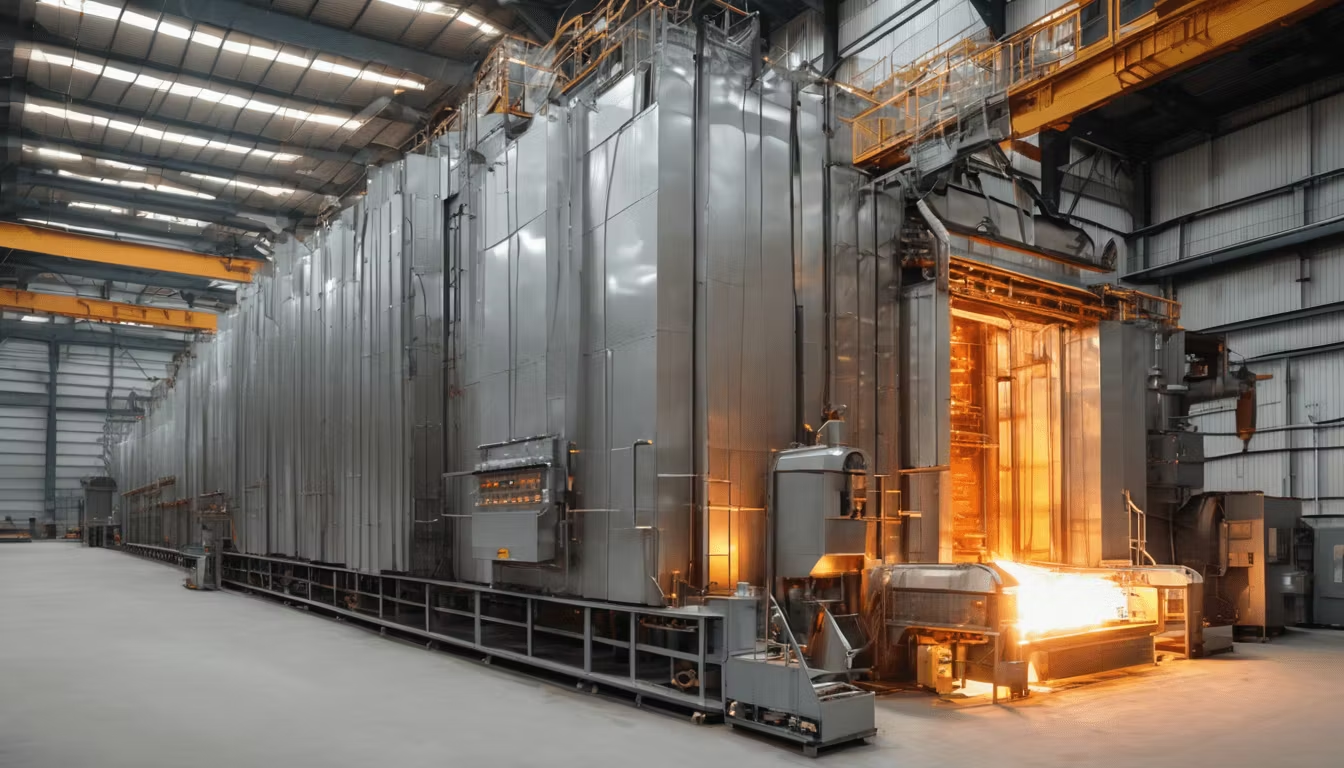
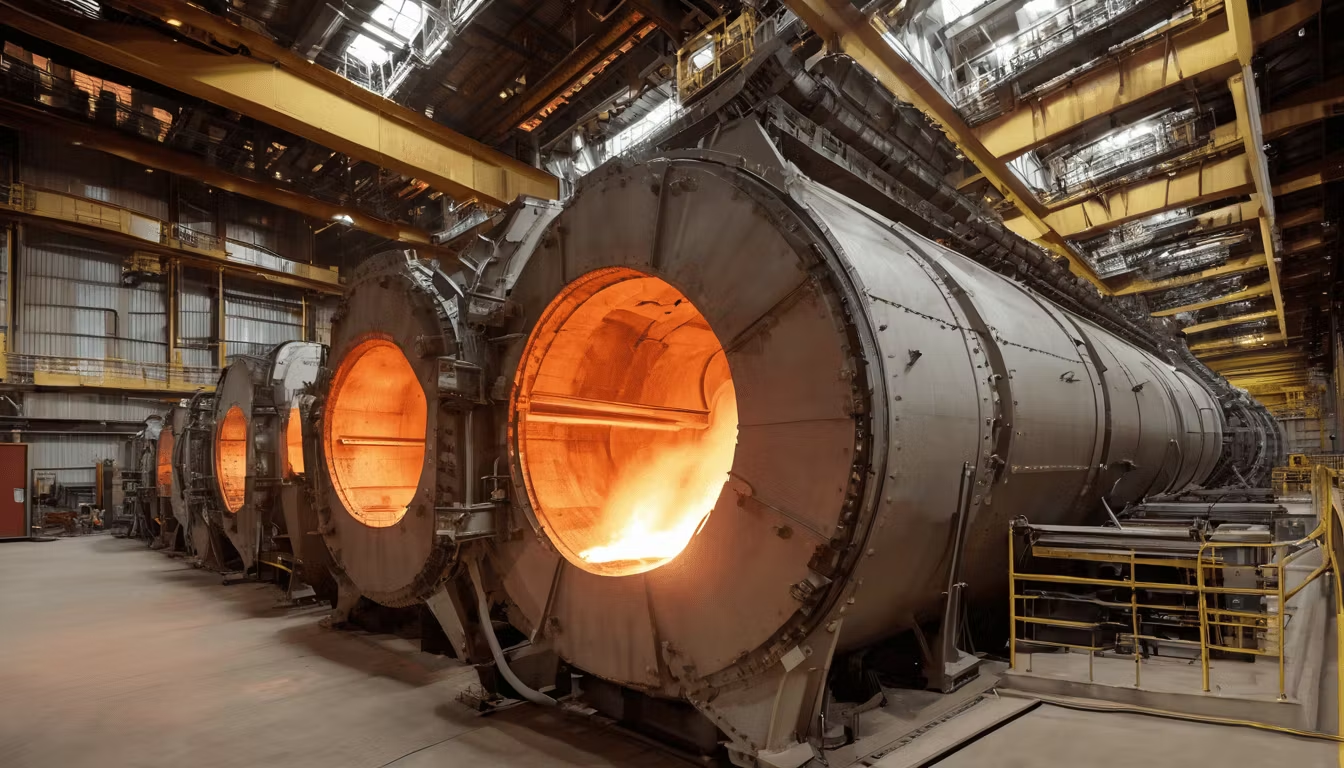
Smelters pay substantial energy costs to evaporate excess moisture during ore roasting and concentration. High-moisture ore increases fuel consumption, extends processing time, and reduces throughput—all factors that smelters pass back to suppliers through lower purchasing prices. A 5% reduction in ore moisture can translate to meaningful cost savings at industrial scale, making it a negotiation point in major supply contracts.
How Moisture Content Affects Ore Quality Assessment
Sampling and Laboratory Testing Protocols
Accurate moisture measurement requires standardized protocols. Third-party laboratory testing is non-negotiable for B2B ore transactions. CV Indoalam Mineral Persada utilizes SUCOFINDO certification—Indonesia's premier independent testing, inspection, and certification body—to measure moisture content and ensure compliance with international standards.
The testing process involves:
1. Sampling: Multiple ore samples collected from different points in the shipment to ensure representativeness.
2. Moisture Analysis: Samples heated in standardized conditions (typically 105°C) until constant weight is achieved, with moisture calculated as the weight loss percentage.
3. Certification: SUCOFINDO issues official certificates documenting ore grade (nickel %), moisture content, and other relevant parameters for customs clearance and buyer verification.
Buyer beware: informal or in-house moisture testing lacks the credibility needed for international contracts. SUCOFINDO certification provides the third-party assurance that protects both buyer and seller from disputes.
Variability and Batch-to-Batch Consistency
One challenge in nickel ore supply is moisture variability between shipments. Weather conditions, storage duration, and ore handling methods all influence final moisture readings. Tropical rainfall in Sulawesi or Maluku can increase moisture by 5–10% in exposed stockpiles within days. Professional ore suppliers maintain covered storage and implement consistent drying protocols to minimize this variability.
Wet Metric Ton Pricing Models in the Nickel Market
Spot Pricing vs. Contract Pricing
The nickel market quotes ore prices in multiple ways. Spot deals (smaller, one-time purchases) are often priced in USD per WMT, reflecting the ore as physically delivered. Longer-term contracts typically establish a base price per DMT with moisture adjustments, ensuring consistent value regardless of weather-related moisture fluctuations.
A responsible nickel ore supplier will clarify pricing terminology upfront and provide moisture forecasts or guarantees in writing. CV Indoalam Mineral Persada, with annual capacity of 2.5 million metric tons and direct access to Sulawesi and Kalimantan mines, offers transparent pricing with SUCOFINDO-verified moisture data included in every quotation.
The True Cost of "Cheap" High-Moisture Ore
Buyers tempted by low WMT prices on high-moisture ore often face hidden costs:
• Actual nickel content is lower: 100 WMT of 35% moisture ore delivers only 65 DMT of actual ore solids.
• Smelter processing costs increase: Extra drying and roasting add operational expenses passed to the buyer through lower purchase prices on refined nickel.
• Logistics inefficiency: Shipping moisture across continents inflates freight costs per unit of actual mineral delivered.
• Contract penalties: Many smelters dock payment for out-of-spec moisture, negating apparent savings.
Total cost of ownership calculations almost always favor ore with controlled, documented moisture content over artificially cheap high-moisture material.
Industry Standards and Specifications for Nickel Ore Moisture
Indonesian Regulatory Framework
Indonesia's IUP OPK (Izin Usaha Pertambangan Operasi Produksi Khusus—Special Production Operating Permit) and RKAB (Rencana Kerja dan Anggaran Biaya—Work Plan and Budget) regulations require licensed operators like CV Indoalam to maintain quality standards documented through SUCOFINDO testing. Export controls on nickel ore (domestic-only policy for saprolite and limonite) mean that moisture specifications are primarily relevant for domestic smelter supply within Indonesia.
For silica sand and other complementary minerals, export contracts with international buyers demand stricter moisture controls, typically <8% for most industrial applications.
International Buyer Expectations
Major nickel smelters—whether processing ore into ferronickel, nickel pig iron (NPI), or high-pressure acid leaching (HPAL) products—typically accept saprolite nickel ore at 25–32% moisture without penalty. Ore exceeding 35% moisture often faces pricing adjustments or rejection depending on the buyer's processing capabilities.
Professional trading agreements specify:
• Maximum acceptable moisture content (with penalty clauses)
• Testing method and third-party certifier (e.g., SUCOFINDO)
• Responsibility for drying costs if limits are exceeded
• Dispute resolution procedures if testing results vary between buyer and seller labs
How CV Indoalam Mineral Persada Manages Nickel Ore Moisture
Controlled Sourcing and Storage
CV Indoalam sources nickel ore directly from mining operations in Sulawesi (Morowali, Konawe), Kalimantan, and Maluku, bypassing middlemen who lack quality control infrastructure. Direct sourcing enables implementation of moisture management from the point of extraction:
• Covered stockpiles: Ore is protected from rainfall and high-humidity ambient air through roofed storage facilities at mining locations and transshipment points.
• Regular drying protocols: Ore undergoes sun-drying or mechanical drying before loading to reduce moisture to optimal levels.
• Consistent monitoring: Moisture testing is performed at multiple stages—pre-shipment, during loading, and pre-delivery—to detect and address variability.
SUCOFINDO Certification and Transparency
Every shipment of nickel ore from CV Indoalam includes SUCOFINDO lab certificates documenting moisture content, nickel grade, and other quality parameters. This third-party verification protects both supplier and buyer, providing the independent assurance required for major commercial transactions.
Certificates are issued before shipment, enabling buyers to confirm specifications and pricing before committing funds. This transparency builds trust and reduces disputes in the B2B supply chain.
Flexible Supply Agreements
CV Indoalam Mineral Persada accommodates buyers of all sizes—from trial shipments of 100 metric tons to multi-year contracts supplying 2.5 million metric tons annually. Small buyers benefit from the same SUCOFINDO testing and moisture management standards applied to major smelter contracts, ensuring quality consistency regardless of order size.
Practical Considerations for Nickel Ore Buyers
Best Practices for Purchasing Decisions
If you're sourcing nickel ore for your smelter, foundry, or industrial processing operation, follow these guidelines:
1. Always specify moisture limits in writing. Include acceptable ranges, penalty clauses, and testing procedures in your purchase agreement.
2. Require third-party testing. Insist on SUCOFINDO or equivalent independent certification. Don't rely on seller-supplied data.
3. Calculate true cost of ownership. Compare DMT-based prices across suppliers, accounting for moisture and processing costs, not just WMT headline prices.
4. Negotiate realistic timelines. Longer shipping routes increase exposure to moisture variability. Plan for testing and drying delays.
5. Build supplier relationships with quality documentation. Suppliers like CV Indoalam Mineral Persada that prioritize transparency and SUCOFINDO certification demonstrate professional standards worth rewarding with long-term contracts.
Storage and Handling After Delivery
Your responsibility begins after ore arrival. Moisture reabsorption is rapid in tropical or humid climates—ore left in open storage can gain 5–10% moisture within weeks. Maintain covered storage, implement moisture monitoring, and plan processing schedules to minimize downtime between delivery and smelting.
Conclusion: Making Informed Nickel Ore Purchasing Decisions
Nickel ore moisture content is far more than a technical specification—it directly determines your cost per unit of actual mineral and your processing efficiency. Understanding WMT vs. DMT calculations, industry testing standards, and moisture management practices is essential for any buyer serious about optimizing their raw material supply chain.
CV Indoalam Mineral Persada brings Indonesian nickel ore directly to industrial buyers with full transparency: SUCOFINDO-certified moisture testing, IUP OPK and RKAB licensing, and flexible supply ranging from trial lots to 2.5 million metric tons annually. Whether you're supplying a nickel smelter, ferronickel producer, or specialty industrial facility, our commitment to quality documentation and moisture control ensures you receive exactly what you're paying for.
Ready to evaluate our nickel ore for your operation? Contact us today for detailed specifications, moisture certificates, and customized supply proposals. Our team is prepared to discuss your volume requirements, delivery preferences, and quality standards.
For a complete overview of our capabilities across nickel ore and complementary minerals like silica sand and aluminium ingot, visit our about us page to learn more about CV Indoalam Mineral Persada's sourcing infrastructure, certifications, and commitment to B2B mining excellence.