Nickel Matte Production: Complete Smelting Process Guide
Understanding Nickel Matte: The Foundation of Modern Nickel Production
Nickel matte represents a critical intermediate product in the global nickel supply chain, serving as the essential bridge between raw nickel ore extraction and final refined nickel metal production. For B2B buyers, smelters, and metallurgical professionals, understanding the nickel matte production process is fundamental to optimizing procurement strategies and ensuring consistent feedstock quality for downstream operations.
The global nickel market has undergone significant transformation over the past decade, driven by surging demand from battery manufacturers, stainless steel producers, and specialized alloy manufacturers. Nickel matte, with its concentrated nickel content ranging from 40-80%, has become the preferred trade commodity for international commerce due to its stability, consistent quality specifications, and ease of transportation compared to raw laterite ore.
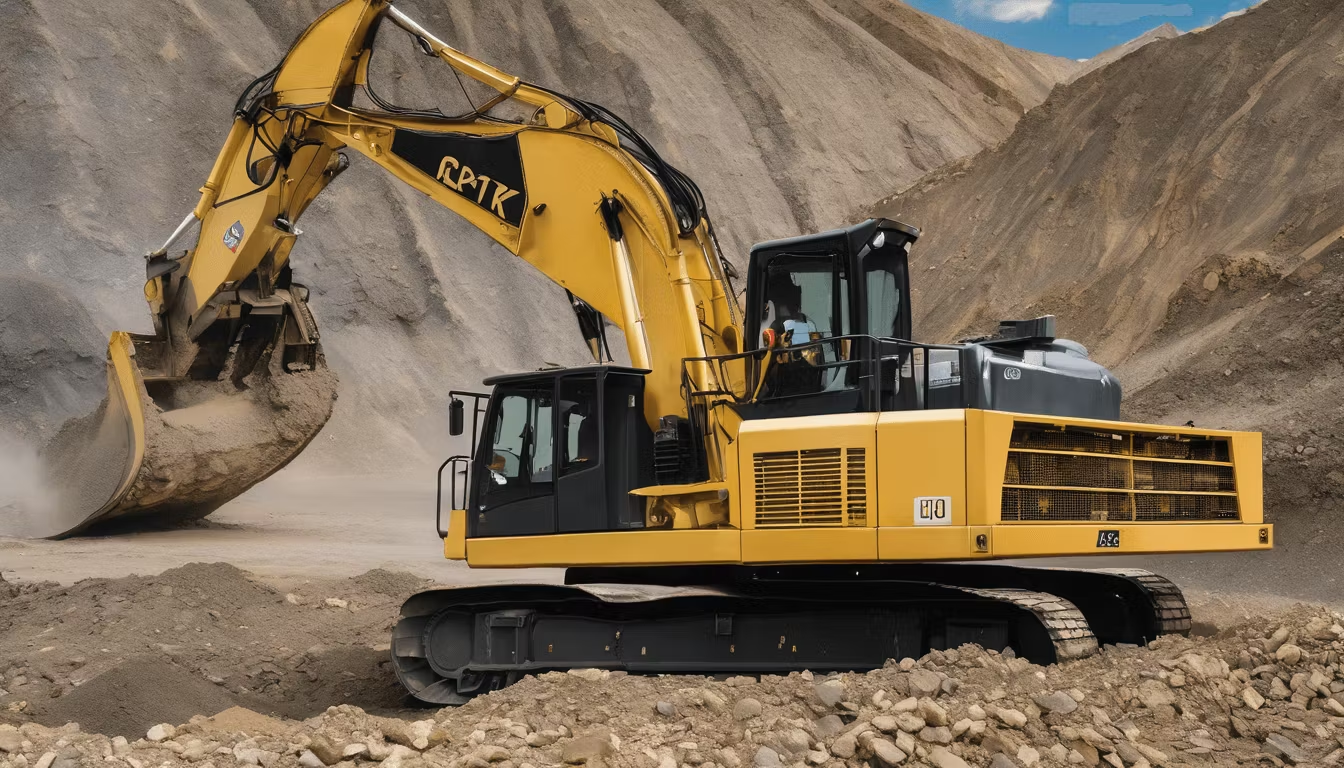
At CV Indoalam Mineral Persada, we recognize the critical importance of quality nickel ore sourcing for smelters requiring consistent matte feedstock. Our operations across Sulawesi's prime mining regions—including Morowali and Konawe—provide access to both saprolite (1.5-2.0% Ni) and limonite (0.8-1.2% Ni) ore grades optimized for matte production through proven smelting methodologies.
The Nickel Smelting Matte Process: A Technical Overview
Stage 1: Ore Preparation and Concentration
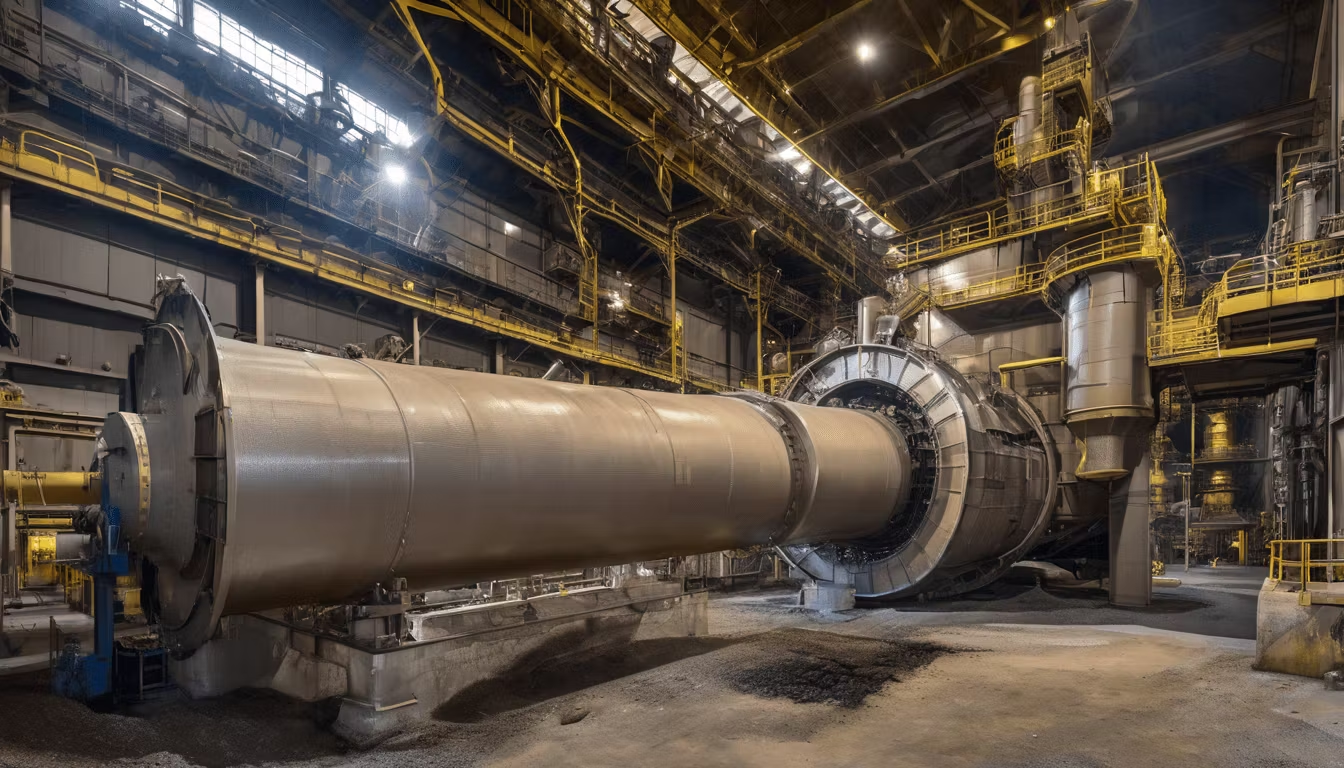
The journey from raw nickel ore to finished matte begins with rigorous ore preparation. Laterite nickel ores—particularly saprolite varieties—contain substantial moisture and require initial drying to reduce transportation costs and improve furnace efficiency. Modern facilities employ rotary dryers operating at 800-900°C to eliminate moisture content while preventing premature nickel oxidation.
Following desiccation, crushed ore undergoes concentration through screening and sometimes magnetic separation to remove low-grade material. This concentration step is economically critical, as it reduces furnace burden volume and improves the nickel-to-iron ratio in the final matte product. Quality assurance through SUCOFINDO testing ensures that only ore meeting strict nickel content specifications proceeds to smelting.
Stage 2: Pyrometallurgical Smelting
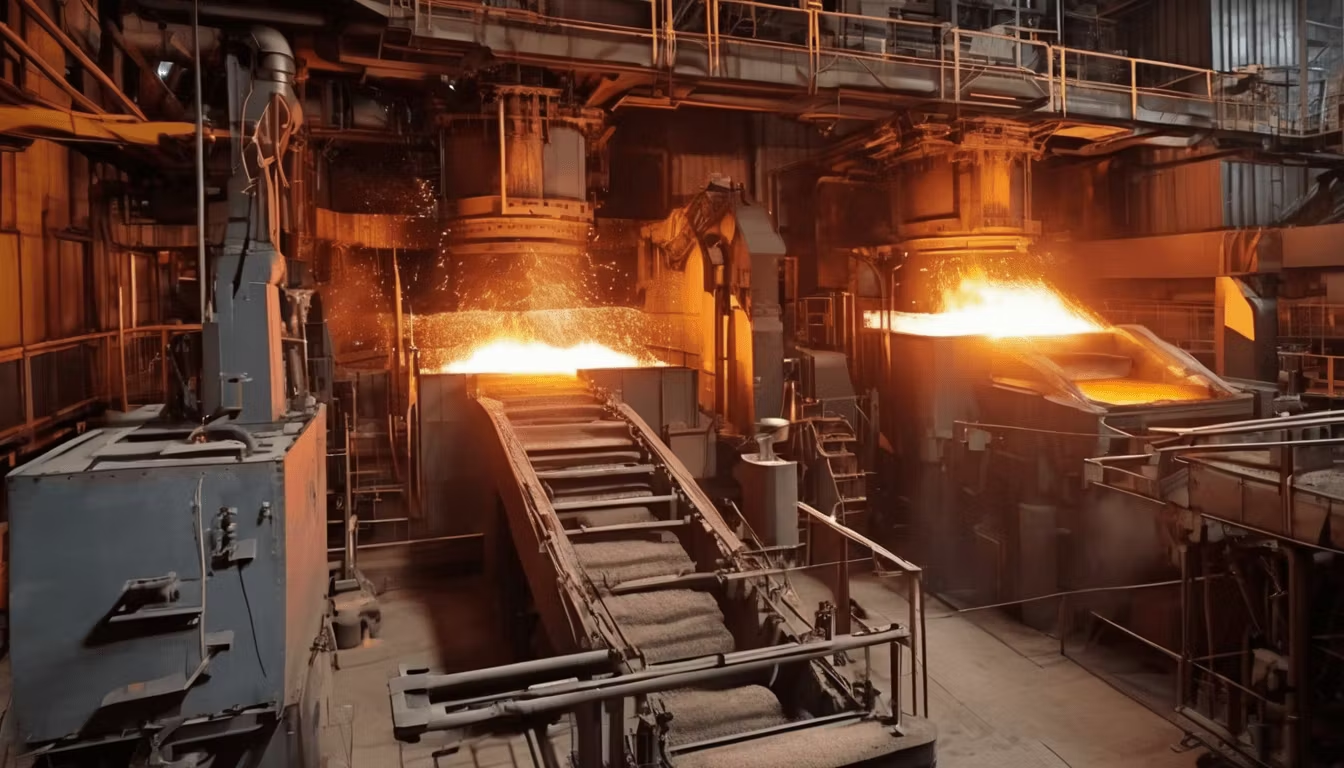
The core of nickel matte production occurs in high-temperature smelting furnaces—typically electric arc furnaces (EAF) or flash smelters capable of achieving temperatures exceeding 1,400°C. During smelting, prepared nickel ore is charged alongside fluxing agents (limestone) and reducing agents (coke, coal) to create an oxygen-poor environment.
The chemical reactions occurring within the furnace are complex but essential to matte formation. Nickel oxides (NiO) are reduced to metallic nickel, which subsequently combines with iron sulfides present in the ore (or deliberately introduced) to form the nickel-iron sulfide compound known as matte. The chemical formula varies, but typical nickel matte contains approximately 50% nickel, 25% iron, and 20% sulfur by weight.
Temperature control proves absolutely critical during smelting. Insufficient temperatures result in incomplete reduction and poor nickel recovery, while excessive temperatures risk nickel volatilization and furnace equipment degradation. Experienced smelters maintain precise control through continuous ore feeding optimization and fuel adjustment.
Stage 3: Matte Settling and Separation
As smelting progresses, the density differential between molten matte (density ~4.8 g/cm³) and slag (density ~2.8 g/cm³) enables gravitational separation. Heavier matte settles toward the furnace hearth while lighter slag floats above. Periodic tapping removes slag from the furnace, with the remaining matte undergoing continuous circulation and re-exposure to reducing conditions.
This multi-stage settling approach—sometimes called "slag removal cycles"—ensures maximal nickel recovery by providing repeated opportunities for nickel-bearing slag particles to reductively convert to matte phase. Industrial smelters typically achieve 95-98% nickel recovery through optimized settling protocols.
Nickel Refining and Matte Converting: Achieving Market-Grade Products
Converting Process Fundamentals
Raw nickel matte emerging from primary smelting, while containing 50-60% nickel, remains unsuitable for direct industrial application due to unacceptable iron and sulfur concentrations. The converting process—conducted in specialized converting furnaces similar to traditional copper converting equipment—systematically oxidizes iron and sulfur impurities while preserving metallic nickel.
Converting furnaces operate at 1,200-1,300°C, where compressed air or oxygen-enriched air is blown through molten matte via submerged tuyeres. Initial air blowing selectively oxidizes iron to iron oxides (Fe₂O₃, Fe₃O₄), which combine with added silica flux to form iron silicate slag. This iron-rich slag is periodically removed, leaving behind nickel with progressively decreasing iron content.
Matte Converting Stages
The complete matte converting operation typically unfolds in three distinct stages:
Stage 1—Iron Oxidation: Initial air blowing oxidizes the majority of iron content. Temperatures rise rapidly (sometimes to 1,400°C+) due to exothermic oxidation reactions. Slag is continuously skimmed and removed as it forms.
Stage 2—Sulfur Oxidation: Following substantial iron removal, continuing air blowing shifts to sulfur oxidation, converting iron-nickel sulfides to nickel oxide and sulfur dioxide gas (SO₂). The SO₂ is typically captured for sulfuric acid production, adding economic value to the operation.
Stage 3—Final Conversion: The final stage produces "white matte"—a product containing 75-80% nickel with minimal iron and sulfur. Some smelters extend conversion further to produce nickel oxide or even crude nickel metal, depending on end-market requirements and equipment capabilities.
Quality Specifications and Testing
Market-grade nickel matte must meet strict compositional specifications established through international trading standards. Buyers typically require:
- Nickel content: 75-80% minimum (high-grade matte)
- Iron content: <4% for premium products
- Copper content: <0.5%
- Cobalt content: <0.3%
- Sulfur content: 4-6% (for sulfide matte)
- Moisture: <0.5%
Every batch of nickel matte undergoes rigorous laboratory analysis to verify these specifications before shipment. At CV Indoalam, our partnerships with SUCOFINDO-certified laboratories ensure that all supplied nickel ore meets the baseline specifications necessary for our smelting partner networks to produce consistently high-quality matte products.
Industrial Applications of Nickel Matte
Stainless Steel Production
Nickel matte represents the primary feedstock for stainless steel manufacturing, accounting for approximately 65-70% of global nickel consumption. Stainless steel producers value matte for its concentrated nickel content, which facilitates precise alloy composition control without requiring complete refining to pure nickel metal—significantly reducing their raw material costs.
Nickel-Based Superalloys
Aerospace, power generation, and chemical processing industries demand nickel-based superalloys for extreme-temperature applications. While these ultimate applications typically require further refining of matte products, many superalloy producers maintain converting capabilities in-house and source nickel matte as their preferred raw material.
Battery and Electric Vehicle Applications
The explosive growth in lithium-ion battery manufacturing has created unprecedented demand for high-purity nickel compounds. While battery applications typically require chemically refined nickel sulfate rather than direct matte consumption, battery-grade nickel sulfate is most efficiently produced from high-quality nickel matte feedstock through hydrometallurgical refining processes.
Electroplating and Surface Treatment
Industrial nickel plating operations consume significant quantities of nickel matte converted to nickel sulfamate and nickel chloride electrolytes. The corrosion resistance imparted by nickel plating makes this application critical across automotive, electronics, and industrial equipment manufacturing sectors.
Sustainability Considerations in Matte Production
Modern nickel matte production increasingly incorporates environmental management strategies to minimize ecological impact. Sulfur dioxide capture from converting furnaces—historically released to the atmosphere—is now routinely converted to sulfuric acid, creating a valuable co-product while eliminating air pollution. Water recycling systems minimize freshwater consumption, and waste heat recovery from cooling stages reduces overall energy requirements.
Leading producers like those supplied by CV Indoalam's nickel ore operate under strict environmental management protocols aligned with Indonesian regulatory requirements and international best practices. IUP OPK licensing ensures that all sourcing operations comply with land rehabilitation standards and environmental impact mitigation protocols.
Procurement Strategy: Selecting Nickel Ore for Optimal Matte Production
Ore Grade Considerations
Smelters must carefully evaluate nickel ore grades in relation to matte production economics. Saprolite ore (1.5-2.0% Ni content) offers higher concentrations, enabling higher matte production rates per ton of ore processed. Conversely, limonite ore (0.8-1.2% Ni), while requiring greater volume for equivalent nickel output, often carries lower procurement costs and may present advantages for operations with excess furnace capacity.
Consistency and Quality Assurance
Smelting operations demand consistent ore quality to maintain optimal furnace conditions and matte specifications. Erratic nickel grades create furnace control challenges, reduce recovery rates, and increase processing costs. Procurement from established, quality-assured suppliers with comprehensive testing protocols—such as CV Indoalam Mineral Persada's SUCOFINDO-verified operations—provides the consistency necessary for profitable matte production.
Supply Chain Reliability
Nickel smelting represents a capital-intensive operation with fixed overhead costs. Supply interruptions force inefficient furnace operation (partial capacity), driving unit production costs upward. Reliable suppliers with multiple sourcing locations and adequate inventory buffer against market disruptions and seasonal availability fluctuations.
Why Partner with CV Indoalam for Nickel Ore Supply
CV Indoalam Mineral Persada brings more than two years of specialized experience in nickel ore sourcing and distribution, with direct access to premium mining operations across Indonesia's richest nickel-bearing regions. Our direct-from-mine operational model eliminates middlemen and their associated costs and quality variability, delivering competitive pricing and verified ore specifications.
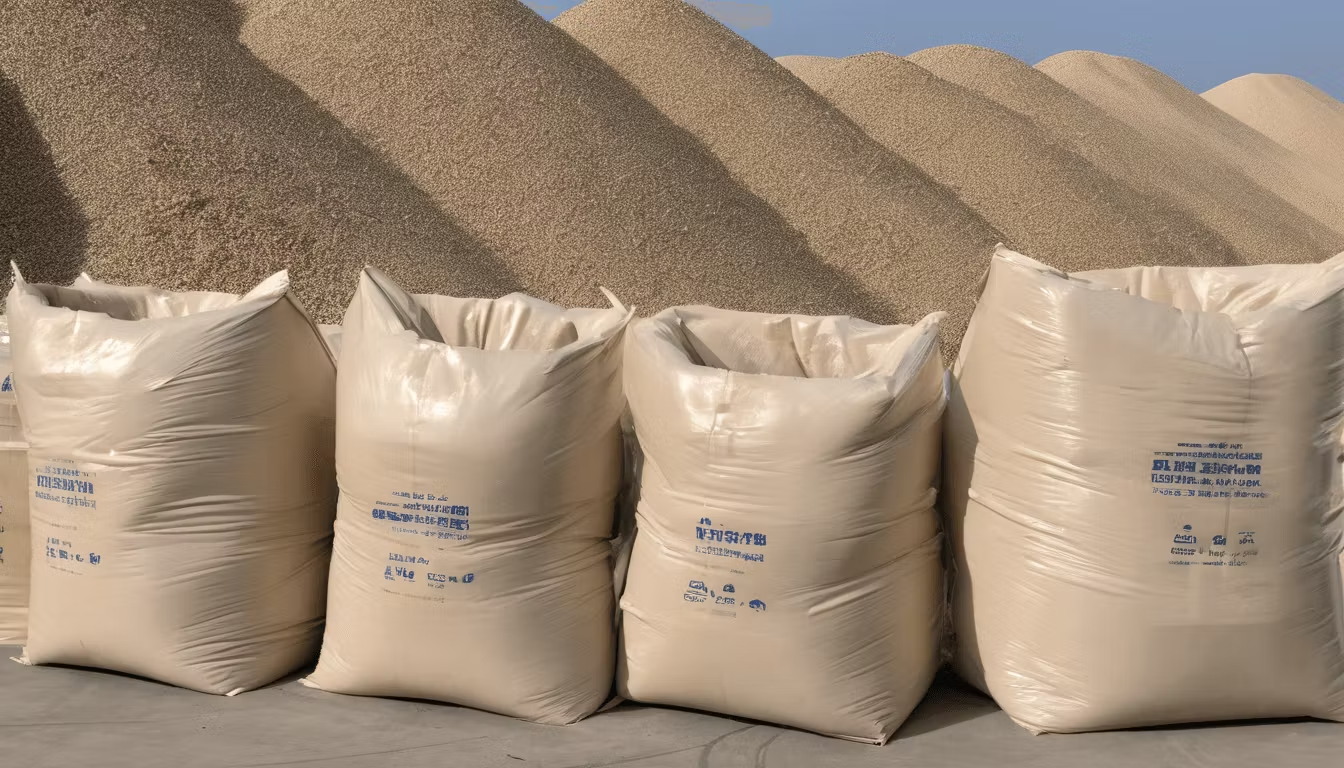
Our comprehensive product portfolio extends beyond nickel ore to include silica sand, aluminium ingot, and zircon sand—enabling integrated procurement relationships with industrial operators across multiple commodity requirements. Every product batch undergoes independent SUCOFINDO testing, backed by full IUP OPK and RKAB regulatory compliance documentation.
We offer flexible supply arrangements ranging from 100-metric-ton trial shipments through multi-year agreements supporting 2.5 million metric tons of annual capacity, accommodating both startup evaluations and major industrial partnerships.
Conclusion: Mastering Nickel Matte Production
Nickel matte production represents a technically sophisticated yet economically essential process converting raw laterite ore into the intermediate product fueling global nickel-dependent industries. From initial ore preparation through pyrometallurgical smelting, gravity separation, and converting operations, every stage demands precise technical control and quality assurance to achieve market-competitive specifications.
For smelting operations and downstream nickel consumers, procuring consistent, verified-quality nickel ore directly impacts matte production efficiency, final product specifications, and overall operational profitability. Strategic partnerships with reliable, fully-licensed suppliers ensure that critical ore feedstock requirements are met reliably and cost-effectively.
CV Indoalam Mineral Persada stands ready to support your nickel matte production objectives with premium ore sourcing, comprehensive quality assurance, and flexible supply arrangements. Contact us today to discuss your specific nickel ore requirements and discover how our direct-from-mine expertise can optimize your smelting operations and matte production efficiency.