Nickel and the EV Battery Revolution: Indonesia's Strategic Role

Introduction: Nickel's Critical Role in the EV Battery Revolution
The global transition to electric vehicles (EVs) represents one of the most significant industrial transformations of the 21st century. At the heart of this revolution lies a single critical mineral: nickel. As battery manufacturers worldwide race to scale production, the demand for high-quality nickel ore has reached unprecedented levels. Indonesia, as the world's largest nickel producer, stands at the epicenter of this energy transformation, supplying the raw materials that power millions of EVs globally.
The correlation between nickel supply and EV battery performance is direct and undeniable. Nickel-rich cathode materials in lithium-ion batteries offer superior energy density, longer driving ranges, and improved performance characteristics. Understanding this supply chain—from mine to battery factory—is essential for manufacturers, traders, and investors navigating the evolving mineral commodities market.
The EV Battery Supply Chain: Where Nickel Fits
Understanding Battery-Grade Nickel Requirements
Modern EV batteries rely on nickel-based cathode chemistries, primarily NCA (nickel-cobalt-aluminium), NCM (nickel-cobalt-manganese), and emerging NCMA formulations. These chemistries demand nickel with specific purity levels and chemical profiles. Battery-grade nickel typically requires:
- Nickel content above 99.8% purity for processed intermediate products
- Low impurity levels, particularly reduced iron and cobalt concentrations
- Consistent particle size distribution for manufacturing efficiency
- Certified traceability and third-party testing verification
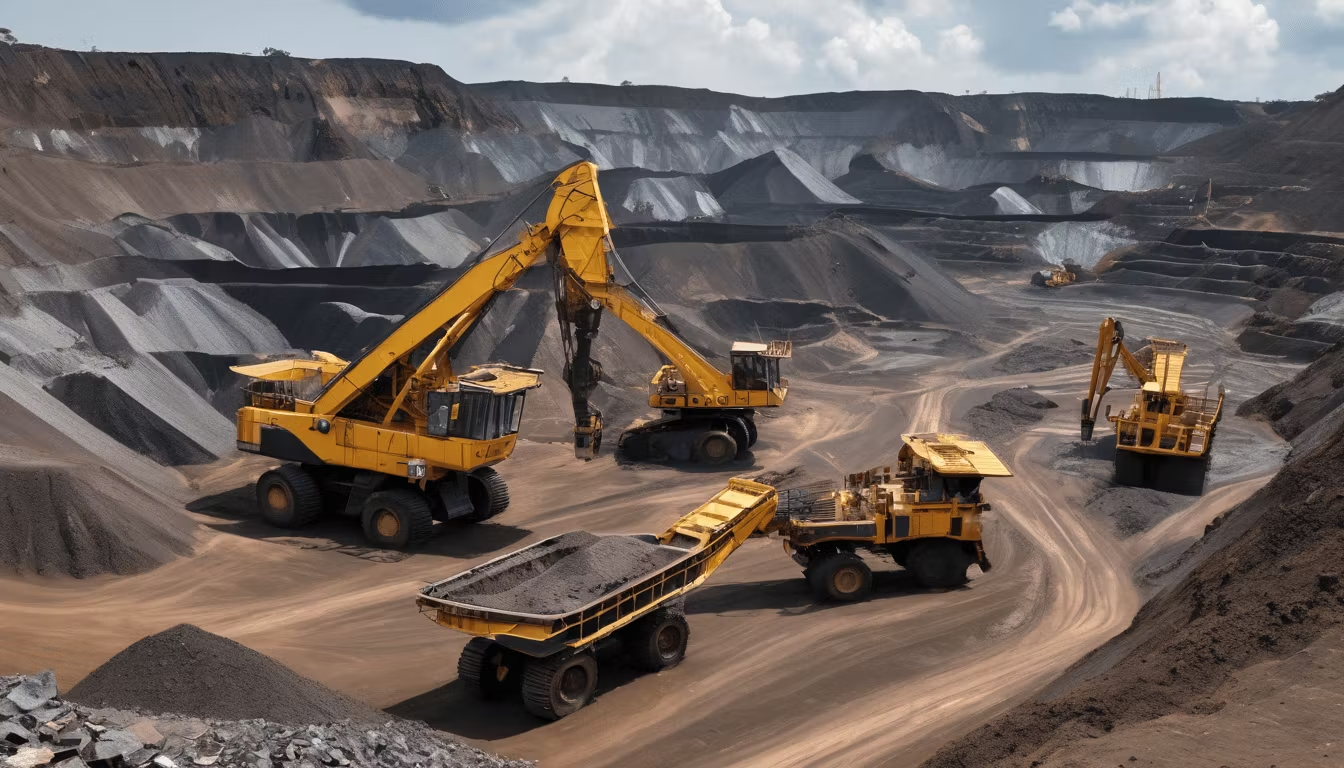
Raw nickel ore must undergo rigorous processing to meet these specifications. Indonesia's abundant laterite nickel deposits—primarily saprolite and limonite ore types—contain nickel concentrations ranging from 0.8% to 2.0%, requiring sophisticated extraction and refining processes to achieve battery-grade standards.
From Raw Ore to Battery Materials: The Processing Journey
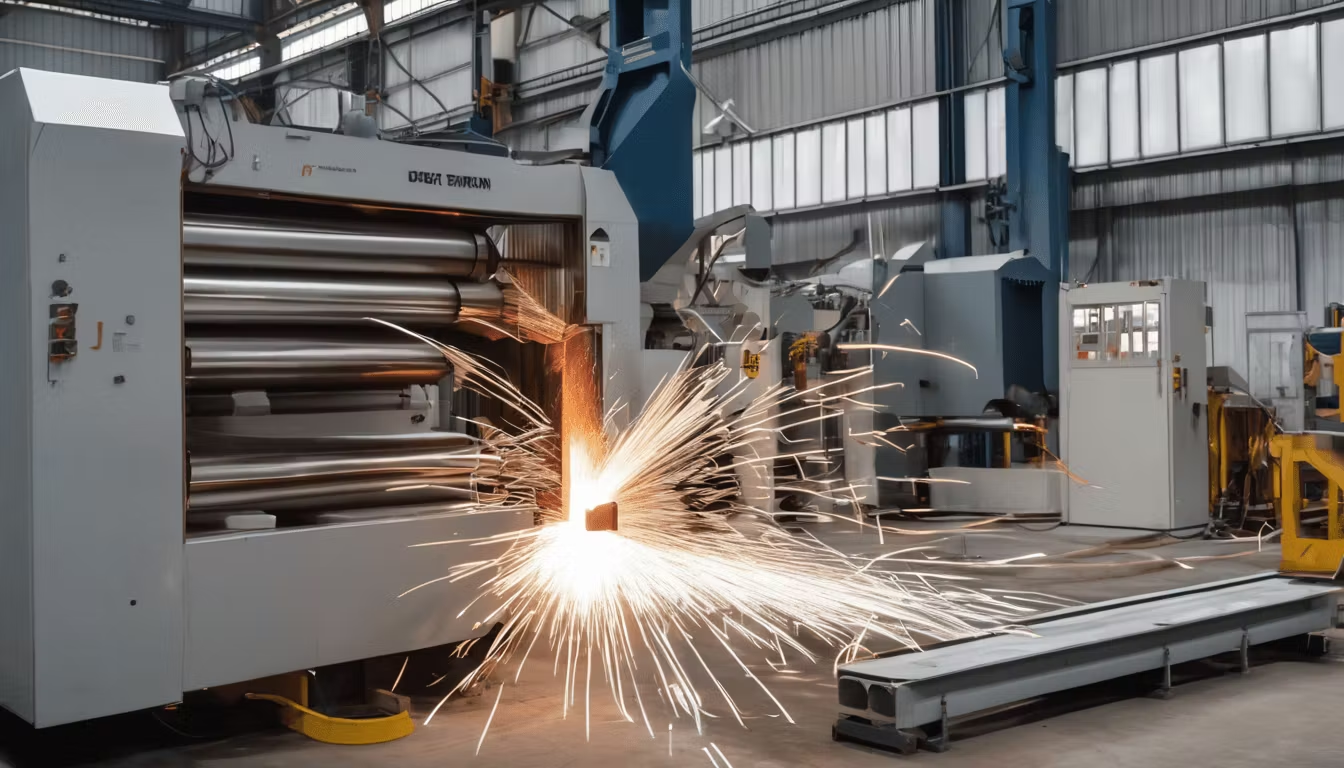
The transformation of Indonesian nickel ore into battery-ready materials involves multiple processing pathways. The HPAL (High Pressure Acid Leaching) process represents the most advanced technology for converting laterite ore into nickel intermediates suitable for battery manufacturing. This hydrometallurgical process extracts nickel from low-grade limonite ore through acid leaching under elevated temperature and pressure, producing nickel-cobalt mixed hydroxide precipitate (MHP) or nickel sulphate solutions.
The HPAL process offers significant advantages: higher nickel recovery rates (85-95%), reduced environmental footprint compared to pyrometallurgical methods, and production of intermediate products that battery manufacturers can process into cathode materials. Indonesian smelters increasingly adopt HPAL technology, positioning Indonesia as a key supplier of battery intermediates rather than merely raw ore.
Indonesia's Dominance in Global Nickel Supply
Resource Abundance and Production Capacity
Indonesia controls approximately 21% of the world's proven nickel reserves and produces roughly 34% of global nickel supply. The country's nickel deposits concentrate primarily in Sulawesi, particularly the Morowali and Konawe regions, alongside significant reserves in Kalimantan and Maluku's Halmahera island. This geographic advantage, combined with relatively accessible laterite deposits, provides Indonesia with unparalleled production capacity.
The Indonesian government's strategic approach to nickel resource management reflects the mineral's critical importance. In 2020, Indonesia implemented an export ban on raw nickel ore, a policy designed to encourage domestic value addition and battery material production. This regulation fundamentally reshaped global nickel supply chains, forcing battery manufacturers to establish smelting and refining operations within Indonesia or secure refined intermediates from Indonesian producers.
The Policy Shift: Raw Ore Export Ban and Downstream Investment
The nickel ore export prohibition has catalyzed massive investment in Indonesian smelting and refining infrastructure. International nickel producers and Chinese battery material manufacturers have established numerous HPAL and ferronickel facilities across Indonesia. This policy effectively transformed Indonesia from a raw material exporter into a processing hub, creating significant opportunities for intermediate product trading and creating competitive advantages for manufacturers located within or near Indonesian production clusters.
For B2B mineral traders and manufacturers sourcing nickel, this policy shift necessitates direct relationships with Indonesian smelters or access to licensed trading partners with established supply chains. Companies like CV Indoalam Mineral Persada, with established credentials in Indonesian mineral sourcing, provide essential connections to reliable nickel supply sources compliant with regulatory frameworks.
Battery Chemistry Evolution: Why Nickel Content Matters
High-Nickel Cathode Chemistries Drive EV Performance
Battery chemistry has evolved toward increasingly nickel-rich formulations. Early EV batteries typically featured NCM 111 (one-third nickel, one-third cobalt, one-third manganese). Current production emphasizes NCM 811 (eight parts nickel, one part cobalt, one part manganese) and nickel-rich NCA variants. Next-generation technologies explore single-crystal cathodes and NCMA chemistries with even higher nickel content.
This evolution toward nickel-rich chemistries reflects several performance advantages: increased energy density enables longer driving ranges per charge, reduced cobalt dependency addresses supply security and ethical sourcing concerns, and lower manufacturing costs result from cobalt replacement. A single EV battery pack requires 8-10 kilograms of battery-grade nickel or nickel intermediates, meaning each vehicle produced adds significant demand to global nickel markets.
Cobalt Reduction and Supply Security
The geopolitical concentration of cobalt production—primarily in the Democratic Republic of Congo—creates supply vulnerability for battery manufacturers. Shifting toward high-nickel chemistries with minimal cobalt dependency represents a strategic diversification. Indonesia's abundant nickel resources combined with its geographic stability make Indonesian nickel an attractive supply security solution for battery manufacturers seeking to reduce cobalt exposure.
Market Dynamics: Pricing, Demand, and Future Projections
EV Growth Trajectories and Nickel Demand Forecasts
Global EV sales have accelerated dramatically, reaching 14 million units in 2023 and projected to reach 30-40 million annually by 2030. This growth trajectory creates exponential nickel demand growth. The International Energy Agency (IEA) projects that battery demand alone could account for 25-30% of global nickel supply by 2030, compared to approximately 10% currently. Some forecasts suggest battery production could require 2-3 million metric tons of nickel annually within the decade—equivalent to Indonesia's current total nickel production capacity.
This supply-demand imbalance creates significant implications for nickel pricing and procurement strategy. Forward-looking manufacturers increasingly secure long-term supply agreements with established producers, recognizing that spot market purchases alone cannot satisfy future demand. Indonesian suppliers positioned in the HPAL processing value chain benefit from sustained premium pricing and secure demand from battery material manufacturers.
Price Volatility and Hedging Considerations
Nickel markets exhibit considerable price volatility, driven by macroeconomic factors, stainless steel demand cycles, investment flows, and regulatory announcements. The 2022 London Metal Exchange nickel price spike to nearly $100,000 per metric ton—subsequently reversed through suspension and forced position liquidation—demonstrated market fragility and the importance of diversified sourcing strategies.
For B2B buyers, this volatility necessitates sophisticated procurement approaches. Long-term contracts with tiered pricing mechanisms, strategic inventory positioning, and relationships with multiple suppliers across different producing regions provide operational resilience. Indonesian suppliers offering flexible supply arrangements—from trial quantities of 100 metric tons to annual contracts exceeding 2.5 million metric tons—enable manufacturers to balance cost optimization with supply security.
Indonesia's Infrastructure and Processing Capabilities
HPAL Technology Adoption and Facility Expansion
Indonesian smelting operators have invested billions in HPAL capacity expansion. These facilities utilize proprietary technology to process laterite ore efficiently, producing nickel-cobalt mixed hydroxide precipitate, nickel sulphate, and other intermediate products tailored to downstream battery material manufacturers' specifications. Major Indonesian smelters now operate multiple HPAL lines, each capable of processing hundreds of thousands of metric tons annually.
The geographic clustering of HPAL facilities in Morowali creates competitive advantages through shared infrastructure, logistics optimization, and supply chain efficiency. Proximity to raw ore sources reduces transportation costs and processing delays, while clustering enables shared utilities and port facilities for both raw material intake and finished product export.
Quality Assurance and Third-Party Certification
Battery manufacturers demand rigorous quality assurance throughout the supply chain. Indonesian producers increasingly implement ISO 9001 quality management systems and obtain third-party testing through organizations like SUCOFINDO (Sucofindo Indonesia). These certifications verify chemical composition, particle size distribution, moisture content, and impurity levels, providing manufacturers with documented traceability and quality transparency essential for battery production.
Suppliers offering SUCOFINDO-tested materials and full documentation of mining licenses (IUP OPK), environmental approvals (RKAB), and regulatory compliance provide manufacturers with confidence in supply continuity and regulatory adherence.
Strategic Considerations for EV Battery Supply Chain Participants
Vertical Integration and Supply Chain Resilience
Leading battery manufacturers increasingly pursue vertical integration strategies, acquiring or establishing smelting operations within Indonesia to secure nickel supply. This trend reflects confidence in Indonesia's long-term role in battery supply chains and the competitive advantages of controlling nickel intermediate production. Companies unable to establish Indonesian operations benefit from partnerships with established local suppliers and traders with deep market knowledge and regulatory compliance expertise.
Sustainability and ESG Compliance
Battery manufacturers face increasing pressure to demonstrate responsible sourcing and environmental compliance throughout their supply chains. Indonesian nickel production, despite its abundance, carries environmental scrutiny regarding land use, water management, and community impact. Suppliers demonstrating environmental management system certifications (ISO 14001), community engagement, and adherence to Indonesian environmental regulations increasingly command premium pricing and secure long-term contracts with ESG-conscious manufacturers.
Trade Route Optimization and Logistics
Nickel intermediates produced in Indonesia serve battery material manufacturers globally. Logistics optimization—leveraging Indonesian port infrastructure, maritime routes to primary demand centers in East Asia, and emerging manufacturing clusters in Southeast Asia—significantly impacts supply chain economics. Suppliers offering comprehensive logistics solutions and export documentation support reduce downstream customer complexity and create competitive differentiation.
The Road Ahead: Nickel's Irreplaceable Role in EV Electrification
As the global automotive industry accelerates its transition to electric propulsion, nickel's criticality will only intensify. Indonesia, as the world's preeminent nickel supplier and increasingly sophisticated processing hub, occupies an unparalleled strategic position. The evolution from raw ore export toward HPAL-processed intermediates represents value chain advancement that strengthens Indonesia's competitive positioning while creating premium-priced opportunities for suppliers capable of delivering battery-grade material specifications.
Battery chemistry advancement toward higher-nickel formulations will sustain and accelerate demand growth throughout the 2020s and beyond. Manufacturers and traders navigating this landscape require partnerships with Indonesian suppliers offering regulatory compliance, quality assurance, flexible supply arrangements, and logistical sophistication. The nickel supply chain represents not merely a commodity market but a critical infrastructure underpinning global decarbonization objectives.
Partner with a Trusted Indonesian Mineral Supplier
CV Indoalam Mineral Persada represents a reliable partner for manufacturers and traders seeking consistent, certified nickel ore supply. With full IUP OPK licensing, SUCOFINDO lab testing, and direct sourcing from premium deposits across Sulawesi, Kalimantan, and Maluku, Indoalam offers the quality assurance, regulatory compliance, and supply flexibility essential for battery supply chain success.
Our saprolite and limonite nickel ore—with nickel concentrations ranging from 1.5-2.0% and 0.8-1.2% respectively—meets specifications for HPAL processing while our comprehensive testing documentation and RKAB-approved mining operations provide manufacturers with confidence in supply continuity and environmental compliance. Whether you require trial quantities for testing or long-term supply agreements, Indoalam delivers the partnership reliability and technical expertise that modern battery supply chains demand.
Beyond nickel, our complementary expertise in silica sand, aluminium ingot, and zircon sand provides diversified mineral sourcing solutions for diversified industrial applications. Contact Indoalam today to discuss your nickel supply requirements and explore how our Indonesian mineral expertise can strengthen your battery supply chain resilience.