Laterite Nickel Deposits: Formation, Geology & Mining
Introduction: Understanding Laterite Nickel Deposits
Laterite nickel deposits represent one of the world's most critical sources of this essential industrial metal, particularly in tropical regions like Southeast Asia and Indonesia. These deposits form through a unique geological process involving the intense chemical weathering of ultramafic rocks in warm, humid climates over millions of years. For industrial buyers, smelters, and manufacturers, understanding the formation, geological characteristics, and extraction methods of laterite nickel is essential to sourcing reliable, consistent supplies that meet strict specifications.
The significance of laterite nickel has grown exponentially in recent years, driven by surging demand from stainless steel producers, battery manufacturers, and nickel-based alloy makers worldwide. Unlike sulfide nickel ores found in temperate climates, laterite deposits offer unique advantages in terms of abundance and accessibility, making them the focus of major mining operations across the tropics. This comprehensive guide explores the science behind laterite nickel, the geology that creates these deposits, and the mining techniques that make them economically viable for modern industry.
What Are Laterite Nickel Deposits?
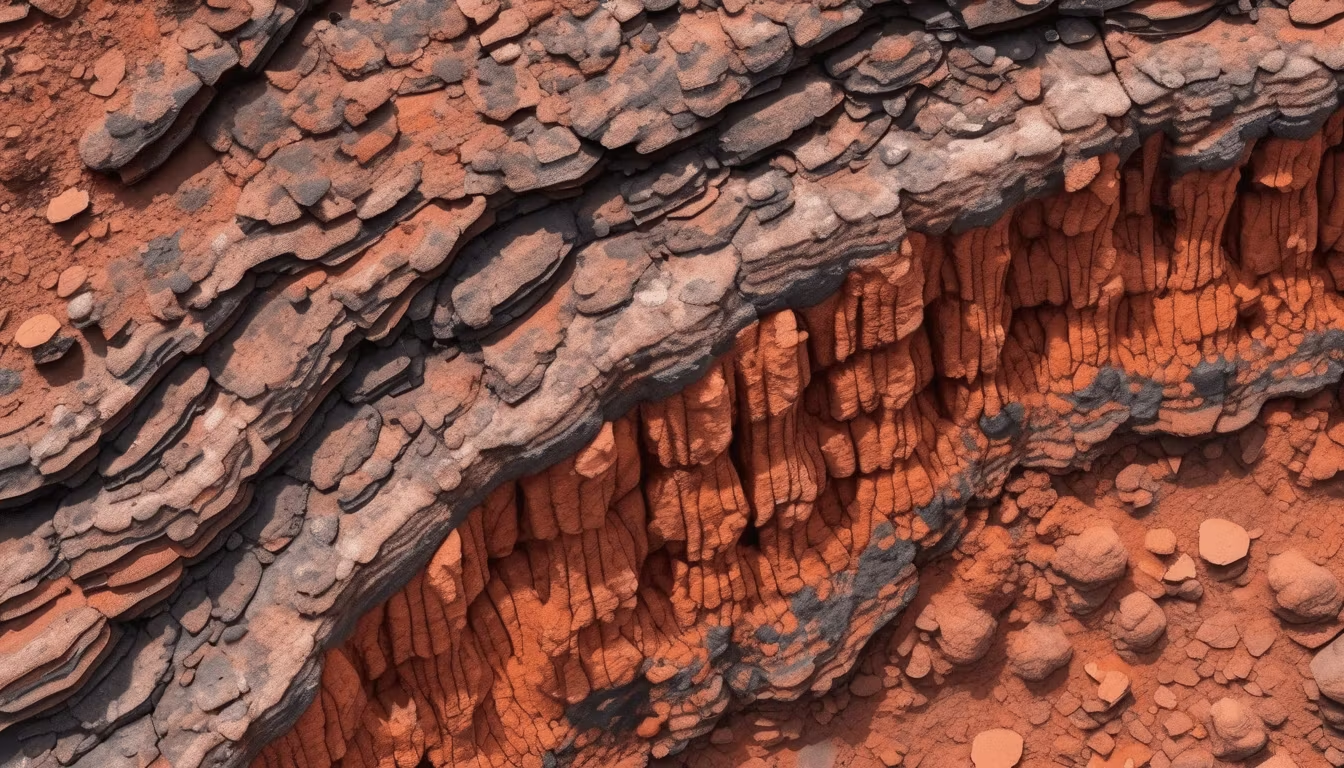
Laterite nickel deposits are secondary mineral concentrations that form through the deep chemical weathering of ultramafic igneous rocks—primarily dunite, peridotite, and pyroxenite containing primary nickel silicate minerals. Unlike sulfide nickel ores found in colder regions, laterite deposits represent the weathered products of these primary rocks, where nickel becomes concentrated in oxide and hydroxide minerals such as garnierite, limonite, and goethite.
The distinction between laterite and sulfide nickel ore is significant for industrial processing. Laterite deposits typically contain lower absolute nickel grades (0.8-2.0%) compared to sulfide ores, but their geological abundance, shallower depth, and suitability for open pit mining make them economically attractive. Tropical and subtropical regions with high annual rainfall and consistently warm temperatures provide ideal conditions for laterite formation, which is why Indonesia, the Philippines, Papua New Guinea, and Madagascar host the world's richest nickel ore deposits.
These deposits are typically massive in scale, with some operations producing hundreds of thousands of metric tons annually from single pit complexes. The horizontal extent of laterite deposits often exceeds their depth, making them ideal for large-scale mining operations that can achieve economies of scale. For buyers seeking stable, long-term supply relationships, the scale and productivity of laterite operations offer significant advantages over smaller sulfide operations.
Formation Through Tropical Weathering
The creation of laterite nickel deposits is a slow, methodical geological process driven by specific climatic and geochemical conditions. Understanding this process reveals why these deposits are geographically concentrated in tropical latitudes and why climate change and land-use patterns can affect future deposit availability.
The Weathering Process
The journey from solid ultramafic rock to economically mineable laterite ore begins with exposure of the parent rock to tropical conditions. Intense rainfall, high temperatures, and warm groundwater create an aggressive chemical environment where primary nickel silicate minerals break down through hydrolysis and oxidation. Rainwater, enriched with organic acids from tropical soil, percolates downward through fractures and pores in the rock, chemically attacking mineral structures.
As this weathering progresses, mobile elements—particularly magnesium and silica—are leached away and transported downward by groundwater. Nickel and iron, being less soluble under tropical weathering conditions, remain behind and gradually concentrate in specific layers. This selective leaching process operates continuously over millions of years, eventually creating deposits with nickel concentrations tens or hundreds of times higher than the original parent rock.
Climate's Critical Role
The tropical climate is absolutely essential to laterite nickel formation. Consistent moisture keeps chemical reactions active, while high temperatures accelerate weathering rates exponentially. A single tropical location experiencing 2,000-3,000mm of annual rainfall develops laterite profiles far more rapidly than temperate regions receiving half that precipitation. Without these climatic conditions, the formation of economic laterite deposits would be impossible or require geological timescales that dwarf what we observe in modern deposits.
This climate dependency explains the precise geographic distribution of the world's major laterite nickel reserves. Indonesia, straddling the equator with high humidity and abundant tropical rainfall, has created ideal conditions for laterite ore body development. The weathering profiles found in Indonesian deposits often exceed 100 meters in depth, representing hundreds of millions of years of continuous chemical alteration under stable tropical conditions.
Geological Structure and Characteristics
A mature laterite nickel deposit exhibits distinct geological zones or horizons, each with different mineralogy, nickel concentrations, and mining and processing characteristics. Understanding these zones is fundamental for mining engineers, process metallurgists, and procurement specialists.
The Laterite Profile
From surface to depth, a typical laterite nickel deposit contains:
Limonite Zone (Upper Layer, 0-40m typically): Rich in iron oxyhydroxide (limonite) minerals with nickel content typically ranging from 0.8-1.2%. This zone forms closest to the surface where oxidation is most intense. The material is relatively soft, weathered, and friable, making it easier to mine but more challenging to process due to high iron content and fine particle sizes. Limonite typically requires HPAL (High Pressure Acid Leaching) technology to extract nickel economically, though recent pyrometallurgical advances have made direct smelting viable in some cases.
Saprolite Zone (Middle Layer, 40-100m typically): Partially weathered rock retaining original rock structure while containing concentrated nickel silicate minerals like garnierite. Nickel grades typically range from 1.5-2.0% or higher in premium deposits. This zone represents the economic core of most operations. The rock is harder and more competent than limonite, making it suitable for conventional open pit mining and direct pyrometallurgical smelting into ferronickel or NPI (Nickel Pig Iron) products.
Transition Zone: Where fresh ultramafic rock gradually becomes weathered material, marking the lower economic boundary of ore zones and representing the beginning of waste rock.
Geological Controls on Deposit Quality
Several factors influence the quality and economic viability of laterite deposits:
Parent Rock Composition: Nickel content in the original ultramafic rock directly influences the potential nickel concentration in weathered products. Primary nickel percentages of 0.3-0.4% in dunite can become enriched to 1.5-2.0% through weathering processes.
Weathering Intensity: Climate, topography, and drainage patterns affect weathering depth and profile development. Well-drained upland areas typically show thicker, better-developed laterite profiles than poorly drained lowlands.
Supergene Enrichment: In ideal conditions, secondary enrichment processes can concentrate nickel further, creating high-grade pods within deposits that are specifically targeted by mining operations.
Open Pit Mining Methods for Laterite Nickel
Open pit mining has become the standard extraction method for laterite nickel deposits worldwide, chosen for its efficiency in accessing these relatively shallow, laterally extensive ore bodies. The method involves multiple integrated stages, from planning through active extraction and ore preparation.
Exploration and Mine Design
Before any ore is extracted, detailed geological surveys and systematic diamond drilling programs map the deposit. Mining engineers conduct thousands of drillholes to establish the location, thickness, and nickel grade of ore zones versus surrounding waste rock. This information feeds into mine planning software that designs optimal pit geometry, considering ore body shape, grade distribution, slope stability, and environmental constraints. Modern pit designs incorporate sophisticated slope stability analysis, pit wall monitoring systems, and staged extraction plans that maximize ore recovery while maintaining safe working conditions.
Stripping and Ore Extraction
Active mining begins with removing overburden—rock and soil layers with insufficient nickel content to justify processing costs. Depending on deposit geometry, the stripping ratio (waste rock volume per ton of ore) typically ranges from 2:1 to 4:1, meaning significant volumes of material must be moved before high-grade ore becomes available. Large hydraulic excavators (200-600 metric ton bucket capacity) work in concert with 100-ton haul trucks to move this material. Once ore is exposed, selective mining practices separate high-grade saprolite from lower-grade limonite, directing each material to appropriate processing pathways.
Crushing and Preliminary Processing
At the mine site or nearby facilities, ore passes through primary crushers that reduce boulder-sized material to fragments manageable for transportation and downstream processing. Screening and classification begin at this stage, with coarser material often subjected to secondary crushing. This preliminary beneficiation reduces transportation costs by eliminating fine, low-value fines that cannot be economically processed. Some modern operations employ pre-concentration techniques that further separate higher-grade ore before transport.
Transportation Logistics
In Indonesia's mining regions, transporting ore from pit to smelter or export facility represents a major operational challenge. Distances can exceed 1,000 kilometers, requiring investment in haul roads, port infrastructure, or rail systems. Many major operations maintain dedicated port facilities or partner with shared terminals to enable efficient ship loading. Buffer stockpiles at transportation hubs provide operational flexibility, allowing mine production to continue even when processing facilities experience disruptions.
Modern Safety and Environmental Practices
Contemporary laterite mining incorporates real-time monitoring systems tracking pit wall stability, blast vibrations, truck movements, and weather conditions. Automated alert systems notify operators of potential hazards before incidents occur. Environmental management includes progressive reclamation of exhausted pit areas, water management systems addressing pit dewatering and runoff, and dust suppression programs protecting nearby communities. Leading operations achieve multiple years of incident-free performance through rigorous safety cultures and continuous improvement programs.
Quality Grades and Market Implications
The mining and refining of laterite nickel produces materials with varying nickel grades and iron contents, each suited to specific industrial applications and processing methods:
Limonite Ore (0.8-1.2% Ni, high Fe): Best suited for HPAL (High Pressure Acid Leaching) processing, where ore is crushed, leached in sulfuric acid under pressure, and purified to produce nickel sulfate solutions. These solutions feed downstream refineries producing mixed hydroxide precipitate (MHP) or nickel metal. The high iron content requires specialized equipment and expertise.
Saprolite Ore (1.5-2.0% Ni, moderate Fe): Higher nickel content and lower iron ratio make saprolite versatile. It feeds both pyrometallurgical smelters producing ferronickel or NPI through direct smelting, and some HPAL operations. The better metallurgical properties justify premium pricing.
For industrial buyers operating nickel smelters, ferronickel producers, or HPAL facilities, ore grade selection directly impacts processing costs, metal recovery rates, and final product quality. Premium saprolite commands higher prices but delivers superior operating efficiency and product consistency. Understanding these quality differences is essential for procurement decisions and long-term supply chain planning.
Indonesia's Laterite Nickel Advantage
Indonesia possesses approximately 24% of the world's identified laterite nickel reserves, concentrated primarily in three regions: Sulawesi (particularly Morowali and Konawe), Kalimantan, and Maluku/Halmahera. This geographic concentration represents a strategic advantage for global nickel consumers, offering unparalleled supply chain proximity and stable production from multiple independent operators.
Indonesian laterite deposits benefit from ideal formation conditions—tropical climate with 2,000-3,000mm annual rainfall, warm year-round temperatures, and vast areas of exposed ultramafic rock. The weathering profiles encountered are among the world's thickest and best-developed, often exceeding 100+ meters with distinct high-grade saprolite and limonite zones. Production-wise, Indonesia's laterite operations are among the world's largest and most efficient, with multiple operations producing 500,000-1,000,000 metric tons annually from single pit complexes.
For industrial buyers requiring reliable, tested supplies, Indonesia offers geological advantages, proven mining expertise, and established quality control systems. When sourcing from Indonesian suppliers, you access deposits with decades of consistent production history and well-understood metallurgical characteristics. Contact established Indonesian suppliers to discuss supply partnerships backed by geological certainty and operational track records.
Why Partner with Experienced Indonesian Suppliers
CV Indoalam Mineral Persada supplies premium-grade laterite nickel ore sourced directly from prime deposits across Indonesia's richest nickel regions in Sulawesi, Kalimantan, and Maluku. Every ton of ore delivered undergoes rigorous SUCOFINDO laboratory testing to verify nickel grade, iron content, moisture levels, and processing characteristics. Our full IUP OPK and RKAB licensing ensures complete regulatory compliance and traceability from pit to shipment.
Whether you operate a nickel smelter, ferronickel facility, HPAL plant, or industrial processing operation, Indoalam provides consistent, high-quality supplies ranging from 100-ton pilot trials to multi-million-ton annual contracts. We understand the metallurgical demands of modern nickel processing and source ore grades specifically matched to your process technology. Direct sourcing relationships with major mining operations ensure price competitiveness and supply continuity that middlemen cannot match.
Contact Indoalam today to discuss your specific nickel ore requirements, arrange laboratory analysis of deposit samples, or secure a reliable supply partnership. We serve major nickel smelters, ferronickel producers, industrial parks, and international traders across Asia, Europe, and beyond. Let our expertise in laterite nickel geology and Indonesian sourcing networks become your competitive advantage in global nickel markets.