Laterite Nickel Deposits: Formation, Geology & Mining
Understanding Laterite Nickel Deposits: A Complete Guide
Laterite nickel deposits represent one of the world's most important sources of this critical industrial metal. Unlike primary sulfide nickel ores found in deeper geological formations, laterite nickel deposits form through weathering processes in tropical and subtropical climates. Indonesia, home to some of the world's largest laterite nickel reserves, has become the leading producer and exporter of this essential mineral. For B2B buyers sourcing nickel ore, understanding the geology and formation of these deposits is crucial for evaluating quality, supply reliability, and long-term sourcing strategies.
What Are Laterite Nickel Deposits?
Laterite nickel deposits are residual ore bodies created through intense chemical weathering of ultramafic rocks—primarily dunite, peridotite, and serpentinite—containing primary nickel sulfides and silicates. These deposits are characterized by the accumulation of nickel in the upper layers of the soil profile as lighter elements are leached away by tropical rainfall. The result is a concentration of valuable minerals in relatively shallow, accessible formations.
Laterite deposits differ fundamentally from laterite nickel ores in terms of nickel concentration grades. Deposits are typically classified into two main types based on their position and nickel content:
- Saprolite Layer: The upper weathered zone with higher nickel content (typically 1.5-2.0% Ni), iron oxides, and silica
- Limonite Layer: The iron-rich oxidized zone below the saprolite with lower nickel grades (typically 0.8-1.2% Ni) but higher iron content
Geological Formation and Tropical Weathering Processes
The Role of Tropical Weathering in Nickel Concentration
Laterite nickel deposits owe their existence to tropical weathering—a comprehensive physical, chemical, and biological alteration process unique to warm, humid climates with high rainfall. This process is fundamentally different from weathering in temperate zones.
In tropical environments, particularly across Indonesia's equatorial regions, intense rainfall combines with high temperatures to accelerate chemical decomposition. Water percolates through the rock profile, dissolving silica and other soluble elements while leaving behind oxides and hydroxides rich in nickel, iron, and aluminum. Over millions of years, this process concentrates nickel from the parent ultramafic rock into economically viable deposits.
The key mechanism is selective leaching: silica and magnesium, the dominant elements in parent rocks, are preferentially removed, while nickel—which has similar ionic properties to magnesium—partially remains in the residual soil. Additionally, iron oxidation creates a stable goethite matrix that further concentrates nickel. The depth and intensity of this weathering profile determine the ore quality and mining feasibility.
Parent Rock Characteristics and Nickel Potential
The source rock—or parent material—dramatically influences laterite nickel deposit quality. Ultramafic rocks rich in olivine ((Mg,Fe)₂SiO₄) and pyroxene containing primary nickel sulfides (pentlandite) or nickel silicates (olivine-hosted Ni) are ideal parent materials.
In Indonesia, particularly in regions like Sulawesi (including Morowali and Konawe) and parts of Kalimantan, these ultramafic intrusions were emplaced during Cretaceous and Paleogene times as part of regional ophiolitic complexes. The nickel content in parent rocks typically ranges from 0.1-0.3% Ni—seemingly low but sufficient to produce economic deposits after weathering concentrates the metal.
Laterite Profile Development
A mature laterite nickel profile typically displays distinct horizons from top to bottom:
- Ferricrete/Iron Cap: Surface iron oxide crust with minimal economic nickel value
- Saprolite Zone: Partially weathered rock with visible original rock structure, maximum nickel concentration, and the primary mining target
- Transition Zone: Gradual change from weathered to unweathered rock
- Fresh Bedrock: Unaltered parent ultramafic rock with primary nickel minerals
Weathering depth varies considerably—from 10-20 meters in marginal deposits to 80+ meters in deeply weathered laterite profiles, making deeper deposits more economically challenging to mine.
Open Pit Laterite Mining Methods and Techniques
Mining Operations and Equipment
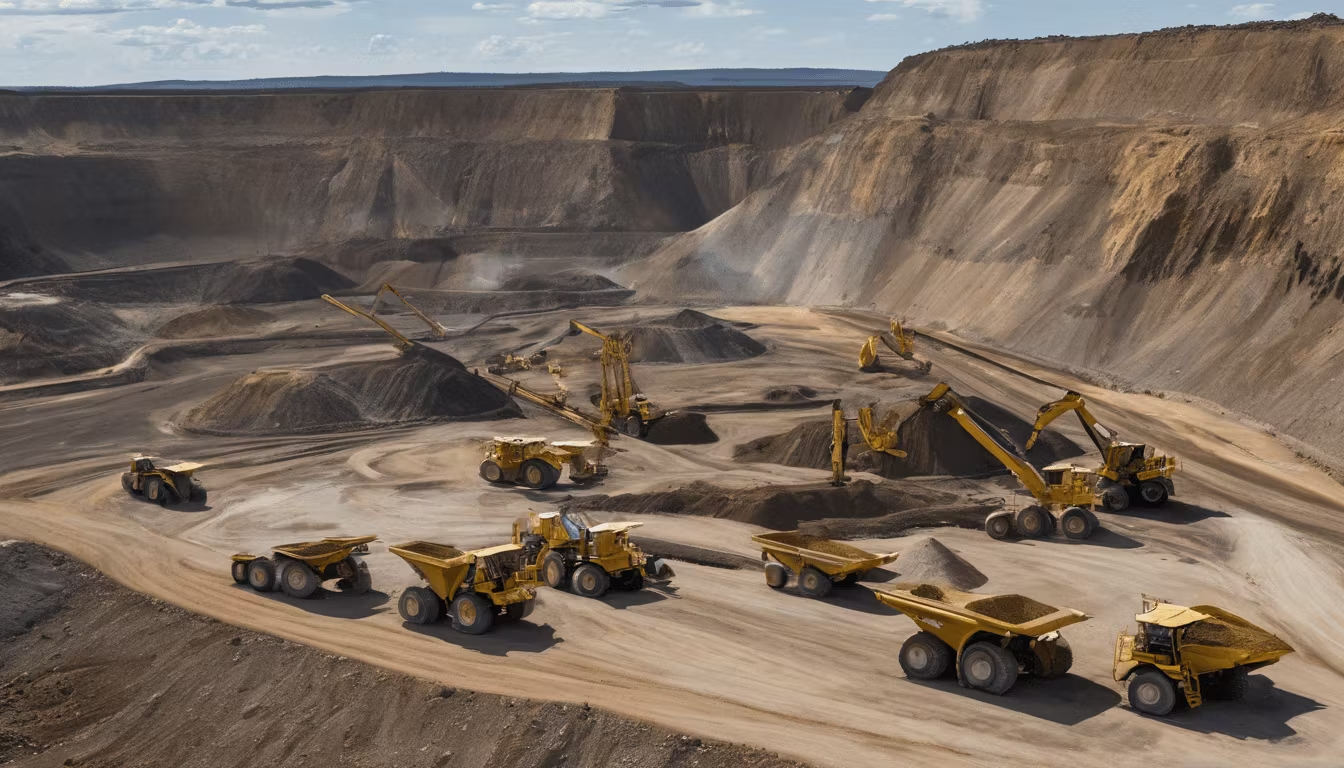
Open pit mining is the standard extraction method for laterite nickel deposits due to their shallow depth and weathered nature. Unlike underground mining required for deeper sulfide nickel ores, open pit methods are more cost-effective for laterite extraction.
Modern laterite nickel mining operations employ:
- Drilling and Blasting: Blast holes are drilled through the overburden and ore zones, and explosives break rock into manageable sizes for loader equipment
- Excavation: Electric or hydraulic shovels and front-end loaders load ore into haul trucks, with separate excavation for waste rock and ore benches
- Haul Roads: Purpose-built internal roads carry ore from pit to processing facilities, requiring constant maintenance in wet tropical climates
- Selective Mining: Grade control ensures saprolite and limonite are mined and stockpiled separately to meet buyer specifications
Overburden Management and Waste Handling
Laterite mining generates significant overburden—weathered rock above economic ore grades and waste rock from deeper levels. Contemporary operations employ advanced waste management strategies:
- In-Pit Disposal: Waste rock is returned to worked-out pit areas, reducing disturbance footprint
- Tailings Management: Processing tailings and fine laterite fines are managed through dedicated impoundments with environmental controls
- Rehabilitation Planning: Backfilling and vegetation establishment are planned during operations to ensure land recovery
Modern licensed operators, including those holding IUP OPK permits for mineral extraction in Indonesia, follow rigorous environmental and operational standards that minimize long-term site impacts.
Grade Control and Ore Sorting
Effective grade control is critical in laterite mining due to variable nickel distribution. Mining operations employ:
- Blast Hole Sampling: Core samples from blast holes are assayed to inform mining boundaries
- Stockpile Segregation: Saprolite and limonite are stockpiled separately based on assay results, enabling supply flexibility
- Quality Verification: Independent laboratory testing (such as SUCOFINDO certification) confirms ore grades before shipment
This approach allows suppliers to provide buyers with consistent, specified grades whether customers require higher-nickel saprolite material or iron-rich limonite ore for specific processing routes.
Indonesia's Laterite Nickel Deposits: Regional Geology
Sulawesi: The Global Nickel Powerhouse
Sulawesi, particularly the northeast arm of the island, contains some of the world's largest laterite nickel reserves. Major deposits are concentrated in:
- Morowali Region: Known for thick, high-grade saprolite profiles hosting numerous large-scale mining operations
- Konawe District: Extensive laterite nickel deposits supporting multiple smelter operations and processing facilities
The geology reflects Miocene-age ophiolitic complex emplacement, creating a vast belt of nickel-rich ultramafic rocks. Tropical weathering over millions of years has produced deposits with exceptional thickness and continuity.
Kalimantan and Maluku Deposits
Beyond Sulawesi, significant laterite nickel deposits occur in:
- East Kalimantan: Similar ophiolitic settings have created laterite profiles supporting regional mining activity
- Halmahera, Maluku: The northernmost ore province contains substantial deposits with varying thickness and grade characteristics
These regions provide supply diversity and flexibility for large-scale buyers requiring multi-source procurement strategies.
Mining Methods in Practice: Processing and Export Considerations
From Pit to Market: Supply Chain Steps
After extraction, laterite nickel ore undergoes several processing steps before reaching end-users. For domestic smelter operations, ore moves directly from mine sites to processing facilities. For prepared materials meeting buyer specifications, mining operations handle:
- Crushing and screening to specified mesh sizes
- Moisture content adjustment through stockpile weathering or drying
- Contamination removal through magnetic separation or gravity methods
- Sampling and third-party laboratory certification
For smelters and industrial buyers, understanding the entire laterite supply chain—from geology to ore handling—enables better procurement decisions and supply security planning.
Domestic Supply and Export Restrictions
It's important to note that Indonesian nickel ore for domestic consumption remains tightly controlled. Export bans on unprocessed nickel ore have redirected laterite production toward domestic smelter development, creating a vertically integrated industry where mining companies work closely with processing facilities.
For B2B buyers outside Indonesia, sourcing nickel requires engagement with integrated smelter operations or trading companies with domestic supply relationships. Understanding these market dynamics is crucial for developing stable, long-term supply agreements.
Quality Standards and Testing for Laterite Nickel
SUCOFINDO Certification and Lab Testing
Professional ore trading requires rigorous quality assurance. Independent testing by accredited laboratories such as SUCOFINDO verifies critical parameters:
- Nickel grade (Ni %)
- Cobalt content (Co %)
- Iron oxide content (Fe₂O₃ %)
- Silica content (SiO₂ %)
- Moisture content
- Mesh analysis and granulometry
These specifications directly impact smelter processing efficiency and recovery rates, making certification essential for commercial transactions.
Choosing the Right Laterite Nickel Supplier
Key Supplier Evaluation Criteria
When sourcing laterite nickel ore, B2B buyers should evaluate suppliers across multiple dimensions:
- Licensing: Valid IUP OPK (mining permits), RKAB (mining work plans), and environmental approvals
- Testing Standards: Third-party lab certification (SUCOFINDO or equivalent) and quality consistency records
- Supply Capacity: Ability to deliver trial quantities (100 MT+) to large contracts (2.5M+ MT annually)
- Direct Sourcing: Verification that suppliers source directly from mines rather than trading houses
- Geographic Diversity: Access to deposits across multiple regions (Sulawesi, Kalimantan, Maluku) for supply security
- Operational Track Record: Established relationships with major smelters and industrial buyers
Companies with full licensing and direct mine access offer superior supply security compared to trading intermediaries.
Conclusion: Laterite Nickel in the Global Market
Laterite nickel deposits, formed through millions of years of tropical weathering processes, represent a critical global mineral resource. Indonesia's dominance in laterite production reflects both its vast mineral endowment and the geological conditions that created world-class deposits across Sulawesi, Kalimantan, and Maluku.
For B2B buyers—whether nickel smelters, industrial manufacturers, or commodity traders—understanding laterite geology, mining methods, and supply chain dynamics is essential for developing effective sourcing strategies. Modern open pit mining operations extract ore efficiently while managing environmental responsibilities, and rigorous quality testing ensures material specifications are met.
If you're evaluating laterite nickel suppliers for long-term contracts or trial shipments, partnering with licensed, directly-sourcing operators ensures supply reliability and consistent quality. CV Indoalam Mineral Persada, with full IUP OPK licensing, SUCOFINDO-tested materials, and access to premium deposits across Indonesia's richest nickel regions, offers the supply security and transparency that professional buyers demand.
Contact us today to discuss your nickel ore requirements and explore how we can support your processing or industrial needs with consistent, certified laterite nickel supply.