Iron Content in Silica Sand: Why Fe2O3 Levels Matter for Glass

Iron Content in Silica Sand: The Hidden Factor Affecting Glass Quality
For glass manufacturers, ceramics producers, and foundries, the purity of raw materials directly determines product quality, production efficiency, and profitability. While many focus on SiO2 percentage, one critical factor often overlooked is iron content—specifically ferric oxide (Fe2O3) concentration. This mineral impurity can make or break your final product, affecting everything from color to structural integrity.
In this comprehensive guide, we'll explore why iron content in silica sand matters, how Fe2O3 impacts different industries, and how to source high-quality, low-iron sand for your manufacturing operations.
Understanding Iron Oxide in Silica Sand
What is Fe2O3 and Where Does It Come From?
Iron oxide (Fe2O3), also known as ferric oxide or hematite, is a naturally occurring compound found in most silica deposits. During geological formation and weathering processes, iron minerals become embedded within quartz sand deposits. The concentration varies significantly depending on the source location, deposit characteristics, and extraction methods.
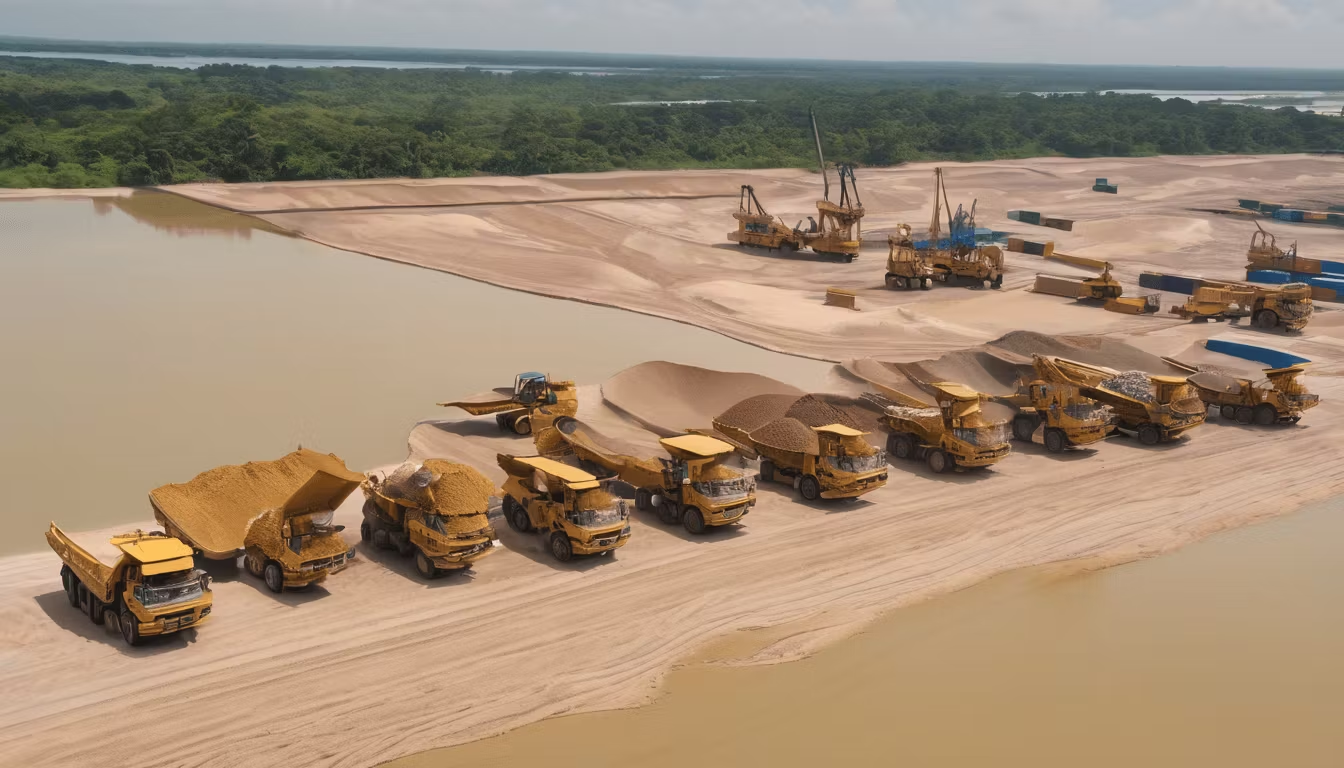
In silica sand sourcing regions like Sulawesi and Kalimantan—major production areas in Indonesia—iron content typically ranges from 0.3% to 1.5% by weight in unrefined deposits. Industrial-grade sand requires careful processing and testing to reduce these levels to acceptable thresholds.
How Iron Impurities Form During Mining
Iron contamination increases when sand is extracted near iron-rich geological layers or when mining equipment with steel components adds ferrous particles. This is why direct sourcing from established mines with proper IUP OPK licensing and quality control protocols is essential. Processing facilities that employ SUCOFINDO-certified testing can identify and minimize iron content before sand reaches your facility.
Why Fe2O3 Levels Matter Across Industries
Glass Manufacturing: The Primary Concern
The glass industry is the most sensitive to iron content in silica sand. Iron oxide acts as a chromophore—a compound that absorbs light at specific wavelengths. Even small concentrations of Fe2O3 can impart an unwanted green or brown tint to clear glass.
Typical Fe2O3 specifications by glass type:
- Float Glass (Clear): ≤0.15% Fe2O3 required
- Container Glass (Amber/Green): 0.3-0.8% Fe2O3 acceptable
- Solar Panel Glass: ≤0.10% Fe2O3 for optimal light transmission
- Glassware & Decorative: ≤0.20% Fe2O3 for color consistency
Exceeding these thresholds forces manufacturers to add expensive decolorizing agents like cobalt oxide or selenium, increasing production costs and reducing profit margins. For high-volume operations producing 500+ metric tons daily, sourcing properly tested sand becomes a cost-control priority.
Ceramics and Tile Production
In ceramics manufacturing, iron content affects glaze chemistry and firing characteristics. Excessive Fe2O3 can cause uneven coloration, surface defects, and reduced whiteness in ceramic bodies. Producers targeting ISO 13006 compliance for ceramic tiles typically require Fe2O3 levels below 0.5%.
Foundries and Metal Casting
Foundries use silica sand as a molding material. While iron content is less critical than in glass production, elevated Fe2O3 levels can affect sand binding properties and increase defect rates in cast products. Precision casting operations prefer sand with Fe2O3 below 0.4% for consistent mold quality.
Water Treatment Applications
In water filtration systems, iron oxide can leach into treated water, affecting quality standards. Municipal and industrial water treatment facilities require Fe2O3 levels below 0.2% to maintain drinking water or process water purity.
Testing and Quality Verification
SUCOFINDO Certification: The Industry Standard
SUCOFINDO (PT Sucofindo) is Indonesia's premier independent laboratory testing company. All premium quartz sand suppliers maintain SUCOFINDO-certified analysis reports documenting exact Fe2O3 percentages. These certificates provide third-party verification that sand meets your specifications before delivery.
A typical SUCOFINDO report includes:
- SiO2 percentage (purity)
- Fe2O3 concentration (iron oxide)
- Al2O3 (aluminum oxide)
- TiO2 (titanium oxide)
- Loss on ignition (LOI)
- Particle size distribution by mesh grade
Iron Content Measurement Methods
Iron content is typically measured through XRF (X-ray fluorescence) spectroscopy or wet chemical analysis. XRF provides rapid non-destructive testing, while wet chemistry offers laboratory precision. Most commercial suppliers use XRF for batch screening and periodic wet chemistry validation.
Selecting the Right Mesh Grade and Iron Specification
Iron oxide concentration varies by particle size. Finer mesh grades (120-200) often have lower Fe2O3 due to natural separation during processing, while coarser grades (8-40) may retain slightly higher iron. When specifying silica sand, request both mesh size and maximum Fe2O3 limits to ensure consistent quality.
Cost Implications of Iron Content Control
Premium Pricing for Low-Iron Sand
Sand with Fe2O3 below 0.15% commands a 15-25% price premium compared to standard industrial grades (0.3-0.5% Fe2O3). However, this investment often yields returns through:
- Reduced decolorizer chemical costs (2-4% savings on additives)
- Improved product consistency and reduced waste
- Higher end-product value and customer satisfaction
- Reduced processing time and energy consumption
Bulk Purchasing Strategies
For operations consuming 100+ metric tons monthly, negotiating locked pricing on consistent Fe2O3 specifications becomes economically viable. Establishing long-term supply agreements with licensed suppliers ensures predictable quality and volume at competitive rates.
Sourcing High-Quality, Low-Iron Silica Sand
Key Supplier Selection Criteria
When evaluating silica sand suppliers, prioritize:
- IUP OPK Licensing: Ensures legal mine operation and environmental compliance
- SUCOFINDO Testing: Provides independent Fe2O3 verification
- RKAB Approval: Confirms sustainable mining practices
- Direct Mining Operations: Eliminates middleman involvement and quality inconsistency
- Flexible Order Quantities: From trial lots (100 MT) to contract volumes (2.5M MT/year)
Geographic Sourcing Advantages
Indonesia's primary silica deposits in Sulawesi (Morowali, Konawe regions) and Kalimantan naturally produce sand with lower iron contamination compared to some global competitors. Combined with modern processing facilities, Indonesian suppliers can deliver Fe2O3 levels below 0.20% consistently.
Direct-from-Mine Advantages
Purchasing directly from licensed mining operations—rather than through trading intermediaries—offers several benefits:
- Direct access to SUCOFINDO test data before purchase commitment
- Ability to specify exact Fe2O3 maximums and mesh grades
- Volume flexibility from trial shipments to annual contracts
- Transparent pricing without middleman markups
- Faster delivery and consistent supply scheduling
Real-World Applications and Standards
Float Glass Specification Example
A float glass manufacturer producing 600 MT daily of clear architectural glass requires sand specifications of SiO2 ≥99.5%, Fe2O3 ≤0.12%, and 120-mesh consistency. Sourcing from a supplier with SUCOFINDO certification and direct mine access ensures batch-to-batch compliance, eliminating color variation complaints from architects and builders.
Solar Panel Glass Requirements
Solar glass requires exceptionally low iron content (≤0.10% Fe2O3) due to iron's light-absorption properties, which reduce panel efficiency. Premium silica sources meeting these tight tolerances are essential for manufacturers targeting 22%+ panel efficiency ratings.
Complementary Mineral Products for Integrated Supply
Beyond silica sand, many industrial manufacturers require complementary minerals. Integrated suppliers offering zircon sand (for foundry core binders), aluminium ingot (for casting), and other processed minerals can streamline procurement and reduce supply chain complexity.
Final Recommendations
Iron content in silica sand is not merely a technical specification—it's a cost driver and quality determinant that directly impacts your bottom line. Whether producing float glass, ceramics, or castings, understanding and controlling Fe2O3 levels provides competitive advantage.
Action Steps:
- Define exact Fe2O3 maximum limits for your product specifications
- Request SUCOFINDO-certified test reports from potential suppliers
- Evaluate total cost of ownership, including decolorizer savings from lower iron content
- Negotiate trial shipments to validate quality before committing to bulk volumes
- Establish long-term supply agreements with licensed, certified suppliers
Partner with a Trusted Silica Sand Supplier
CV Indoalam Mineral Persada specializes in premium silica sand meeting strict Fe2O3 specifications for glass, ceramics, and foundry applications. Our direct mining operations in Sulawesi and Kalimantan, combined with SUCOFINDO laboratory testing and IUP OPK licensing, ensure consistent quality and transparency.
Whether you require trial quantities of 100 metric tons or annual contracts exceeding 500,000 metric tons, we offer flexible supply solutions with documented quality assurance. Our team understands the iron content requirements across diverse industries and can tailor specifications to your exact manufacturing needs.
Ready to source premium low-iron silica sand? Contact us today for a detailed product specification sheet, SUCOFINDO test reports, and competitive pricing tailored to your volume requirements. Our mineral specialists are prepared to support your quality standards and production schedules.