Indonesia's Silica Sand Export Market: Opportunities and Challenges

Indonesia's Silica Sand Export Market: Opportunities and Challenges
Indonesia stands as one of the world's largest producers and exporters of silica sand, a critical raw material for industries ranging from glass manufacturing to semiconductors. The global silica sand market is projected to exceed $12 billion by 2030, with Asia-Pacific regions commanding significant market share. For B2B mineral traders, mining companies, and industrial buyers, understanding the nuances of Indonesia's silica sand export market is essential for navigating both opportunities and regulatory complexities.
This comprehensive guide examines the current state of Indonesia's silica sand export industry, key market drivers, challenges, and strategic opportunities for businesses operating in this sector.
Understanding Indonesia's Silica Sand Industry
Production Capacity and Geographic Distribution
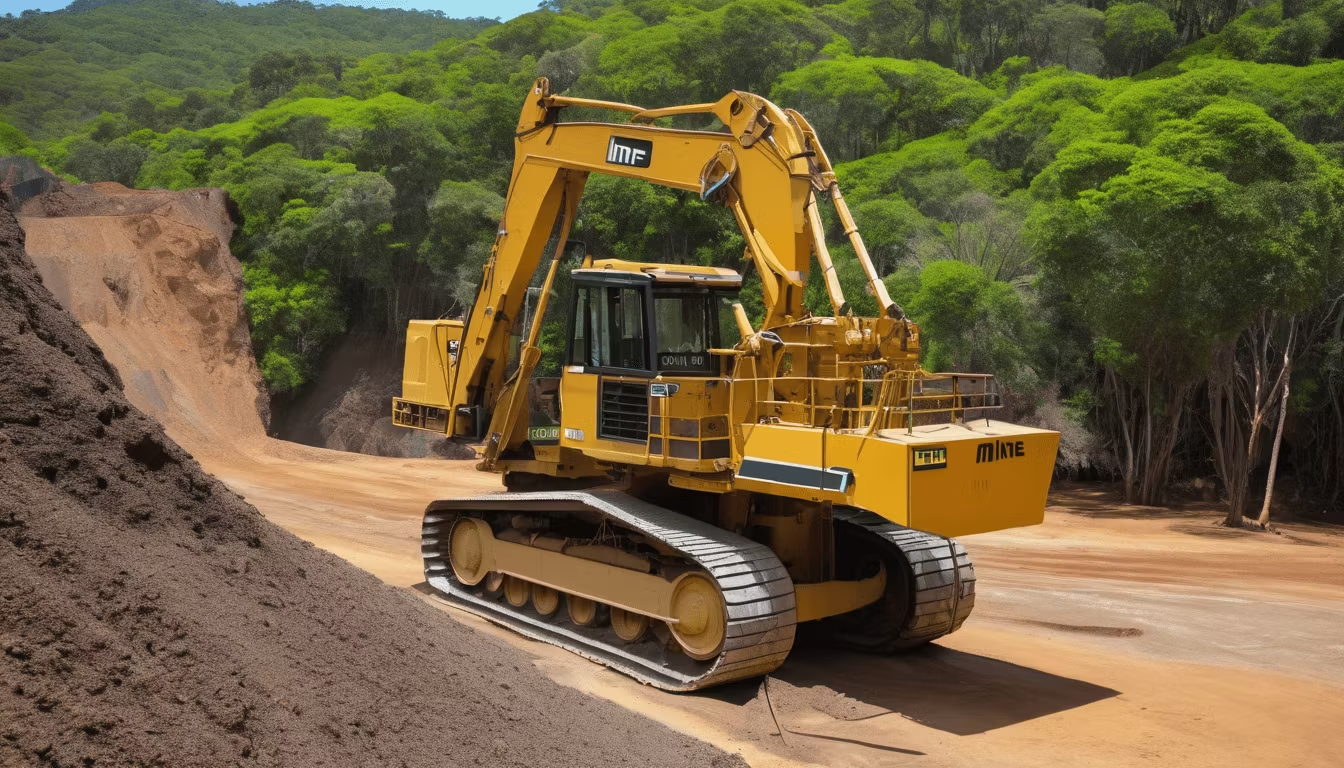
Indonesia's silica sand production is concentrated in three primary regions: Sulawesi, Kalimantan, and Maluku (particularly Halmahera). These regions benefit from extensive mineral deposits and established mining infrastructure. Sulawesi, specifically areas like Morowali and Konawe, has emerged as a production powerhouse, supplying both domestic industrial parks and international markets.
The country's annual production capacity for high-quality silica sand exceeds 2.5 million metric tons, with purity levels reaching SiO2 99.74%. This positions Indonesia competitively against other major producers such as Australia, India, and the United States.
Quality Standards and Specifications
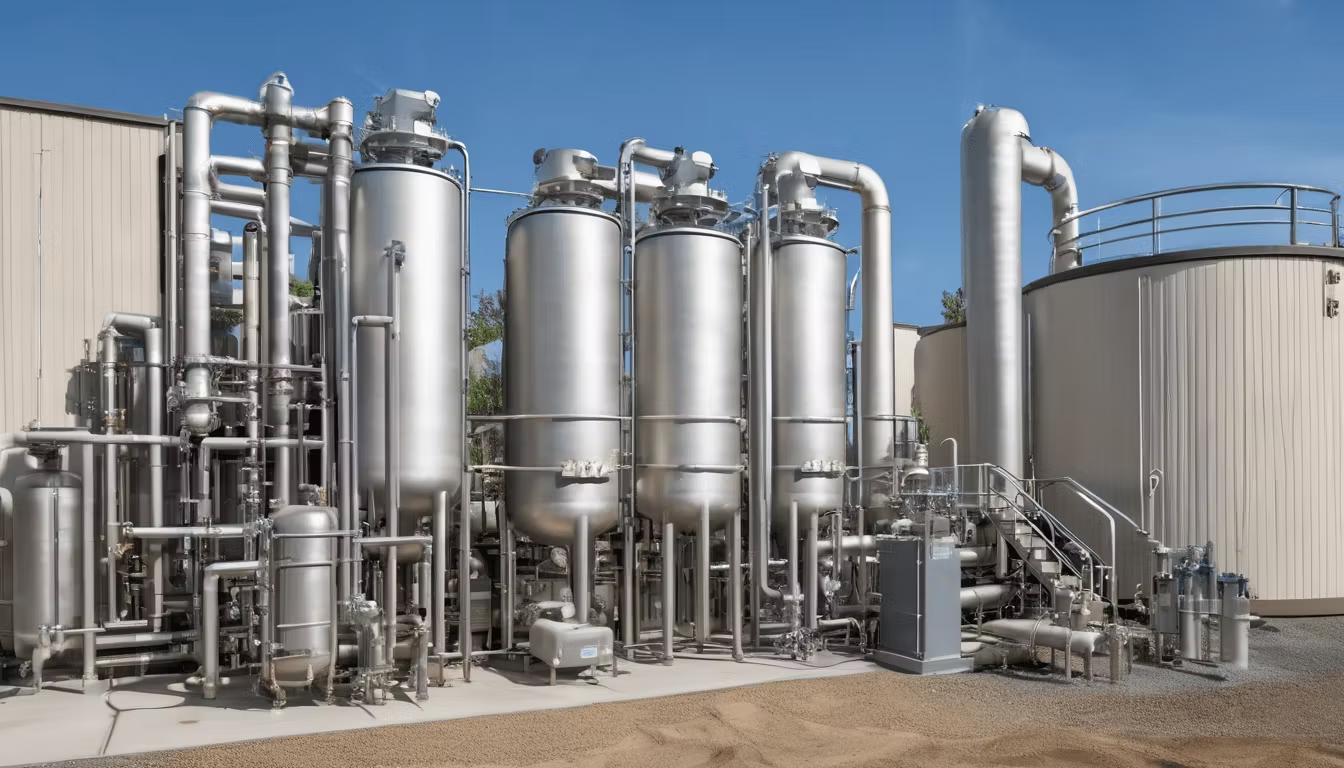
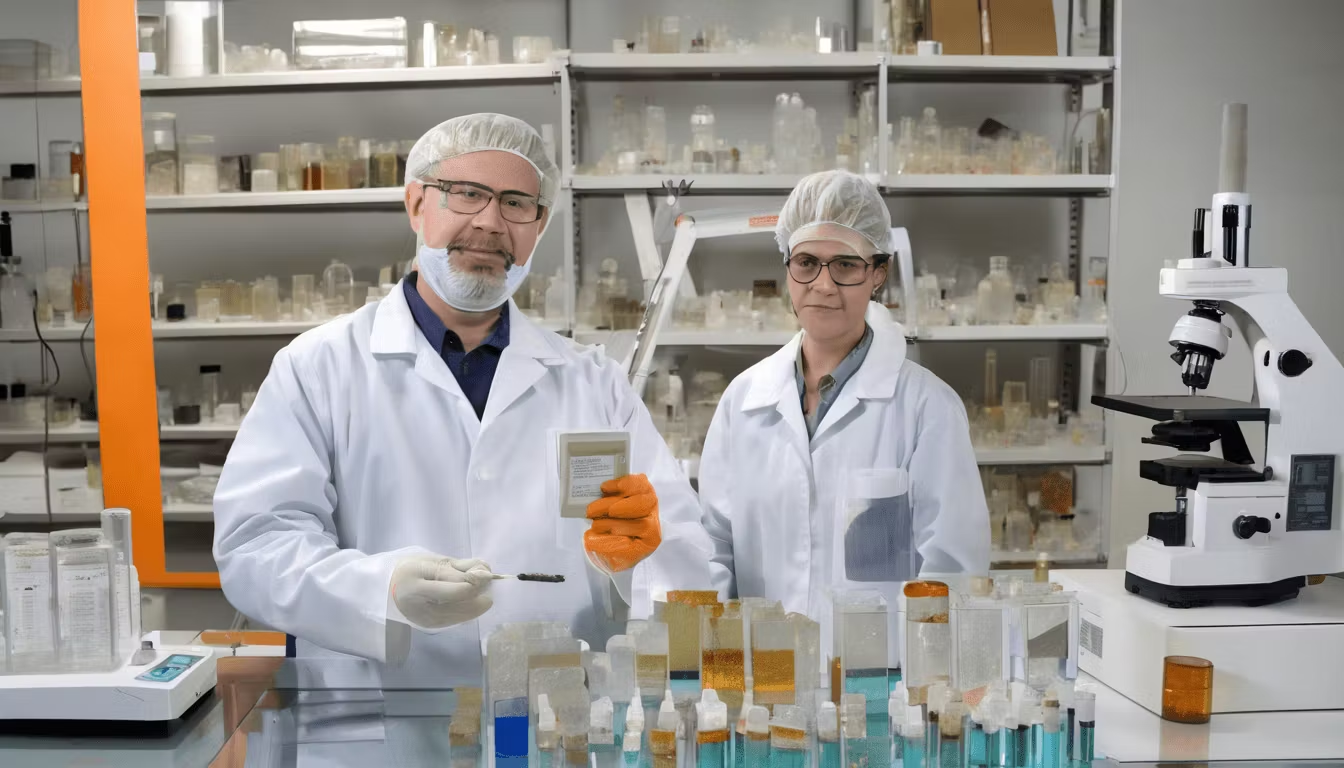
Indonesian quartz sand producers offer multiple mesh grades ranging from 8 to 200, catering to diverse industrial applications. Quality assurance is maintained through rigorous laboratory testing by internationally recognized bodies such as SUCOFINDO, ensuring compliance with ISO standards and customer specifications.
For float glass manufacturing, the primary market segment, silica sand must meet strict purity requirements and contain minimal iron oxide contamination. Premium grades command higher prices and attract glass manufacturers producing high-quality containers and solar panels.
Key Global Market Drivers
Rising Demand from Glass Manufacturing
Glass production remains the largest consumer of silica sand globally, accounting for approximately 70% of industrial demand. The expansion of the flat glass industry in Southeast Asia, driven by construction booms and automotive glass requirements, directly increases demand for Indonesian exports.
Solar panel production has emerged as a significant growth driver. As global renewable energy capacity expands, manufacturers require ultra-pure silica sand for solar glass components. Indonesia's competitive pricing and proximity to Asian manufacturing hubs position it favorably in this market segment.
Foundry and Metal Casting Applications
The foundry industry consumes substantial quantities of silica sand for mold and core production. Industrial development across Asia, particularly in India and Vietnam, has stimulated demand for high-quality casting-grade silica sand. Indonesian suppliers benefit from established logistics networks and competitive transportation costs.
Water Treatment and Filtration
Growing environmental regulations and urbanization have increased water treatment requirements globally. Silica sand serves as a critical filtration medium in municipal and industrial water treatment facilities. This non-cyclical, steady demand provides market stability for suppliers.
Ceramics and Tile Production
The ceramics industry utilizes silica sand in glazes and body compositions. Regional tile manufacturers across Indonesia and neighboring countries depend on consistent local supply, creating reliable domestic and regional export markets.
Current Market Opportunities
Premium Grade Specialization
Market analysis reveals growing premiums for ultra-high-purity silica sand (SiO2 >99.5%). Producers investing in advanced beneficiation and quality control can command 15-25% price premiums over standard grades. This specialization appeals to electronics manufacturers and specialty glass producers.
Supply Chain Diversification
Recent geopolitical tensions and supply chain disruptions have encouraged international buyers to diversify sourcing beyond traditional suppliers. Indonesian producers with reliable production capacity, transparent quality certifications, and established export logistics are positioned to capture market share from competitors facing supply constraints.
Direct Supplier Relationships
Large industrial buyers increasingly prefer direct relationships with mining producers to reduce costs and ensure supply security. Companies offering flexible volumes—from 100-metric-ton trial shipments to annual contracts exceeding 1 million tons—capture growing segments of price-sensitive and quality-demanding buyers.
Value-Added Services
Offering value-added services such as custom mesh sizing, rapid quality testing, and flexible payment terms differentiates suppliers in competitive markets. Buyers increasingly value partners capable of supporting just-in-time manufacturing requirements and custom specifications.
Regulatory Challenges and Compliance Requirements
Mining License and Operational Requirements
All mineral export activities in Indonesia require compliance with the Ministry of Energy and Mineral Resources regulations. Operators must maintain valid Izin Usaha Pertambangan (IUP) licenses and complete environmental impact assessments (AMDAL). The IUP OPK (Operasi Produksi Komersial) classification permits both domestic and export operations.
Recent regulatory changes have increased scrutiny on environmental compliance and community benefit programs. Companies must demonstrate proper waste management, water treatment, and local employment initiatives to maintain operational licenses.
Export Documentation and Quality Certification
Exports require SUCOFINDO testing certificates confirming product specifications and chemical composition. Documentation must include export permits from the Ministry of Trade and comply with destination country import regulations. Processing these requirements typically requires 10-15 business days.
Sustainability and ESG Requirements
International buyers, particularly those in EU markets, increasingly require ESG (Environmental, Social, Governance) certifications. Producers must document sustainable mining practices, waste reduction initiatives, and community development programs. This trend is expected to intensify, creating competitive advantages for compliant suppliers.
Market Challenges and Risk Factors
Price Volatility and Commodity Market Cycles
Silica sand pricing is subject to commodity market cycles and competition from alternative materials. Periods of oversupply in global markets can compress margins by 20-30%. Producers with diversified product portfolios and cost leadership advantages weather these cycles more effectively.
Transportation and Logistics Costs
Global shipping costs significantly impact export profitability. Container freight rates to Europe or North America fluctuate between $2,000-$5,000 per TEU, substantially affecting landed costs. Regional markets (Southeast Asia, India) offer more favorable logistics economics.
Competition from Established Producers
Major global suppliers in Australia, India, and Europe possess economies of scale and established customer relationships. Indonesian producers must differentiate through quality specialization, reliability, or cost advantages to compete effectively.
Environmental and Community Pressures
Mining operations face increasing environmental scrutiny and community opposition. Securing social licenses to operate requires transparent stakeholder engagement and demonstrated commitment to environmental remediation. Delays or suspensions due to permitting challenges can disrupt supply commitments.
Strategic Recommendations for Market Participants
For Producers and Traders
Success in Indonesia's silica sand export market requires multiple strategies: invest in quality assurance infrastructure to achieve premium-grade specifications; maintain IUP OPK and environmental compliance documentation; develop relationships with international buyers in high-growth segments (solar glass, water treatment); and establish flexible supply arrangements accommodating trial shipments and variable volumes.
For Industrial Buyers
Procurement teams should evaluate Indonesian suppliers on multiple criteria: lab-test certifications confirming SiO2 purity and particle size distribution; production capacity and supply reliability; compliance documentation; and freight cost optimization for your specific manufacturing location. Building direct relationships with producers eliminates middlemen and improves pricing.
Complementary Mineral Products in Indonesia
Indonesian mineral suppliers often provide integrated portfolios. Beyond silica sand, major producers supply nickel ore for smelting operations, aluminium ingot for foundries, and zircon sand for specialized industrial applications. This product diversity enables buyers to consolidate sourcing with reliable, fully-licensed suppliers.
Future Market Outlook
Growth Projections
Global silica sand demand is forecast to grow at 5-7% annually through 2030, driven by construction expansion in emerging markets and renewable energy infrastructure development. Indonesia is positioned to capture 15-20% of incremental global growth, particularly in Asian markets.
Technological Advancements
Technological improvements in beneficiation and processing will enable producers to achieve higher purity grades and more consistent particle size distributions. Automation and digital monitoring will reduce processing costs and improve quality consistency.
Sustainability as Competitive Advantage
As ESG requirements become mandatory in international supply chains, suppliers with certified sustainable practices will command premium pricing. Investment in waste reduction, water management, and community programs is becoming essential infrastructure for export competitiveness.
Conclusion: Partnering with Reliable Indonesian Suppliers
Indonesia's silica sand export market presents substantial opportunities for industrial buyers and trading companies. The combination of abundant natural resources, established production infrastructure, competitive pricing, and strategic geographic location creates compelling advantages. However, success requires partnering with suppliers who maintain rigorous quality standards, full regulatory compliance, and operational reliability.
When evaluating Indonesian silica sand suppliers, prioritize companies with IUP OPK licensing, SUCOFINDO testing capabilities, proven production capacity, and transparent operating practices. Direct relationships with producers eliminate intermediary costs and ensure supply security for your manufacturing operations.
About CV Indoalam Mineral Persada: As a licensed mineral trader specializing in high-quality silica sand exports, Indoalam Mineral Persada supplies industrial buyers with laboratory-tested quartz sand meeting international specifications. With sourcing operations across Sulawesi, Kalimantan, and Maluku, and annual capacity exceeding 2.5 million metric tons, Indoalam serves glass manufacturers, foundries, water treatment facilities, and ceramic producers across Indonesia and international markets.
Whether you require premium float glass-grade silica sand or specialized foundry applications, Indoalam offers flexible supply arrangements from trial quantities to large annual contracts, all backed by rigorous quality certification and full compliance with Indonesian mining regulations.
Contact us today to discuss your silica sand requirements and discover how Indoalam can support your supply chain with reliable, high-quality minerals directly from source.