Complete Guide to Indonesian Nickel Ore: Saprolite & Limonite
Introduction: Understanding Indonesian Nickel Ore Supply
Indonesia stands as the world's largest nickel ore producer, commanding approximately 30-35% of global nickel ore supply. The country's vast mineral deposits, strategic location, and established mining infrastructure make it the primary source for nickel ore destined for smelter operations worldwide. However, a domestic export ban on raw nickel ore has shifted market dynamics significantly, creating opportunities for domestic smelter feed within Indonesia's rapidly expanding nickel processing industry.
For industrial buyers—including NPI (nickel pig iron) smelters, ferronickel producers, and HPAL (high-pressure acid leach) operators—understanding the nuances between saprolite and limonite ore is critical for production planning, cost optimization, and meeting downstream specifications. This guide examines the composition, grade variations, sourcing logistics, and quality assurance frameworks that define the Indonesian nickel ore market.
What Is Nickel Ore? Geology and Formation
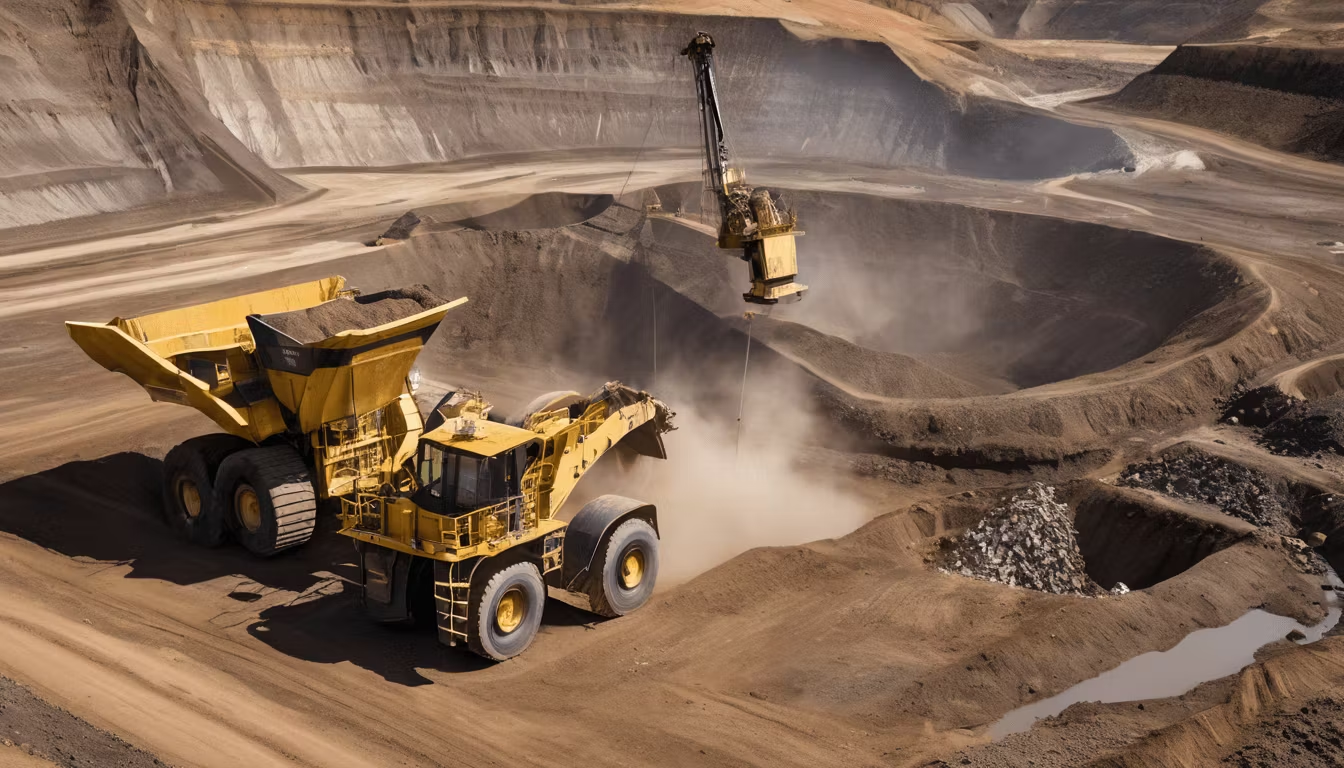
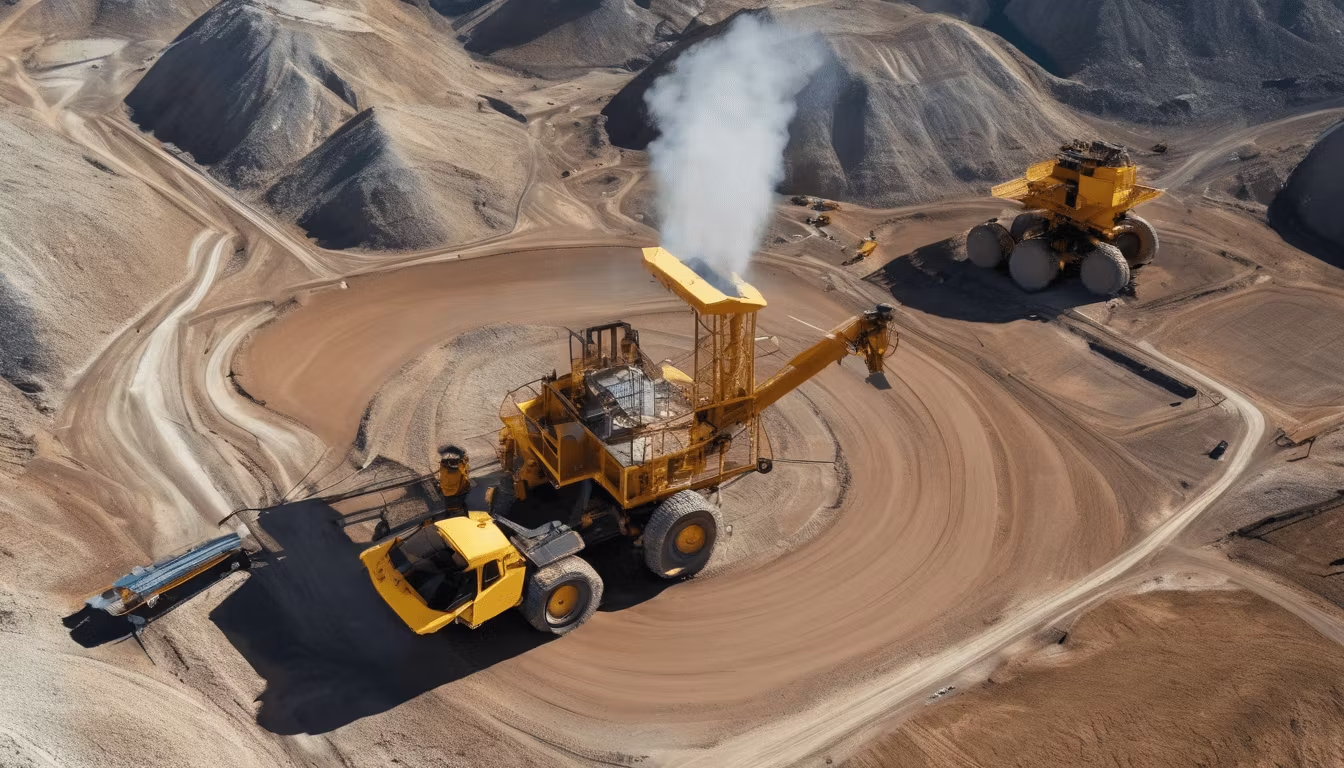
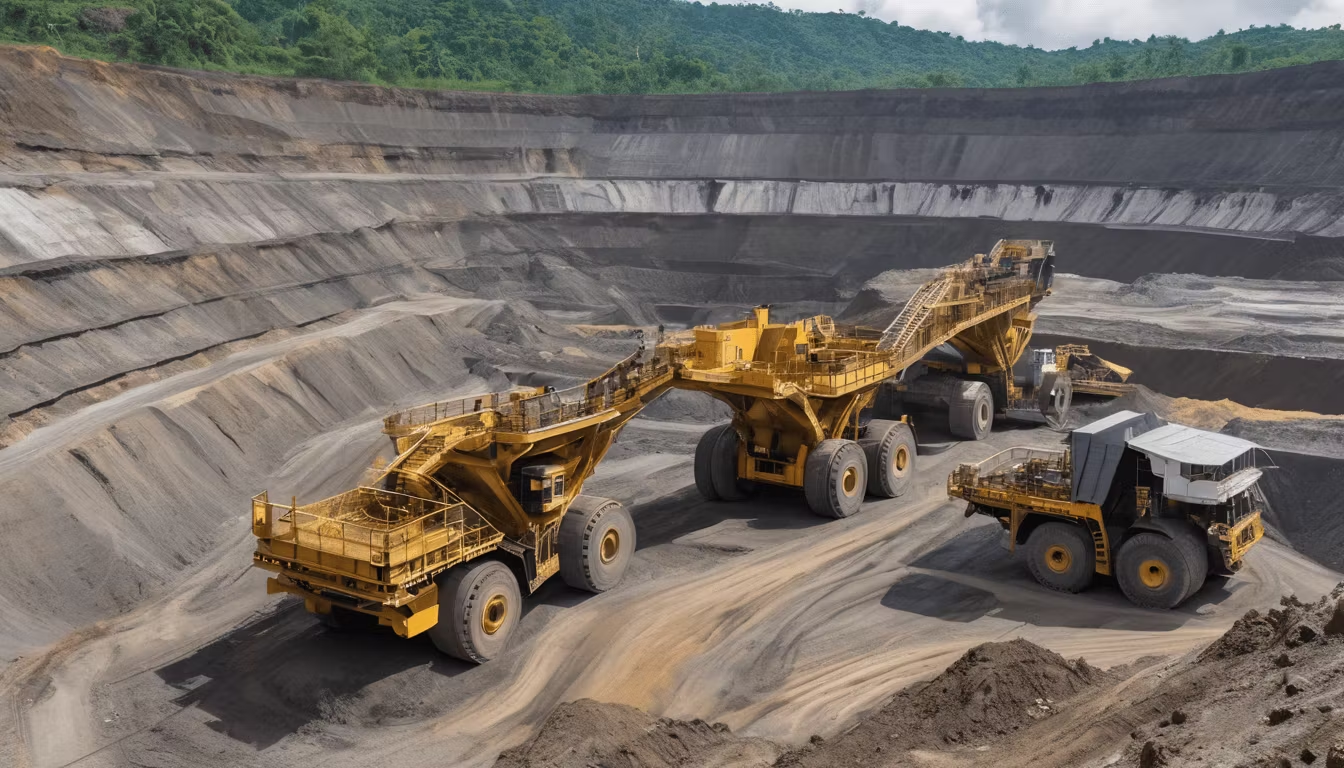
Nickel ore is a lateritic deposit formed through the weathering of ultramafic igneous rocks over millions of years. Indonesia's nickel deposits are concentrated in the Sulawesi-Maluku metallogenic belt, particularly across Sulawesi (Morowali, Konawe), Kalimantan, and Halmahera in Maluku province. These regions contain some of the world's richest nickel ore bodies, with deposits lying close to the surface and accessible via open-pit mining techniques.
The weathering process creates a layered profile within the laterite ore body: a surficial oxide zone, a transitional zone, and a primary sulfide zone. Industrial mining operations target the upper two zones, extracting saprolite and limonite ore that meet contemporary smelting requirements. Understanding this geological context helps buyers assess ore consistency, strip ratios, and mining viability when evaluating long-term supply contracts.
Saprolite Nickel Ore: Properties, Grades, and Applications
What Is Saprolite?
Saprolite is the weathered, clay-rich layer of laterite ore lying beneath the oxide layer. It retains the crystalline structure of the parent rock but is significantly altered by chemical weathering. For nickel producers, saprolite is the premium ore type—higher nickel grades, lower moisture, and better metallurgical properties make it the feedstock of choice for ferronickel and NPI smelting.
Grade Specifications and Composition
Indonesian saprolite nickel ore typically ranges from 1.5% to 2.0% nickel content by weight. Premium deposits yield saprolite with 1.8-2.0% Ni, while lower-grade zones produce ore at 1.5-1.7% Ni. Beyond nickel, the ore composition includes:
- Iron (Fe): 8-15% (influences smelting energy requirements)
- Magnesium (Mg): 6-10% (affects slag chemistry)
- Silica (SiO₂): 35-45% (impacts concentrate quality)
- Aluminum (Al₂O₃): 5-8%
- Moisture (H₂O): 15-25% (drying costs for transport)
- Loss on Ignition (LOI): 8-15%
Saprolite's Smelting Advantages
Saprolite ore delivers superior performance in both electric arc furnace (EAF) and rotary kiln operations. The lower moisture content reduces pre-treatment costs, while higher nickel concentration improves furnace productivity and reduces slag volume. For ferronickel production targeting 25-30% Ni matte grades, saprolite provides consistent feed quality and predictable metallurgical outcomes. NPI producers similarly favor saprolite for achieving target iron levels (75-78% Fe) with minimal beneficiation.
Limonite Nickel Ore: Properties, Grades, and Use Cases
Understanding Limonite Ore
Limonite is the upper oxide zone of the laterite profile, characterized by high iron oxide (goethite/hematite) content and elevated moisture. While lower in nickel concentration than saprolite, limonite ore remains economically viable for HPAL processing and is essential feedstock for laterite-optimized smelting routes.
Grade Specifications and Composition
Indonesian limonite nickel ore typically grades 0.8% to 1.2% nickel content. Typical elemental composition includes:
- Nickel (Ni): 0.8-1.2%
- Iron (Fe): 35-50% (much higher than saprolite)
- Silica (SiO₂): 15-25%
- Magnesium (Mg): 5-9%
- Moisture (H₂O): 25-35% (higher than saprolite)
- Loss on Ignition (LOI): 10-20%
- Cobalt (Co): 0.03-0.08% (valuable by-product)
Limonite Processing and Market Role
Limonite's high iron content and lower nickel grades make it suitable for HPAL leaching, where pressurized sulfuric acid dissolves nickel and cobalt from the ore matrix. Major Indonesian HPAL operators in North Konawe and Morowali preferentially source limonite ore for feed consistency. The ore's oxide composition also simplifies laterite roasting, making it competitive for rotary kiln operations when energy costs permit.
Despite lower nickel concentration, limonite's iron content supports byproduct recovery and slag utilization, appealing to vertically integrated producers seeking maximum ore value extraction.
Quality Assurance and Testing Standards in Indonesia
All Indonesian nickel ore suppliers operating under valid IUP OPK (Izin Usaha Pertambangan Operasi Produksi) licenses must submit ore samples to SUCOFINDO (Surveyor Indonesia) for third-party testing and certification. SUCOFINDO testing verifies nickel grade, iron content, moisture, silica, and trace elements against Indonesian national standards (SNI) and international commodity specifications.
Testing protocols include:
- Fire assay and XRF (X-ray fluorescence) for nickel and iron grades
- Moisture determination via oven drying at 105°C
- LOI (loss on ignition) testing at 1000°C
- Silica and alumina analysis via fusion methods
- Trace element screening (cobalt, chromium, arsenic)
SUCOFINDO certificates accompany shipments, providing buyers independent verification of ore quality before receiving inventory. This testing framework is non-negotiable for industrial buyers and is legally mandated under Indonesian mining regulations.
Indonesian Nickel Mining Regions and Production Capacity
Primary Mining Zones
Sulawesi (Morowali & Konawe): Indonesia's largest nickel ore producing region, with multiple active mines operated by both PT VALE and smaller regional operators. Morowali district alone accounts for roughly 40% of Indonesia's nickel ore output. The region supplies both saprolite and limonite ore, with seasonal production variations driven by monsoon patterns affecting ore moisture and transport accessibility.
Kalimantan: Emerging production zone with significant untapped reserves. Regional mines supply primarily to downstream regional smelters and traders, with smaller shipment scales compared to Sulawesi operations.
Maluku (Halmahera): Secondary but strategically important production area, supplying specialized ore grades for niche market segments.
Annual Supply and Capacity Considerations
Indonesia's domestic nickel ore output reached approximately 32 million metric tons in 2023, with production growing 8-12% annually. Dedicated traders and production companies typically maintain annual capacity between 500,000 to 2.5 million metric tons, depending on sourcing networks and mine access agreements. Seasonal rainfall patterns significantly impact production consistency, with dry seasons (July-September) enabling peak extraction and wet seasons (November-March) reducing output by 20-30%.
Applications: Nickel Ore Mining for Smelter Feed
NPI (Nickel Pig Iron) Production
NPI smelters are Indonesia's largest domestic consumers of nickel ore. These electric arc furnace operations target 1.5-2.2% Ni ore grades (predominantly saprolite) to produce NPI at 10-15% nickel content, which is then sold to stainless steel mills or further processed into ferronickel. The NPI smelter feed market has driven demand for consistent-grade, low-moisture saprolite ore, supporting premium pricing for materials meeting strict quality specifications.
Ferronickel Processing
Ferronickel producers operating rotary kiln-electric arc furnace (RKEF) complexes require ore flexibility, accepting both saprolite and limonite grades and adjusting process parameters accordingly. Typical ferronickel feed specifications call for 1.2-2.0% Ni ore with controlled iron ratios (8-15% optimal range). Ferronickel output (typically 20-30% Ni content) supplies stainless steel mills, specialty alloy producers, and battery manufacturers.
HPAL (High-Pressure Acid Leach) Operations
HPAL is an advanced laterite processing route using pressurized sulfuric acid to selectively dissolve nickel and cobalt from limonite ore. HPAL operations prefer consistent 0.9-1.2% Ni limonite grades and benefit from higher iron and cobalt content compared to saprolite ore. Several major Indonesian HPAL facilities operate at scale, processing 2-4 million metric tons annually to produce battery-grade nickel sulfate and cobalt sulfate for electric vehicle supply chains.
Sourcing Indonesian Nickel Ore: What Buyers Need to Know
Export Restrictions and Domestic-Only Sourcing
Since 2020, Indonesia has banned unprocessed nickel ore exports, reserving raw ore for domestic smelting operations. This policy has fundamentally restructured nickel supply chains, requiring international buyers to source processed products (NPI, ferronickel, laterite ore concentrate) rather than raw ore. For domestic Indonesian industrial buyers, however, direct access to raw ore remains available through licensed traders and production companies.
Licensing and Compliance Requirements
Reputable nickel ore suppliers must hold current IUP OPK licenses (issued by provincial mining authorities) and RKAB (Rencana Kerja dan Anggaran Biaya) environmental approval. Buyers should verify licensing status via the Indonesian Ministry of Energy and Mineral Resources database before engaging in long-term supply agreements. Licensed suppliers also maintain environmental compliance records, community relations agreements, and safety certifications.
Typical Supply Terms
Nickel ore suppliers accommodate flexible order sizes: trial purchases of 50-500 MT are common for quality verification, while established relationships often involve annual contracts for 10,000-500,000 MT. Pricing typically reflects spot market nickel prices (LME), tonnage discounts, ore grade premiums/discounts, moisture content adjustments, and delivery logistics. Standard payment terms are 30-90 days after delivery, with letter of credit arrangements available for larger volumes.
Quality Metrics and Purchasing Specifications
Critical Parameters for Saprolite Buyers
When sourcing saprolite nickel ore, industrial buyers should specify:
- Nickel grade: 1.7-2.0% minimum (with penalty clauses below 1.7%)
- Iron content: 8-13% range (impacts smelting efficiency)
- Moisture: Below 20% (reduces transport weight and drying costs)
- SiO₂: 35-42% (influences slag volume)
- LOI: Below 12%
- SUCOFINDO certification: Non-negotiable
Critical Parameters for Limonite Buyers
Limonite ore specifications typically include:
- Nickel grade: 0.9-1.2% minimum
- Iron content: 40-50% (supports HPAL and rotary kiln economics)
- Moisture: Below 32%
- Cobalt content: 0.04-0.08% (valuable for battery precursor markets)
- SiO₂: 18-25%
- SUCOFINDO third-party testing: Required
Environmental and Regulatory Considerations
Indonesia's nickel mining sector operates under increasingly stringent environmental regulations. The 2023 Environmental Impact Assessment (AMDAL) requirements mandate acid mine drainage prevention, tailings management, and biodiversity protection across all active mining operations. Progressive suppliers implement water treatment systems, reforestation programs, and community benefit agreements as standard practice.
International buyers importing ferronickel, NPI, or processed nickel products originating from Indonesian ore should verify due diligence documentation confirming compliance with Indonesian environmental standards and, where applicable, international frameworks like the London Metal Exchange's Responsible Sourcing principles.
Pricing Dynamics and Market Trends
Indonesian nickel ore pricing correlates with LME nickel futures, with saprolite ore commanding premiums of 15-25% over limonite grades due to superior metallurgical properties. Moisture content directly impacts realized prices: each 1% above specification typically triggers 0.5-1.0% price deductions. Seasonal variations create opportunities for strategic buyers: ore sourced during dry season (July-September) commands lower moisture premiums, while monsoon-season ore (November-March) carries handling surcharges.
Long-term supply contracts (1-3 years) typically feature quarterly price adjustments indexed to LME nickel, while spot purchases reflect real-time market conditions with premiums reflecting immediate supply/demand imbalances.
Beyond Nickel Ore: Integrated Mineral Supply Solutions
Leading Indonesian mining traders extend beyond nickel ore, offering complementary minerals supporting broader industrial operations. For instance, silica sand and zircon sand serve flotation and beneficiation circuits, while aluminium ingot supports secondary smelting and alloy production. Integrated procurement from single-source suppliers streamlines logistics, reduces overhead, and enables volume-based pricing advantages.
How to Source Nickel Ore from Reliable Indonesian Suppliers
Verification Checklist
Before committing to long-term supply agreements, verify:
- IUP OPK License Status: Confirm via Ministry of Energy and Mineral Resources registry
- RKAB Environmental Approval: Review current environmental compliance documentation
- SUCOFINDO Testing Record: Request historical test certificates to assess quality consistency
- Production Capacity: Confirm annual/monthly production capacity aligns with procurement needs
- Payment and Logistics Terms: Establish clarity on FOB/CIF pricing, shipping logistics, and quality guarantees
- References: Request contact information for existing clients (smelters, traders, industrial users)
Trial Shipments and Relationship Building
Reputable suppliers welcome trial orders (50-500 MT) at premium pricing to establish quality confidence and logistics familiarity. During trial phases, conduct independent assay verification, assess moisture stability during transport, and evaluate delivery timelines. Successful trial shipments typically lead to 3-12 month supply agreements with negotiated pricing based on volume commitments and quality consistency performance.
Conclusion: Partnering for Consistent, Quality Nickel Ore Supply
Indonesian nickel ore—whether saprolite or limonite—remains the backbone of Asia's smelting infrastructure and a critical input for battery-grade nickel sulfate production serving electric vehicle supply chains. Understanding ore types, grade specifications, testing standards, and regulatory requirements is essential for industrial buyers seeking reliable, compliant supply.
CV Indoalam Mineral Persada operates as a licensed, fully-compliant Indonesian nickel ore supplier with direct access to producing mines across Sulawesi, Kalimantan, and Maluku. Leveraging IUP OPK licensing, SUCOFINDO-verified quality protocols, and RKAB environmental approval, Indoalam delivers consistent saprolite (1.5-2.0% Ni) and limonite (0.8-1.2% Ni) ore meeting industrial smelter specifications. Whether you require trial shipments for quality verification or multi-year supply contracts supporting high-volume operations, Indoalam's integrated mineral supply platform—including silica sand and specialty minerals—streamlines procurement and reduces supply chain complexity.
Contact us today to discuss your nickel ore sourcing requirements, explore customized supply agreements, and discover how Indoalam partners with smelters, traders, and industrial operators across Indonesia to deliver world-class mineral products at competitive pricing.