Indonesia Nickel Export Ban: Reshaping Global Markets & Supply Chains

Understanding Indonesia's Nickel Export Ban: A Game-Changing Policy
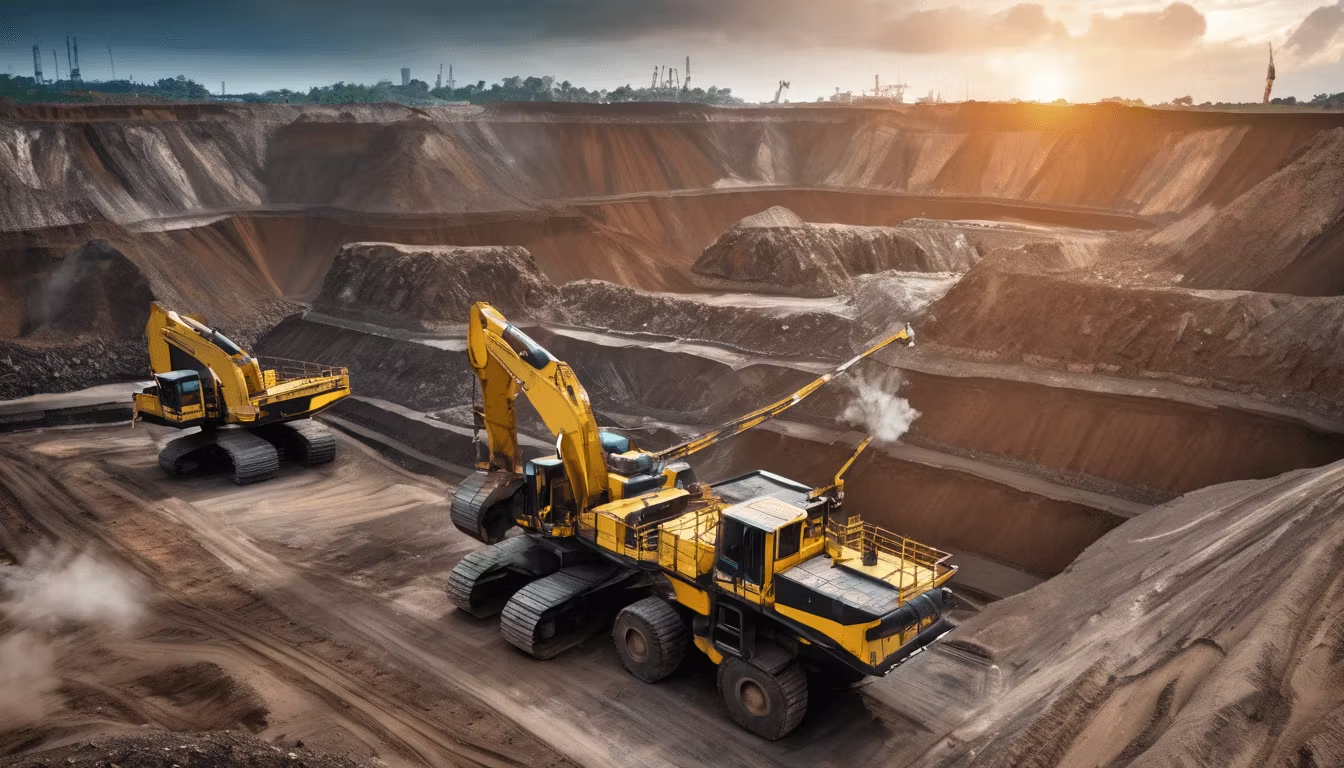
Indonesia's decision to implement a comprehensive nickel export ban stands as one of the most significant mineral policy shifts of the past decade. As the world's largest nickel ore producer, controlling approximately 30-35% of global nickel reserves, Indonesia's move to restrict raw ore exports while promoting downstream beneficiation has fundamentally altered international commodity markets, supply chains, and investment strategies across the global mining sector.
The Indonesia nickel export ban, initially implemented in 2020 and progressively tightened through 2022-2023, wasn't simply a trade restriction—it was a deliberate strategy to transform Indonesia from a raw material exporter into a value-added mineral processor. This policy decision has created ripple effects across industries reliant on nickel ore, forcing global buyers, smelters, and manufacturers to fundamentally rethink their sourcing strategies and operational models.
The Timeline and Evolution of Indonesia's Nickel Policy
Phase 1: The Initial Ban (2020)
Indonesia's government first announced restrictions on unprocessed nickel ore exports in January 2020, with implementation beginning that November. The ban targeted raw ore exports while permitting processed nickel products to leave the country. This initial phase aimed to encourage domestic nickel smelting and value addition, but the transition period created significant market disruption and price volatility.
Mining companies and international traders faced immediate uncertainty. Stockpiles accumulated at Indonesian ports as buyers scrambled to understand the new regulatory landscape. Prices for nickel ore surged as global supply tightened, creating a premium for available material and forcing downstream consumers to evaluate alternative sourcing options.
Phase 2: Strengthened Restrictions (2022-2023)
As Indonesia solidified its downstream nickel beneficiation policy, the government tightened regulations further. Export quotas became increasingly restrictive, and the definition of "processed" nickel narrowed considerably. Government incentives shifted toward encouraging domestic investment in ferronickel smelters, HPAL (High-Pressure Acid Leach) plants, and nickel refining facilities.
This evolution reflected Indonesia's commitment to capturing greater margins in the nickel value chain. Rather than allowing foreign companies to profit from ore processing, Indonesia aimed to develop its own refining capacity and establish itself as a global supplier of finished nickel products rather than raw material.
How the Nickel Ban Reshaped Global Supply Chains
Impact on International Nickel Markets
The Indonesia nickel export ban created immediate supply shocks that reverberated through global commodity markets. Nickel prices climbed dramatically in 2021-2022, with spot prices at the London Metal Exchange exceeding $20,000 per metric ton—levels not seen in over a decade. This price spike affected everything from stainless steel production to electric vehicle battery manufacturing, industries deeply dependent on stable nickel supplies.
International nickel buyers faced three critical challenges: securing alternative supplies, adjusting production costs upward, and adapting long-term supply contracts. The ban shifted the global balance of power, reducing Indonesia's export volume but simultaneously increasing the value of remaining nickel products available for international trade.
Smelter Consolidation and Domestic Processing Growth
Indonesia's downstream nickel policy successfully attracted massive investment in domestic smelting capacity. Between 2020-2024, the country commissioned numerous ferronickel and HPAL operations, particularly in Sulawesi's Morowali Industrial Park and surrounding regions. These facilities now process Indonesia's nickel ore domestically, creating employment and capturing processing margins within Indonesia rather than exporting them internationally.
This consolidation transformed Indonesia from a simple ore exporter into an integrated nickel processor. Major global nickel producers established or expanded operations in Indonesia to maintain access to world-class ore deposits while benefiting from government incentives supporting downstream development.
Geographic Diversification of Global Nickel Sources
Faced with Indonesia's export restrictions, global nickel consumers accelerated exploration and development of alternative sources. Investment in nickel projects in the Philippines, Papua New Guinea, Democratic Republic of Congo, and other regions intensified. While these new sources cannot completely replace Indonesian ore quality and volume, they provide geographic diversification and reduce dependency on a single producer country.
This geographic shift increased costs for many buyers but enhanced supply security. The concentration risk associated with Indonesian nickel dominance diminished, though Indonesia remains the world's largest producer and continues exporting processed nickel products at premium volumes.
Strategic Implications for Mining Industry Stakeholders
Challenges for International Nickel Smelters
Traditional nickel smelters outside Indonesia faced severe operational disruptions. Companies accustomed to importing raw ore suddenly confronted limited supply and elevated prices. Some operations reduced production, while others pursued strategic partnerships with Indonesian smelters to secure processed nickel products instead of ore.
The mineral beneficiation law underlying Indonesia's policy essentially forced foreign smelters into two choices: establish local operations in Indonesia to process ore, or purchase more expensive finished nickel products from Indonesian processors. This structural change redistributed industry profits and geopolitical advantage toward Indonesia.
Opportunities for Integrated Miners and Traders
Companies with flexibility to source, process, and trade multiple mineral products gained competitive advantages. Rather than depending exclusively on nickel ore, diversified mineral suppliers could offer clients alternative materials or complementary products. For example, suppliers providing silica sand or aluminium ingot alongside nickel products could position themselves as comprehensive mineral sourcing partners.
This diversification reflected market realities: the nickel ban created opportunities for companies offering portfolio approaches to mineral sourcing, rather than single-commodity specialists vulnerable to policy changes.
Electric Vehicle Industry Adaptations
The electric vehicle (EV) battery sector experienced the nickel ban's most immediate effects. Battery manufacturers require consistent, high-quality nickel supplies for cathode materials. The ban-induced price volatility and supply constraints forced EV manufacturers to pursue long-term contracts with Indonesian nickel smelters, invest in battery recycling programs to recover nickel from end-of-life batteries, and diversify cathode chemistries to reduce nickel intensity.
These adaptations reshaped EV development globally, with implications for vehicle costs, performance, and environmental profiles extending through the 2020s.
Indonesia's Downstream Beneficiation Strategy: Long-Term Implications
Value Capture and Economic Development
Indonesia's downstream nickel beneficiation policy represents a deliberate strategy to capture greater economic value from mineral resources. Rather than exporting raw ore for $5-10 per ton, Indonesia processes ore into ferronickel (worth $15-20 per ton) or refined nickel (worth $30-50+ per ton). This value multiplication creates employment, tax revenue, and industrial development within Indonesia.
The policy reflects broader emerging-market strategies to move up value chains in commodities, similar to how Chile developed copper refining capacity or how China built rare earth processing dominance. By restricting raw ore exports while subsidizing downstream facilities, Indonesia encourages processing investment and captures margins that would otherwise accrue to foreign companies.
Environmental and Infrastructure Considerations
Concentrating nickel processing in Indonesia raises important environmental questions. The country must manage smelting residues, acid leach effluent, and other byproducts responsibly. Infrastructure investments in ports, transportation networks, and waste management systems become critical as processing volumes expand.
Indonesia's commitment to these investments demonstrates confidence in the policy's long-term viability. However, operational challenges in managing environmental impact at scale remain ongoing concerns for regulators, operators, and communities affected by mining and smelting activities.
Future Outlook: Will Other Countries Follow Indonesia's Model?
Emerging Precedent for Resource Nationalism
Indonesia's success in implementing and maintaining the nickel export ban creates a potential template for other mineral-rich countries. The Democratic Republic of Congo, which dominates global cobalt supplies, has shown interest in similar downstream beneficiation policies. The Philippines and Papua New Guinea have occasionally discussed restricting nickel exports. Even minor producers evaluate whether export restrictions could maximize economic returns from mineral resources.
If major producers of cobalt, copper, rare earths, or other critical minerals implement comparable policies, global commodity markets could experience sustained volatility and structural changes comparable to the nickel ban's effects.
International Trade and WTO Considerations
Indonesia's nickel export ban exists within a complex international trade context. While the ban itself doesn't directly violate WTO rules (countries retain rights to regulate natural resource exports), it raises questions about fairness, reciprocity, and whether similar measures by other countries could destabilize global trade. However, no successful WTO challenge to Indonesia's policy has emerged, suggesting broad acceptance of sovereign resource management authority.
Practical Implications for Mining Buyers: Adapting to the New Normal
Securing Reliable Nickel Supplies
B2B mining buyers dependent on nickel ore should prioritize long-term contracts with integrated suppliers offering nickel ore and processed nickel products. Direct relationships with licensed mining companies in Indonesia—particularly those holding IUP OPK permits and SUCOFINDO certifications—provide supply security and quality assurance.
Diversifying supplier relationships across multiple Indonesian operations and geographic regions reduces concentration risk. Companies with presence in Sulawesi's Morowali and Konawe regions, Kalimantan, and Maluku can provide geographic diversity while maintaining Indonesian supply access.
Evaluating Alternative Materials
The nickel ban's supply constraints motivated some manufacturers to evaluate alternative materials. For certain applications, silica sand provides industrial properties previously achieved with nickel-bearing compounds. While complete substitution isn't viable for battery or stainless steel applications, tactical material substitutions can reduce vulnerability to nickel supply disruptions in secondary applications.
Building Flexibility into Operations
Manufacturing operations should design flexibility to accommodate price volatility and supply variations. Inventory management strategies that account for potential supply disruptions, pricing flexibility in customer contracts that reflect commodity volatility, and diversified product portfolios help businesses absorb the impacts of the nickel ban without operational disruption.
Conclusion: A Transformed Nickel Market
Indonesia's nickel export ban represents more than regulatory change—it reflects a fundamental shift in how resource-rich nations approach commodity extraction and value creation. By restricting raw ore exports while promoting downstream processing, Indonesia captured greater economic value, attracted major industrial investment, and established itself as a global nickel processing powerhouse rather than simply a raw material supplier.
For mining industry stakeholders, the ban created both challenges and opportunities. Global supply chains reorganized, prices adjusted, and strategic partnerships formed around Indonesia's integrated nickel ecosystem. The policy succeeded in its primary objectives while demonstrating that determined governments can reshape global commodity markets through resource policy.
As industries adapt to this new landscape, partnerships with reliable Indonesian suppliers offering diverse mineral products become increasingly valuable. Companies seeking secure access to nickel ore, processed nickel products, aluminium ingot, zircon sand, and other minerals benefit from working with established suppliers holding proper licensing, quality certifications, and proven track records supplying major industrial buyers.
Ready to secure reliable mineral supplies in the post-ban era? CV Indoalam Mineral Persada specializes in direct-from-mine sourcing of premium nickel ore, silica sand, aluminium ingots, and zircon sand for major smelters, manufacturers, and traders across Indonesia and internationally. Our IUP OPK licensing, SUCOFINDO quality testing, and flexible supply arrangements from 100 MT trials to 2.5M MT annual contracts provide the security and scale you need. Contact us today to discuss your mineral sourcing requirements and discover how Indoalam can support your supply chain in this transformed market.