Global Silica Sand Market: Demand Drivers & Growth Projections 2024

Global Silica Sand Market: Demand Drivers and Growth Projections 2024
The global silica sand market is experiencing unprecedented growth, driven by industrial expansion across emerging economies and technological innovation in advanced manufacturing. As industries worldwide seek high-quality industrial materials, understanding market dynamics has become essential for procurement professionals, manufacturing executives, and commodity traders.
This comprehensive analysis explores the key demand drivers reshaping the silica sand industry, examines current market valuations, and projects growth trajectories through 2030.
Understanding the Global Silica Sand Market
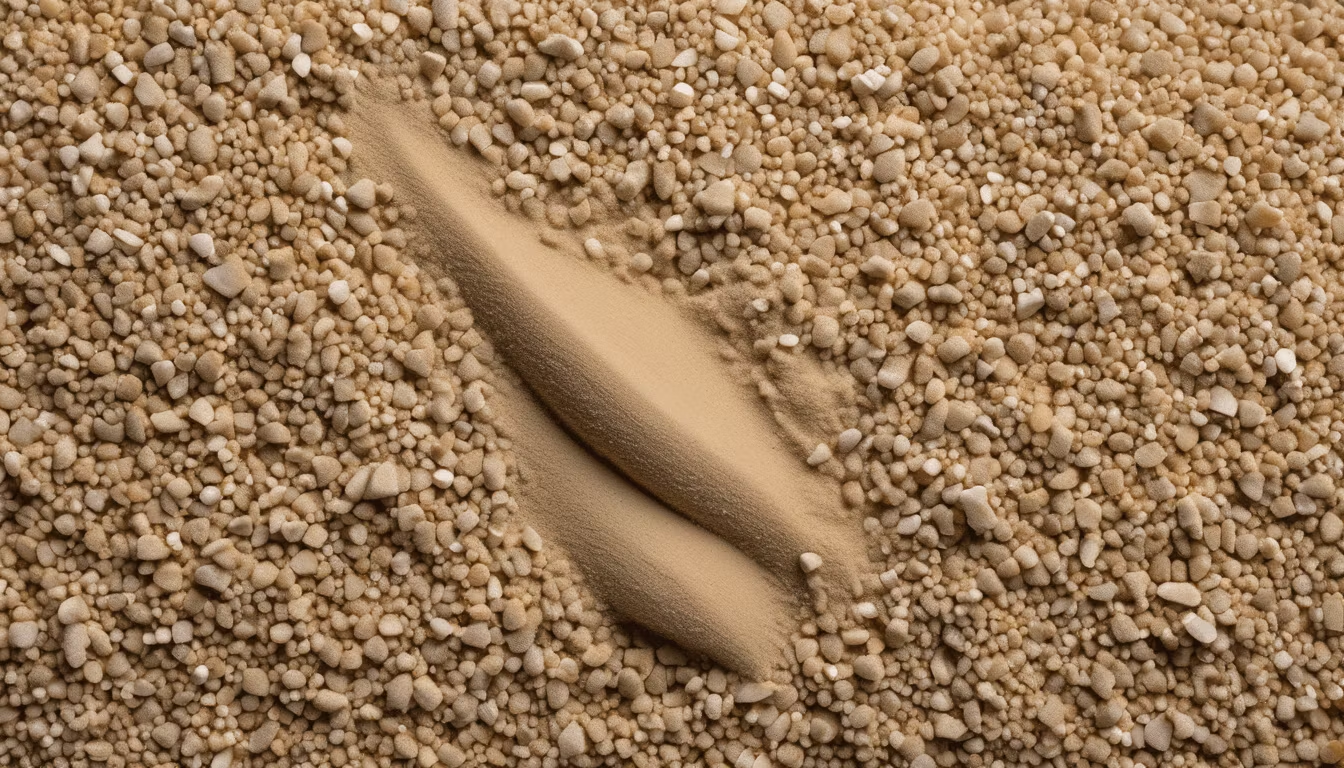
Silica sand, composed primarily of silicon dioxide (SiO₂), is one of the most versatile industrial minerals globally. The global silica sand market has experienced consistent expansion, with market size estimated between $8-12 billion USD annually, depending on regional classifications and product specifications.
Unlike commodity-grade sand, industrial-grade silica sand requires rigorous quality standards. High-purity variants with SiO₂ content exceeding 99% command premium pricing and serve specialized applications in solar manufacturing, precision casting, and optical glass production.
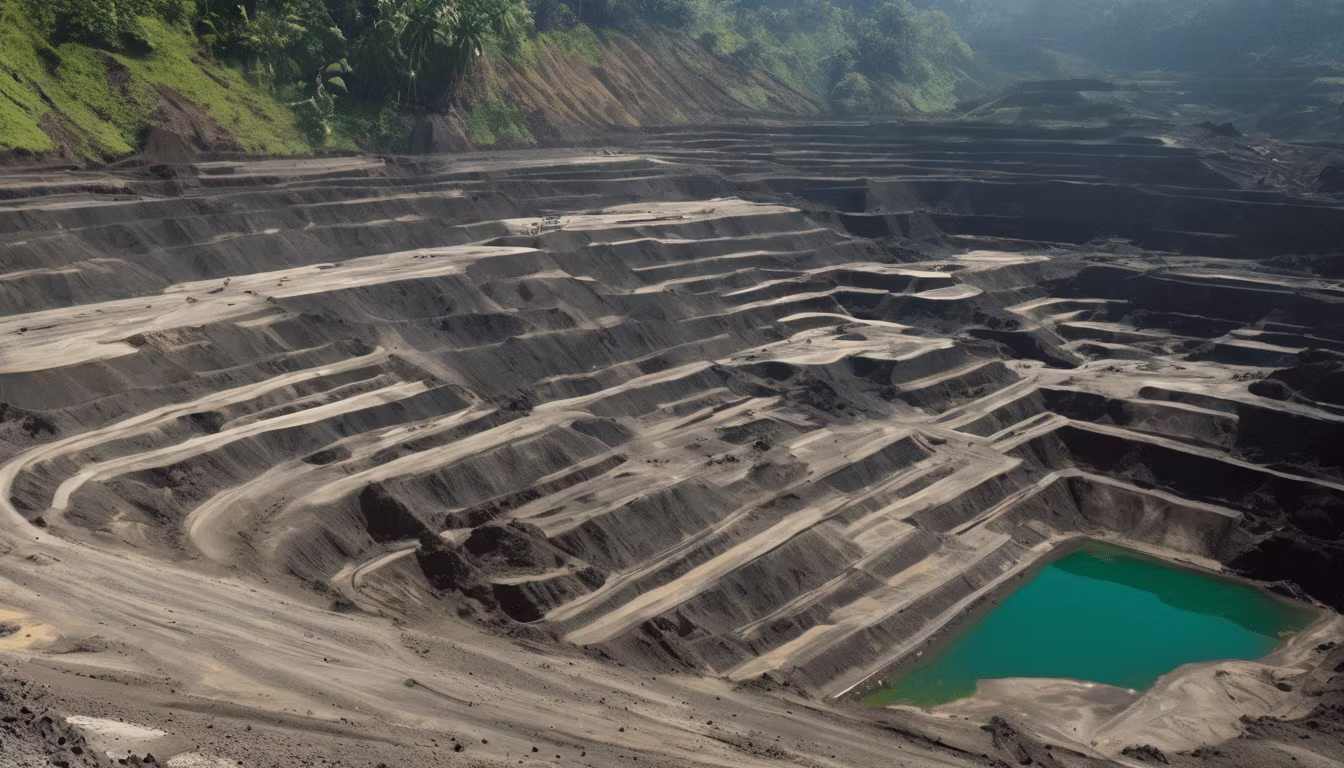
Indonesia remains a critical global supplier, with abundant reserves concentrated in Sulawesi, Kalimantan, and Maluku regions. The country's geological advantages—combined with advanced processing capabilities—position it as a preferred source for international buyers seeking reliable supply chains.
Primary Demand Drivers for Silica Sand
1. Glass Manufacturing and Solar Panel Production
Glass manufacturing dominates silica sand consumption, accounting for approximately 35-40% of global demand. This sector encompasses:
- Float Glass Production: Automotive, architectural, and decorative glass manufacturers require premium-grade silica with minimal iron oxide contamination
- Solar Panel Manufacturing: Photovoltaic (PV) glass production has surged alongside renewable energy adoption, with solar installations projected to grow 15-20% annually through 2030
- Container and Glassware: Beverage bottles, food containers, and laboratory glassware maintain steady demand in developing markets
The renewable energy transition specifically amplifies silica sand demand. Each 1 MW solar installation requires approximately 300-500 kilograms of specialized glass, creating sustained market pressure for high-quality quartz sand.
2. Construction and Infrastructure Development
Construction-grade quartz sand fuels building material production globally. Applications include:
- Mortar and concrete additives
- Tile and ceramic manufacturing
- Grout formulations
- Concrete surface finishes
Asian infrastructure expansion—particularly in Southeast Asia, India, and East Africa—drives substantial demand for construction-grade silica. Indonesia's proximity to these markets provides significant logistics advantages and cost competitiveness.
3. Industrial Casting and Foundry Operations
Foundry-grade silica sand remains essential for precision casting applications. The automotive, aerospace, and machinery industries require:
- Consistent grain size distribution (typically 80-200 mesh)
- Low moisture content and exceptional purity
- Stable refractory properties during high-temperature applications
As global manufacturing rebounds post-pandemic, foundry demand for specialized sand grades has intensified. Complex casting processes in electric vehicle manufacturing particularly require superior silica specifications.
4. Water Treatment and Filtration
Municipal and industrial water treatment facilities utilize silica sand for multi-stage filtration systems. Market growth in this segment reflects:
- Stricter environmental regulations globally
- Expansion of potable water infrastructure in developing nations
- Industrial wastewater treatment requirements
- Agricultural irrigation system upgrades
5. Chemical and Specialty Applications
Advanced applications continue expanding:
- Silica Gel Production: Desiccants and moisture control materials
- Fracturable Sand: Oil and gas well stimulation (proppant applications)
- Electronic Substrates: Semiconductor and microelectronics manufacturing
- Cosmetics and Personal Care: Industrial abrasives and fillers
Market Size and Current Valuation
Recent market research indicates:
- Global Market Size (2023): Approximately $8.7-9.2 billion USD
- Projected CAGR (2024-2030): 5.8-7.2% annually
- Estimated 2030 Market Value: $13.5-14.8 billion USD
Regional variations significantly impact valuation. Asia-Pacific dominates consumption, driven by Chinese manufacturing, Indian infrastructure investment, and Southeast Asian industrial expansion. Europe maintains stable demand for premium specialty grades, while North America shows strong industrial casting and water treatment demand.
Growth Projections Through 2030
Regional Growth Patterns
Asia-Pacific (45-50% of global demand): Fastest growth trajectory, led by:
- China's continued manufacturing dominance
- India's infrastructure mega-projects
- Indonesia's domestic industrial expansion
- Vietnam and Thailand's emerging manufacturing sectors
Europe (20-25% of global demand): Growth driven by:
- Renewable energy manufacturing expansion
- Strict quality requirements maintaining premium pricing
- Sustainability-focused specialty applications
North America (15-18% of global demand): Moderate growth from:
- Oil and gas well stimulation (proppant demand)
- Advanced manufacturing resourcing
- Water infrastructure modernization
Supply Chain Dynamics
Future silica sand market stability depends on several factors:
- Freight Costs: Ocean freight volatility influences international competitiveness
- Supply Concentration: Geographic clustering creates dependency risks
- Processing Technology: Advanced beneficiation enables higher-margin specialty products
- Environmental Regulations: Silica dust regulations affect processing costs and market structure
Direct-from-mine sourcing models gain competitive advantage by reducing intermediary costs and ensuring quality consistency throughout supply chains.
Quality Specifications Driving Market Premiums
Market pricing reflects rigorous quality differentiation:
| Grade | SiO₂ Content | Primary Applications | Price Range |
|---|---|---|---|
| Standard Industrial | 95-97% | Construction, concrete | $15-25/MT |
| High-Purity | 98-99% | Glass, ceramics, foundry | $35-55/MT |
| Ultra-High Purity | 99.5-99.8% | Solar, optical, electronics | $80-150/MT |
| Specialty Grades | 99.7%+ | Semiconductors, advanced materials | $200-400/MT |
Third-party testing and quality certification—such as SUCOFINDO laboratory analysis—have become standard market requirements, especially for international transactions and premium applications.
Emerging Market Trends
Sustainability and Environmental Considerations
Environmental consciousness reshapes silica sand sourcing decisions. Progressive buyers increasingly prioritize:
- Suppliers with environmental management systems (ISO 14001)
- Reduced dust emission processing facilities
- Responsible mining practices and land rehabilitation
- Carbon-neutral logistics options
Supply Chain Localization
Post-pandemic supply chain resilience drives diversification. Manufacturers increasingly seek multiple regional suppliers rather than single-source dependencies, benefiting geographically advantaged producers.
Product Innovation
Market differentiation increasingly involves engineered sand products:
- Pre-sized mesh grades optimizing customer processing
- Treated silica reducing handling costs
- Specialty coatings for advanced applications
- Custom blends meeting precise technical specifications
Strategic Considerations for B2B Buyers
Organizations procuring silica sand should evaluate:
- Supply Reliability: Long-term availability and price stability from licensed producers
- Quality Consistency: Third-party testing credentials and specification guarantees
- Logistics Efficiency: Direct sourcing minimizes supply chain friction and reduces costs
- Regulatory Compliance: IUP licensing, environmental approvals, and export documentation
- Flexibility: Ability to accommodate volumes ranging from trial shipments to annual contracts
Indonesian suppliers offering silica sand with verified SUCOFINDO testing, IUP OPK licensing, and established production capacity provide institutional reliability for global buyers.
Indonesia's Position in Global Silica Markets
Indonesia commands strategic advantages in global silica sand supply:
- Abundant Resources: Multiple high-grade deposits in Sulawesi, Kalimantan, and Maluku
- Geographic Proximity: Direct access to fastest-growing Asian markets
- Production Capacity: Modern mining operations supporting 2-3 million metric ton annual capacity
- Quality Standards: SUCOFINDO-certified testing ensuring international specifications
- Regulatory Framework: IUP OPK licensing providing supply security and transparency
Beyond silica sand, Indonesian producers also supply complementary industrial minerals. Companies seeking diversified sourcing may explore opportunities in zircon sand for advanced ceramics and refractory applications, or aluminium ingot for downstream casting operations.
Future Market Outlook
The global silica sand market demonstrates resilience and growth potential through 2030. Key outlook factors include:
- Renewable Energy Acceleration: Solar and wind manufacturing sustained growth
- Infrastructure Investment: Developing economy construction spending expansion
- Manufacturing Automation: Advanced casting and production technology adoption
- Environmental Standards: Quality and sustainability requirements intensifying
Organizations investing in reliable, quality-assured supply partnerships positioned to capture market opportunities as demand continues ascending.
Conclusion
The global silica sand market expansion reflects fundamental industrial growth across emerging economies combined with technological advancement in specialty applications. As demand drivers—particularly renewable energy and construction development—accelerate, supply reliability and quality assurance become paramount competitive factors.
Strategic procurement requires partnerships with established, licensed producers offering transparent quality documentation and flexible supply arrangements. Indonesian suppliers with comprehensive regulatory compliance, proven production capacity, and international market experience provide optimal risk-mitigation profiles for global buyers.
Ready to secure reliable silica sand supply for your operations? Contact us to discuss your specific requirements, request product samples, or explore custom supply arrangements. CV Indoalam Mineral Persada delivers SUCOFINDO-tested, IUP OPK licensed silica sand directly from source—ensuring quality, consistency, and competitive pricing for your industrial applications.