Global Aluminium Market Trends 2024: Supply, Demand & LME Pricing

Global Aluminium Market Trends: What B2B Buyers Need to Know
The global aluminium market is experiencing significant shifts in 2024, driven by geopolitical tensions, energy cost fluctuations, and evolving industrial demand across key sectors. For B2B buyers in foundries, automotive, construction, and manufacturing industries, understanding these global aluminium market dynamics is critical to optimizing procurement strategies and managing costs effectively.
This comprehensive analysis explores the current state of the aluminium price trends, supply-demand imbalances, and strategic sourcing opportunities that are reshaping how industrial buyers approach their material procurement.
Understanding the Current Global Aluminium Market Landscape
Market Overview and Size
The global aluminium market reached approximately 68 million metric tons in 2023 and is projected to grow at a CAGR of 4.5-5.2% through 2030. This growth is driven primarily by emerging markets in Asia, where industrialization and infrastructure development continue to accelerate. China remains the world's largest producer and consumer, accounting for roughly 55-60% of global primary aluminium production.
However, supply constraints in other regions—particularly Europe and North America—have created pricing volatility and supply chain complexities that require careful navigation by B2B buyers.
Key Market Drivers in 2024
Several macroeconomic and industry-specific factors are influencing the aluminium demand landscape:
- Energy Costs: Aluminium smelting is energy-intensive, with electricity representing 30-40% of production costs. Rising energy prices in Europe and North America have shifted production capacity to regions with cheaper hydroelectric power, primarily Southeast Asia and the Middle East.
- Green Energy Transition: Renewable energy infrastructure (solar panels, wind turbines) and electric vehicle (EV) manufacturing are major demand drivers, with EV production alone expected to increase aluminium consumption by 15-20% annually through 2030.
- Supply Chain Regionalization: Post-pandemic, industrial buyers are prioritizing nearshoring and regional sourcing to reduce logistics costs and supply disruptions. This trend favors Southeast Asian suppliers, particularly Indonesia.
- Recycled Aluminium Growth: Secondary aluminium production is increasing, with scrap prices influencing primary aluminium demand patterns.
LME Aluminium Pricing: Current Trends and Volatility Drivers
Price Performance and Volatility
The London Metal Exchange (LME) serves as the global benchmark for LME aluminium pricing. In 2024, aluminium prices have fluctuated within a range of $2,250-$2,800 USD per metric ton, reflecting broader economic uncertainties and supply-demand imbalances.
Key price drivers include:
- Bauxite and Alumina Costs: Bauxite prices have increased 18-22% year-over-year due to supply constraints from Australia and Guinea, directly impacting smelting margins and finished aluminium costs.
- Electricity Prices: European energy markets, though stabilized from 2022-2023 peaks, remain elevated compared to historical averages, affecting competitiveness of Western producers.
- USD Currency Movements: Since aluminium is priced in USD on the LME, currency fluctuations significantly impact international buyers. A stronger dollar increases costs for non-USD economies.
- Chinese Smelting Capacity: Any changes in China's production policies, environmental restrictions, or export quotas create immediate ripple effects across global pricing.
Seasonal Price Patterns
Aluminium prices typically show seasonal volatility, with prices generally firming in Q4 (due to year-end industrial demand) and softening in Q2 (summer slowdown in construction and automotive). B2B buyers should strategically time large purchases around these seasonal patterns to optimize procurement costs.
Supply-Demand Dynamics and Market Imbalances
Global Supply Constraints
Primary aluminium supply is facing mounting pressures:
- Production Capacity Underutilization: Western smelters are operating at 70-80% capacity due to high energy costs, while Chinese capacity remains at 95%+ utilization. This creates structural supply constraints outside China.
- Bauxite Mining Limitations: Guinea, the world's second-largest bauxite producer, has experienced mining disruptions due to political instability. Australia's export volumes remain steady but insufficient to meet global demand growth.
- Alumina Refining Bottlenecks: The conversion of bauxite to alumina represents a critical supply chokepoint. China controls approximately 60% of global alumina refining capacity, creating geopolitical leverage.
Demand Growth Sectors
Strong aluminium demand is concentrated in:
- Transportation: Light-weighting for fuel efficiency in automotive, combined with EV battery enclosures and thermal management components, drives sustained demand.
- Packaging: Aluminium beverage cans and food packaging benefit from sustainability trends and are growing at 3-4% annually.
- Building & Construction: Window frames, curtain walls, and structural components remain steady demand sources in developed markets and growth markets in Asia.
- Electronics & Renewable Energy: Solar panel frames, wind turbine components, and EV-related applications represent the fastest-growing segments at 12-15% annual growth.
Regional Market Variations and Sourcing Implications
Asia-Pacific: Growth Engine and Price Setter
Asia-Pacific accounts for approximately 62% of global aluminium demand and 58% of production. Within this region, Indonesia has emerged as a strategically important supplier, particularly for aluminium ingot products (ADC12 and A7 grades) destined for foundries, automotive component manufacturers, and industrial casting operations.
Sourcing from Indonesian suppliers offers several advantages: proximity to major manufacturing hubs, lower energy costs due to abundant hydroelectric resources, and favorable logistics for regional distribution.
Europe: Premium Pricing and Sustainability Focus
European aluminium commands price premiums (typically $150-250/MT above LME spot) due to stringent sustainability certifications and the carbon border adjustment mechanism (CBAM). Buyers seeking certified sustainable or low-carbon aluminium should expect to pay premiums but may benefit from regulatory compliance advantages.
North America: Domestic Content Preferences
The U.S. Inflation Reduction Act (IRA) incentivizes domestic aluminium sourcing for EV and green energy applications. B2B buyers in North America should factor potential tariff implications and domestic content requirements into long-term supply planning.
Strategic Implications for B2B Buyers
Procurement Strategy Recommendations
1. Diversify Supply Sources: Over-reliance on single suppliers or regions increases vulnerability to price shocks and supply disruptions. Establishing relationships with multiple suppliers across different geographies—including reliable Southeast Asian sources—reduces risk.
2. Lock in Long-Term Contracts: With LME volatility expected to persist, securing fixed-price or formula-based long-term supply agreements provides budget certainty and protects against spot market fluctuations.
3. Optimize Inventory Management: Balancing just-in-time inventory practices with strategic stockpiling during price dips requires sophisticated demand forecasting and supply chain visibility.
4. Monitor Premiums and Specifications: Beyond LME pricing, buyer attention to regional premiums, quality specifications (alloy composition, purity, ingot size), and delivery terms significantly impacts total cost of ownership.
Quality and Certification Considerations
When evaluating aluminium suppliers, B2B buyers should prioritize:
- Third-party lab testing and certification (SUCOFINDO testing standards ensure quality consistency)
- Compliance with international standards (ASTM, EN, GB)
- Supply chain transparency and traceability documentation
- Supplier capacity to handle variable order sizes (from trial quantities to large annual contracts)
Competitive Landscape and Supplier Evaluation
Vertical Integration Benefits
Suppliers with direct access to raw materials and integrated production capabilities offer cost advantages and supply security. Direct-from-mine sourcing eliminates middleman markups and improves price transparency—a critical advantage in volatile commodity markets.
Reputable suppliers should hold proper licensing credentials (IUP OPK for mineral operations in Indonesia, for example) demonstrating regulatory compliance and operational legitimacy.
Emerging Market Consolidation
The aluminium supply industry is witnessing consolidation, with larger trading companies acquiring regional producers. This trend favors buyers who can build relationships with mid-tier suppliers before consolidation eliminates their independence and negotiating power.
Future Outlook: 2025-2030 Market Projections
Demand Growth Drivers
Industry analysts project global aluminium demand will grow to 78-82 million metric tons by 2030, driven by:
- EV production scaling to 35-40% of automotive market share
- Renewable energy infrastructure buildout targeting net-zero commitments
- Infrastructure development in emerging markets (India, Southeast Asia, Africa)
- Packaging industry expansion driven by e-commerce and food safety trends
Supply Response and Price Outlook
Supply is expected to expand but struggle to keep pace with demand growth, particularly outside China. This structural imbalance suggests:
- Sustained Price Support: LME aluminium likely to trade in the $2,500-$3,200/MT range through 2026, with periodic volatility around geopolitical events and energy market shocks.
- Regional Price Divergence: Premium pricing for certified sustainable and low-carbon aluminium will widen, creating opportunities for specialty suppliers.
- Secondary Aluminium Growth: Scrap-based production will increase to 15-18% of total supply by 2030, moderating primary aluminium demand growth.
Sourcing Quality Minerals Alongside Aluminium Products
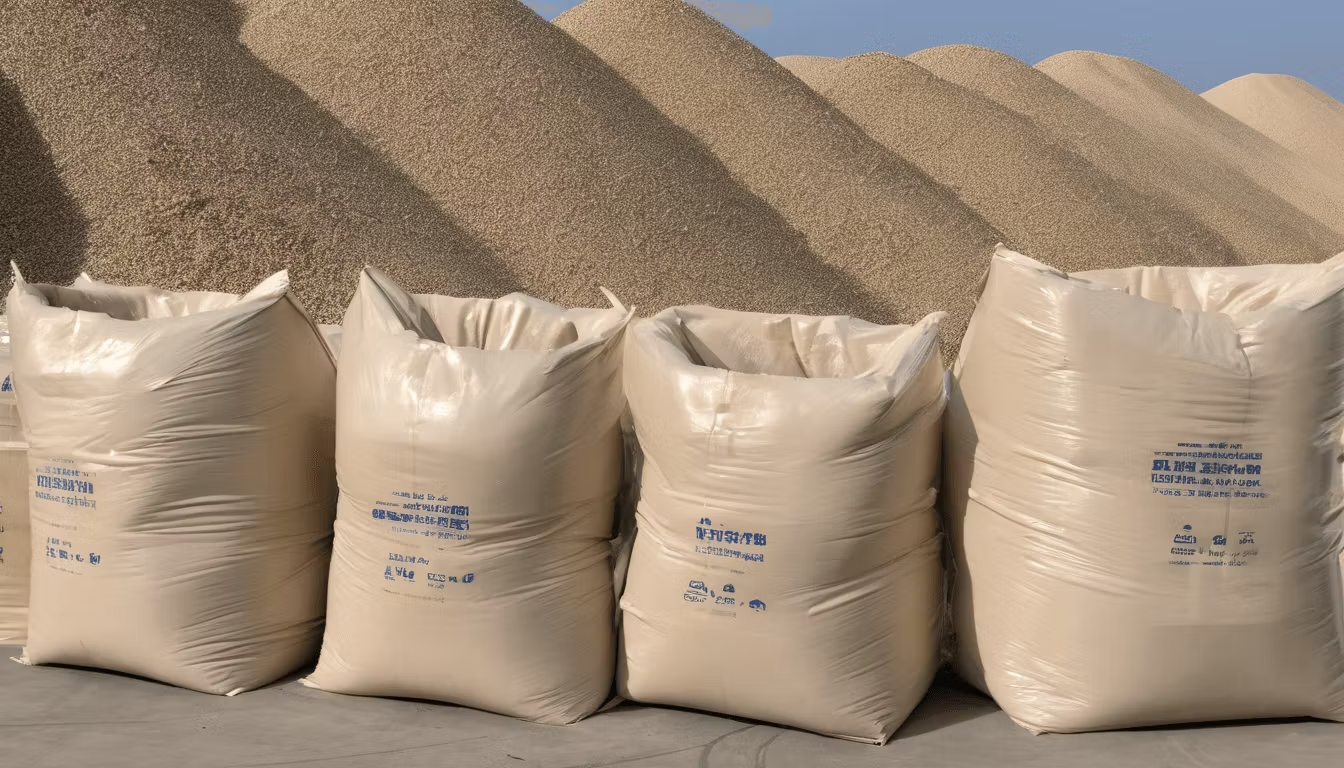
Integrated industrial buyers—particularly those in foundry, ceramics, glass manufacturing, and water treatment—often source multiple mineral products simultaneously. In addition to aluminium ingot supplies, many companies procure complementary materials such as silica sand for foundry applications, zircon sand for ceramic and refractory applications, and specialized mineral products.
Consolidating these purchases with reliable regional suppliers reduces administrative overhead and improves supply chain coordination.
Conclusion: Navigating Global Aluminium Market Complexity
The global aluminium market in 2024-2025 presents both challenges and opportunities for B2B buyers. Understanding LME aluminium pricing dynamics, regional supply constraints, and emerging demand drivers enables more informed procurement decisions. The shift toward regionalized supply chains, combined with growing demand for sustainable products, creates opportunities for buyers to establish partnerships with quality-focused Southeast Asian suppliers offering competitive pricing and reliable delivery.
Success in this environment requires balancing spot market opportunism with long-term supply security, diversifying supplier relationships, and maintaining focus on quality standards and regulatory compliance.
If you're seeking reliable aluminium ingot supplies with direct-from-source pricing and lab-tested quality assurance, contact us to discuss how CV Indoalam Mineral Persada can support your procurement strategy with flexible volumes, transparent pricing, and full regulatory compliance credentials.