Foundry Sand for Metal Casting: Silica Sand Applications Guide

Understanding Foundry Sand: The Foundation of Quality Metal Casting
In the metal casting industry, the quality of your foundry sand directly determines the quality of your finished products. Silica sand, also known as quartz sand, serves as the primary molding material in both ferrous and non-ferrous casting operations worldwide. For manufacturers seeking reliable foundry sand suppliers, understanding the critical role of this material is essential to optimizing production efficiency and reducing defects.
Foundry sand is far more than just ordinary sand. It's a carefully selected and processed mineral material engineered to withstand extreme temperatures, maintain dimensional accuracy, and preserve fine surface finishes on cast components. In Indonesia, where mining expertise meets industrial demand, premium silica sand production has become a cornerstone of regional metal casting supply chains.
What Makes Silica Sand Ideal for Metal Casting?
Chemical Composition and Purity Standards
The foundation of excellent casting sand begins with chemical purity. Industrial-grade silica sand for foundry applications typically requires SiO₂ content of 99% or higher. This exceptionally high silica content ensures consistent thermal behavior, prevents unwanted chemical reactions with molten metal, and maintains structural integrity during the casting process.
When silica content falls below 98%, iron oxide contamination and other impurities can trigger fusion defects, metal penetration, and surface irregularities on cast parts. For precision casting operations—whether you're producing automotive components, industrial machinery parts, or specialized equipment—maintaining strict silica purity becomes non-negotiable.
Grain Size Distribution and Mesh Grades
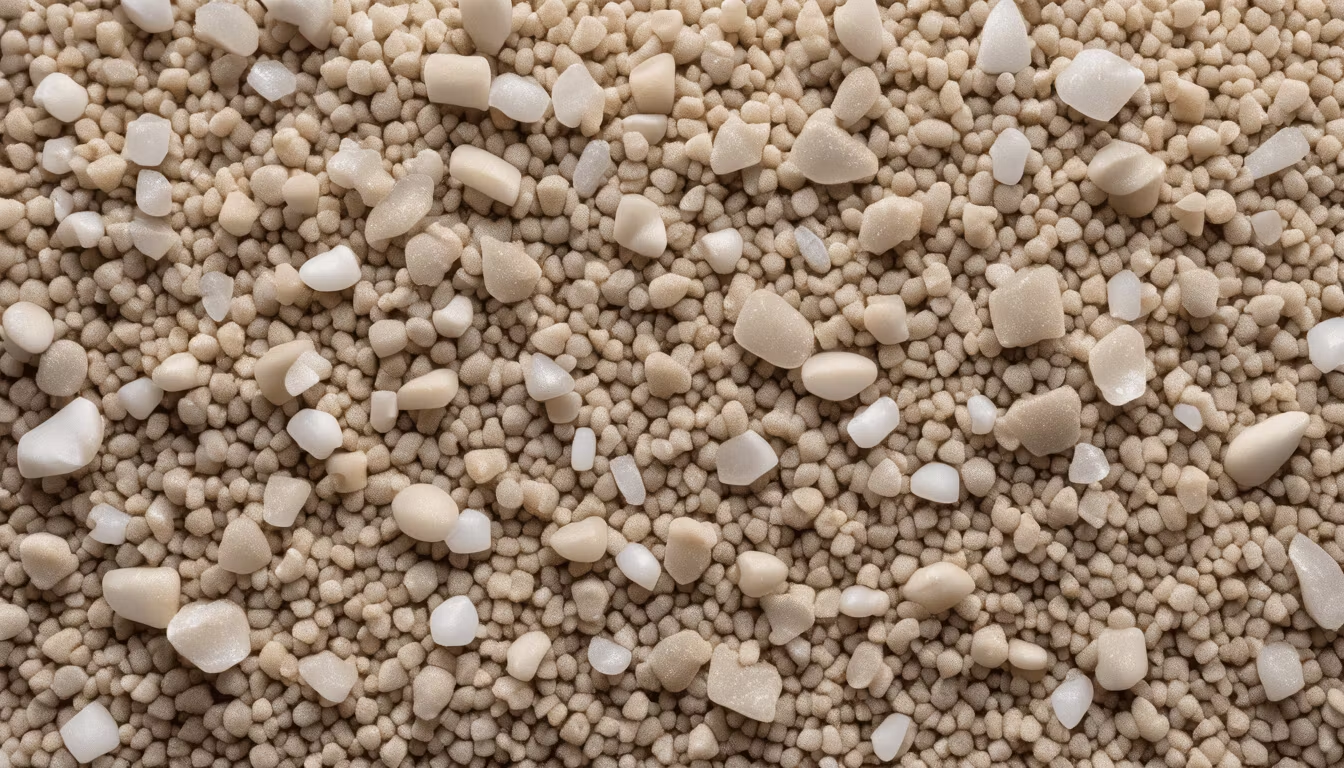
Foundry sand effectiveness depends heavily on grain size consistency. The mesh grade classification system (8, 16, 20, 30, 40, 60, 100, 120, 150, 200) defines the particle size distribution, which directly impacts:
- Surface finish quality: Finer mesh grades (100-200) produce smoother casting surfaces
- Mold strength: Coarser grades (8-30) provide better structural integrity for large castings
- Permeability: Medium grades (40-60) allow optimal gas escape during solidification
- Dimensional accuracy: Consistent grain distribution prevents casting shrinkage and warping
Professional foundries typically blend multiple mesh grades to achieve the optimal balance for specific casting applications. A foundry producing thin-walled precision parts might prefer finer silica sand, while heavy machinery manufacturers opt for coarser grades to support larger mold structures.
Applications of Foundry Sand Across Metal Casting Industries
Ferrous Metal Casting
Iron and steel casting represents the largest application sector for foundry sand globally. Ferrous foundries use silica sand for both green sand molding (clay-bonded sand) and chemically-bonded systems. The high melting point of silica sand (1710°C) makes it suitable for containing molten iron temperatures exceeding 1500°C without degradation.
Gray iron castings, ductile iron components, and steel forgings all benefit from premium foundry sand specifications. The refractory properties prevent metal penetration—a critical defect that compromises structural integrity in critical applications like automotive engine blocks and hydraulic machinery.
Non-Ferrous Casting Applications
Aluminum, copper, and bronze casting operations require equally stringent sand specifications but with different thermal profiles. Aluminum casting typically occurs between 700-750°C, lower than ferrous casting but creating unique challenges around metal fluidity and surface tension interactions with the mold.
This is where premium silica sand composition becomes crucial. Contaminants that might be tolerable in iron casting can cause serious defects in aluminum—including veining, gas porosity, and rough surfaces. Manufacturers producing aluminum automotive components, marine hardware, and precision aerospace parts depend on foundry sand meeting exacting international standards.
Specialty Casting Processes
Beyond traditional sand molding, silica sand serves critical roles in:
- Lost-foam casting: Supporting precise foam patterns that require stable sand permeability
- Shell molding: Providing the aggregate base for resin-bonded shells
- Precision investment casting: Contributing to core materials and pouring materials
- Core sand production: Enabling complex internal geometries in cast components
Technical Specifications for Casting Sand Selection
Key Physical Properties
When sourcing foundry sand, quality-conscious manufacturers evaluate multiple technical parameters:
- Silica Content (SiO₂): 99.74%+ for premium applications
- Loss on Ignition: Less than 0.5% to minimize organic contamination
- Bulk Density: 1.55-1.65 g/cm³ for optimal mold packing
- Refractoriness: PCE cone 30+ to withstand extreme temperatures
- Green Strength: 150+ PSI when combined with bentonite binders
- Permeability: AFS 150-180 for optimal gas escape
These specifications aren't arbitrary—they represent decades of foundry industry standards developed to minimize defects and maximize casting quality consistency.
Testing and Quality Assurance
Professional suppliers implement rigorous testing protocols throughout the production and supply chain. Third-party laboratory certification—such as SUCOFINDO testing—provides independent verification of chemical composition and physical properties, offering manufacturers the confidence that delivered material meets contracted specifications.
Regular quality audits, particle size distribution analysis, and thermal property testing ensure that every shipment maintains consistent performance characteristics. This is particularly important for foundries running tight production schedules where sand quality variation could trigger costly production delays.
Sourcing Premium Foundry Sand from Indonesia
Indonesia's Strategic Position in Silica Sand Supply
Indonesia has emerged as a critical global source of premium silica sand, with extensive mineral deposits across Sulawesi, Kalimantan, and Maluku. These regions possess the geological characteristics necessary for producing exceptionally pure silica sand without excessive contamination—a natural advantage that reduces processing requirements and production costs.
For foundries across Asia-Pacific and internationally, Indonesian silica sand offers competitive pricing without compromising quality. Direct sourcing from mining operations eliminates middleman markups, allowing manufacturers to reduce material costs while maintaining strict quality control.
Direct Supply Advantages
Working with established Indonesian suppliers provides several competitive advantages:
- Direct from mine operations: No intermediaries means better pricing and transparency
- Flexible supply arrangements: From trial quantities (100 MT) to annual contracts (2.5M MT+)
- Fully licensed operations: IUP OPK and RKAB compliance ensures legal and environmental compliance
- Comprehensive certifications: SUCOFINDO testing provides independent quality verification
- Custom specifications: Ability to produce specific mesh grades and compositions for unique applications
These advantages make Indonesian suppliers increasingly attractive to foundries seeking to optimize their supply chains while reducing material procurement complexity.
Best Practices for Foundry Sand Implementation
Optimal Storage and Handling
Even premium foundry sand can lose quality if improperly stored or handled. Best practices include:
- Storing sand in clean, covered facilities protected from moisture and contamination
- Preventing cross-contamination between different mesh grades and compositions
- Regular moisture monitoring—foundry sand performs optimally at 3-5% moisture content
- Implementing quality checks at receiving to catch potential shipping-related issues
Sand Reclamation and Sustainability
Modern foundries recognize that foundry sand management significantly impacts both economics and environmental responsibility. Thermal and chemical reclamation processes allow sand to be reused multiple times before disposal, reducing material consumption and landfill burden. Sourcing from responsible suppliers—those implementing sustainable mining and processing practices—aligns operations with evolving environmental expectations.
Common Casting Defects and Sand-Related Solutions
Many casting defects trace back to suboptimal foundry sand specifications:
- Metal penetration: Indicates insufficient silica content or inadequate binder strength
- Veining and scabbing: Results from poor permeability or high iron oxide contamination
- Rough surface finish: Correlates with inconsistent mesh grades or excess clay content
- Dimensional variation: Suggests problems with grain size consistency or mold compaction
- Gas porosity: Points to inadequate gas escape capability (permeability issues)
Addressing these issues begins with comprehensive sand analysis and sourcing from suppliers committed to consistent quality standards.
Comparing Foundry Sand Options: Why Quality Matters
The foundry sand market offers options ranging from budget alternatives to premium specifications. However, attempting to save costs through lower-grade sand typically results in:
- Increased scrap rates and casting defects
- Higher labor costs addressing quality issues
- Production delays due to sand-related problems
- Potential customer dissatisfaction and warranty claims
- Long-term supply chain disruptions
When calculated comprehensively, premium foundry sand actually reduces total casting costs through improved yield rates, reduced rework, and consistent production efficiency.
Partner with Indoalam for Reliable Foundry Sand Supply
CV Indoalam Mineral Persada has established itself as a trusted supplier of premium silica sand to foundries, metal casting facilities, and industrial manufacturers across Indonesia and internationally. With direct mining operations, comprehensive quality testing, and flexible supply arrangements, Indoalam provides the reliability and quality that modern casting operations demand.
Whether you require specific mesh grades, custom compositions, or large-scale annual contracts, Indoalam's experienced team understands the technical requirements of metal casting industries and delivers accordingly. Our SUCOFINDO-tested silica sand meets international quality standards while offering competitive Indonesian sourcing advantages.
Contact our team today to discuss your foundry sand requirements, request samples, or explore supply partnerships that support your casting operations with consistent quality and competitive pricing.