B2B Mineral Trading in Indonesia: A Complete Buyer's Guide

Introduction: Understanding Indonesia's Mineral Trading Landscape
Indonesia is one of the world's largest mineral-producing nations, offering an abundance of natural resources that fuel global industries. From construction materials to electronics manufacturing, the demand for high-quality minerals continues to grow. However, for international and domestic B2B buyers, navigating the complexities of mineral trading in Indonesia can be challenging.
This comprehensive guide walks you through the essential aspects of B2B mineral trading in Indonesia, covering sourcing strategies, quality assurance, regulatory compliance, and how to identify trustworthy suppliers. Whether you're sourcing nickel ore for smelting operations or silica sand for industrial applications, understanding this market will help you make informed purchasing decisions.
The Indonesian Mineral Market: Size, Scope, and Opportunities
Indonesia's Mineral Resources and Production Capacity
Indonesia's mineral sector represents a critical component of both the national economy and global commodity supply chains. The country produces several key minerals including nickel, tin, coal, copper, and various industrial minerals. With production regions spanning Sulawesi, Kalimantan, Maluku, and other archipelago zones, Indonesia offers diverse sourcing opportunities for B2B buyers.
The mining sector is heavily regulated through strict licensing frameworks, including IUP (Izin Usaha Pertambangan) permits and operational compliance requirements. Understanding these regulatory layers is essential for legitimate mineral procurement.
Market Growth and Industry Demand
Indonesia's mineral trading volume has expanded significantly over the past decade, driven by increased demand from nickel smelters, glass manufacturers, ceramics producers, and construction material facilities. The global transition toward renewable energy and electric vehicles has particularly boosted demand for nickel-based products, making Indonesia's mineral exports increasingly valuable.
For B2B buyers, this growth creates opportunities for competitive pricing and reliable supply chains, provided you partner with legitimate, licensed suppliers.
Key Minerals Traded in Indonesia
Nickel Ore: The Strategic Mineral
Nickel ore remains Indonesia's most strategically important mineral export, with two primary grades available: saprolite nickel (1.5-2.0% Ni content) and limonite nickel (0.8-1.2% Ni content). Indonesia supplies major ferronickel smelters, NPI (nickel pig iron) producers, and HPAL (High Pressure Acid Leach) operations.
Note that domestic Indonesian policy restricts nickel ore exports, making domestic sourcing essential for international buyers established in Indonesia. If you're operating a smelter or processing facility within Indonesia, nickel ore represents a primary sourcing opportunity. Learn more about nickel ore specifications and sourcing.
Silica Sand and Quartz: Industrial Workhorse
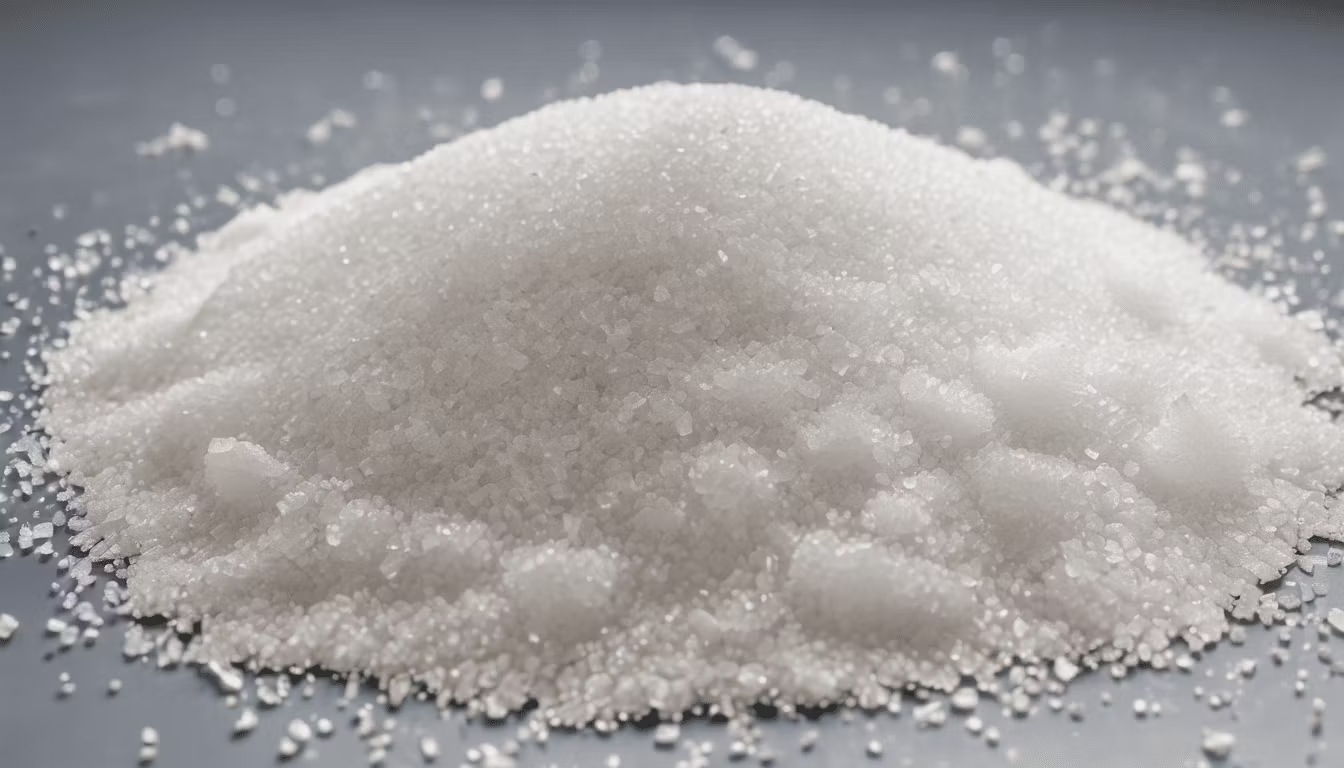
Silica sand (SiO2 content up to 99.74%) is one of Indonesia's most versatile mineral products. Available in multiple mesh grades (8-200), it serves diverse applications across glass manufacturing, ceramics production, water treatment systems, construction materials, and foundry operations.
Unlike nickel ore, silica sand is actively exported internationally, making it accessible to overseas buyers. The competitive pricing and high purity grades make Indonesian silica sand increasingly popular in global markets.
Aluminium Ingots: Casting and Manufacturing Grade
Indonesia produces quality aluminium ingots in ADC12 and A7 grades, serving foundries, metal casters, and manufacturing facilities. These ingots are available for both domestic consumption and international export, with consistent SUCOFINDO laboratory testing ensuring quality compliance.
Explore aluminium ingot options for your casting and manufacturing requirements.
Zircon Sand: Specialty Applications
With ZrO2 content exceeding 65%, Indonesian zircon sand serves specialized industrial applications including ceramics, refractories, and advanced manufacturing. While a niche product, its high purity and consistent availability make it valuable for precision applications.
How to Source Minerals from Indonesia: A Step-by-Step Process
Step 1: Identify Your Specific Requirements
Begin by clearly defining your mineral specifications: particle size distribution, purity levels, moisture content, and volume requirements. Having detailed technical requirements ensures you communicate effectively with suppliers and receive accurate quotations.
Step 2: Verify Supplier Licensing and Compliance
This is critical. Legitimate mineral suppliers must hold:
- IUP OPK (Izin Usaha Pertambangan Operasi Produksi Khusus) - Mining operation license
- RKAB Approval - Annual mining work plan approval
- SUCOFINDO Testing Certification - Third-party laboratory quality verification
- ET Batubara - Coal testing documentation (if applicable)
Request copies of these documents from any potential supplier. Legitimate operators will provide them without hesitation. This step protects you from purchasing conflict minerals or materials from unlicensed sources.
Step 3: Request Samples and Laboratory Testing
Reputable suppliers offer trial quantities (from 100 MT upward) allowing you to conduct your own quality verification. Independent laboratory testing confirms stated specifications before committing to larger orders. This is standard practice in B2B mineral trading.
Step 4: Evaluate Supply Chain Transparency
Ask potential suppliers about their sourcing regions, mining partners, and supply chain documentation. Direct-from-mine suppliers without middlemen typically offer better pricing and more transparent operations. Understanding the complete supply chain from extraction to delivery reduces risks and ensures ethical sourcing.
Step 5: Negotiate Terms and Contracts
B2B mineral trading typically involves formal contracts specifying:
- Mineral specifications and purity guarantees
- Pricing structure and payment terms
- Delivery schedules and logistics responsibilities
- Quality assurance and testing protocols
- Force majeure and dispute resolution clauses
- Minimum order quantities and contract duration
Flexible terms accommodating everything from 100 MT trial quantities to 2.5 million MT annual contracts indicate supplier scalability and reliability.
Quality Assurance in Indonesian Mineral Trading
The Role of SUCOFINDO Laboratory Testing
SUCOFINDO (Surveyor Indonesia) is Indonesia's primary third-party testing and certification body for mineral commodities. All legitimate mineral suppliers utilize SUCOFINDO for independent quality verification. This testing covers:
- Chemical composition analysis (SiO2, Fe, Al, and trace elements)
- Particle size distribution
- Moisture content verification
- Purity certification
Never proceed with large orders without SUCOFINDO-certified test results. These certificates provide legal protection and ensure you receive materials meeting stated specifications.
Specification Standards and Compliance
Indonesian mineral suppliers follow ISO standards and international commodity trading specifications. When sourcing materials, confirm compliance with:
- ISO 9001 quality management standards
- International commodity standards for your specific mineral
- Customer-specific technical requirements
- Environmental and safety compliance standards
Regulatory Framework for Mineral Imports and Exports
IUP OPK Licensing Requirements
The IUP OPK is Indonesia's primary mining operation license, issued by regional authorities. This license permits legal extraction and trading of minerals. When evaluating suppliers, verify their IUP OPK is current and applicable to the specific minerals you're sourcing.
Export Restrictions and Considerations
Indonesia maintains specific export policies for certain minerals. Nickel ore, for example, faces export restrictions, making it available primarily for domestic use. Conversely, silica sand, aluminium ingots, and zircon sand are freely exportable, making them accessible to international buyers.
Understanding these policies prevents expensive complications and ensures legal compliance in your mineral procurement.
Documentation and Customs Clearance
All mineral shipments require proper documentation including:
- Commercial invoices and packing lists
- SUCOFINDO laboratory certificates
- Export/import permits (where applicable)
- Bills of lading and shipping documentation
- Insurance documentation
Experienced suppliers manage these logistics efficiently, ensuring smooth customs clearance and timely delivery.
Pricing and Cost Considerations in Indonesian Mineral Trading
Factors Affecting Mineral Prices
Indonesian mineral prices fluctuate based on:
- Global commodity market prices - International supply/demand dynamics
- Purity and specification levels - Higher purity commands premium pricing
- Order volume - Larger quantities typically receive volume discounts
- Logistics and transportation costs - Distance and shipping method impact final pricing
- Market conditions - Seasonal demand and supply variations
Cost Optimization Strategies
To optimize procurement costs, consider:
- Direct-from-mine sourcing eliminating middleman markups
- Long-term contracts securing favorable pricing
- Consolidating orders to achieve volume discounts
- Building relationships with reliable suppliers for ongoing price competitiveness
Working with Reliable Indonesian Mineral Suppliers
Key Characteristics of Trustworthy Suppliers
Legitimate, professional mineral suppliers demonstrate:
- Current licensing - Active IUP OPK and RKAB approvals
- Laboratory partnerships - SUCOFINDO-certified quality testing
- Supply transparency - Clear information about sourcing regions (Sulawesi, Kalimantan, Maluku regions)
- Flexible scaling - Capacity to handle everything from trial orders to multi-million-ton annual contracts
- Professional communication - Responsive, detailed technical documentation
- Established customer base - References from recognized industrial players
Red Flags to Avoid
Exercise caution with suppliers who:
- Cannot provide current IUP OPK documentation
- Refuse independent SUCOFINDO testing
- Lack transparency about sourcing origins
- Only accept payment before shipment
- Cannot provide customer references
- Quote unrealistically low prices
Building Long-Term Mineral Sourcing Relationships
Contract Negotiation Best Practices
Successful long-term mineral sourcing relationships begin with clear, comprehensive contracts. Specify mineral grades, volume commitments, pricing mechanisms, quality assurance protocols, and delivery schedules. Include flexible terms accommodating your evolving operational needs.
Supply Chain Partnership Development
Rather than treating mineral sourcing as transactional, develop genuine partnerships with suppliers. Regular communication, timely payments, and consistent ordering encourage suppliers to prioritize your needs, often resulting in better pricing and priority allocation during supply constraints.
Conclusion: Your Indonesian Mineral Sourcing Partner
B2B mineral trading in Indonesia presents exceptional opportunities for quality-conscious buyers seeking competitive pricing and reliable supply. Success requires understanding the regulatory landscape, verifying supplier credentials, conducting thorough quality assurance, and building transparent partnerships.
Whether you require zircon sand for specialized applications or bulk quantities of industrial minerals, partnering with a licensed, transparent supplier ensures compliance and consistent quality.
CV Indoalam Mineral Persada stands as a trusted partner for B2B mineral sourcing, offering direct-from-mine supply of quality minerals with full IUP OPK and SUCOFINDO certifications. Our diverse product range, transparent sourcing practices, and flexible contract terms (from 100 MT trials to 2.5 million MT annual agreements) make us an ideal partner for your mineral procurement needs.
Ready to source high-quality minerals from Indonesia? Contact us today to discuss your specific requirements and receive a detailed quotation.