Aluminium Scrap Grades: Taint Tabor, Tense & Twitch Explained
Introduction: Understanding Aluminium Scrap Grades
The global secondary aluminium market is valued at over $40 billion annually, with scrap classification playing a critical role in pricing, quality control, and production efficiency. For foundries, metal recyclers, and industrial buyers sourcing raw materials for aluminium ingot production, understanding scrap grades is essential to optimize costs and ensure consistent product quality.
Aluminium scrap is classified into distinct grades based on composition, contamination levels, and alloy content. The most widely recognized classification system includes categories like Taint Tabor, Tense, and Twitch—terms that may seem cryptic to those new to secondary aluminium trading, but represent precise quality standards that affect melting yields, recycling efficiency, and final product specifications.
At CV Indoalam Mineral Persada, we understand that sourcing quality raw materials directly impacts your production costs and output quality. While our core expertise includes premium silica sand and industrial minerals, we work closely with clients in the secondary metals sector to deliver materials that meet international standards. This guide breaks down aluminium scrap grades to help you make informed purchasing decisions.
What Are Aluminium Scrap Grades?
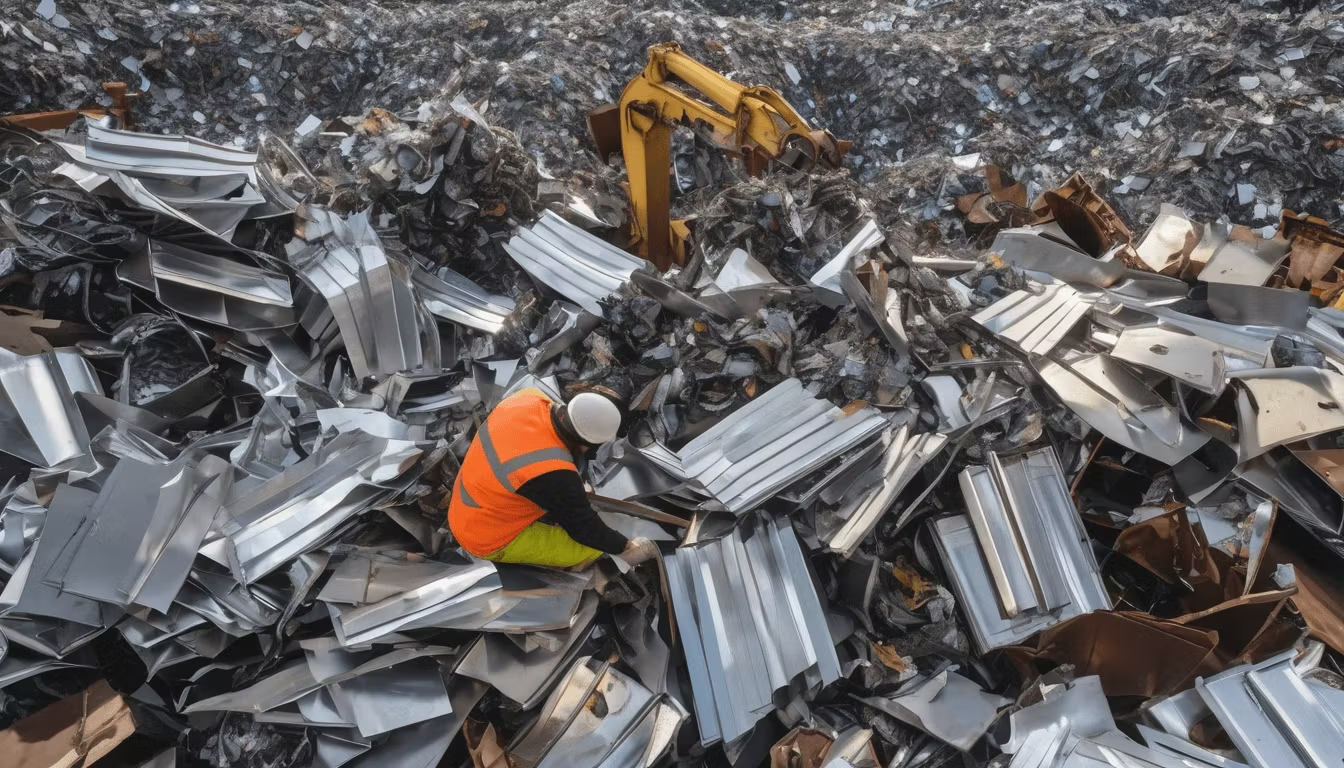
Aluminium scrap grades represent standardized classifications for recycled and secondary aluminium materials. These grades determine the material's suitability for specific industrial applications, melting efficiency, and the final quality of aluminium ingot products.
The classification system considers several critical factors:
- Alloy composition – Primary aluminium content and alloying elements
- Contamination levels – Iron, copper, silicon, and other impurities
- Moisture content – Surface oxidation and residual moisture
- Particle size – Whether material is chunked, shredded, or powdered
- Processing requirements ��� Sorting, cleaning, and preparation demands
In Indonesia, where aluminium ingot production supports growing automotive, construction, and electronics sectors, proper scrap grading ensures that recycled materials meet both domestic standards and international export specifications such as ISO 6361 and ASTM B26.
Taint Tabor: Premium Grade Aluminium Scrap
Definition and Composition
Taint Tabor represents the highest purity grade in the secondary aluminium scrap classification system. This grade contains highly pure aluminium with minimal contamination and is ideal for producing premium-grade aluminium alloys and high-specification ingots.
Key Characteristics of Taint Tabor Scrap
- Aluminium content: 99%+ pure, with very low iron and copper contamination
- Typical sources: Aircraft fuselage, beverage can scrap, wire insulation, electrical cables, and industrial offcuts
- Appearance: Clean, bright metal with minimal oxidation
- Particle size: Typically chunked or shredded, easily identifiable pieces
- Contamination limits: Iron <0.3%, copper <0.05%, silicon <0.1%
Industrial Applications
Taint Tabor scrap is preferred by:
- Aerospace and defense manufacturers requiring AS9100-certified materials
- Automotive OEMs producing critical engine and suspension components
- Electronics manufacturers requiring high-conductivity alloys
- Cable and wire producers needing low-impurity feedstock
- Beverage can manufacturers focused on premium recycled content products
Market Pricing and Value
Due to its superior quality and minimal processing requirements, Taint Tabor commands premium pricing—typically 15-20% above secondary grades. Buyers benefit from reduced melting losses (95-98% recovery rate) and minimal slag generation, offsetting the higher upfront cost through improved operational efficiency.
Tense: Mid-Grade Secondary Aluminium Scrap
Definition and Composition
Tense grade represents mid-range secondary aluminium scrap, offering a balance between cost-effectiveness and quality. This grade contains good aluminium content but with moderate contamination levels that require standard processing before melting.
Key Characteristics of Tense Scrap
- Aluminium content: 95-99% pure
- Typical sources: Window frames, machinery parts, household appliances, construction materials, and mixed industrial scrap
- Appearance: Mixed oxidation state, may include painted or coated surfaces
- Particle size: Various sizes, often requiring shredding or sorting
- Contamination limits: Iron <0.5%, copper <0.15%, silicon <0.2%
Processing Requirements
Tense grade scrap typically requires:
- Removal of paint and coatings through thermal or mechanical cleaning
- Magnetic separation to eliminate iron contamination
- Shredding and size standardization for consistent melting
- Flotation or density separation to remove non-metallic inclusions
Industry Usage and Applications
Tense scrap is widely used in:
- General-purpose casting and foundry operations
- Window and door frame manufacturing
- Automotive body panels and non-critical components
- Construction material production
- Consumer appliance manufacturing
Economic Considerations
Tense grade offers attractive value for budget-conscious buyers. While processing costs are higher than Taint Tabor (due to required cleaning and separation), the lower material cost makes it economical for applications where strict alloy specifications are not critical. Recovery rates typically range from 90-95%, with moderate slag generation.
Twitch: Lower-Grade and Mixed Aluminium Scrap
Definition and Composition
Twitch represents lower-grade, heavily contaminated aluminium scrap that requires extensive processing before suitable for high-value applications. This grade includes mixed aluminium items with significant impurities, paint, coatings, and attached non-metallic materials.
Key Characteristics of Twitch Scrap
- Aluminium content: 85-95% pure
- Typical sources: Mixed scrap from demolition, old electrical equipment, heavy machinery components, painted structural materials
- Appearance: Oxidized, painted, or heavily contaminated surfaces
- Particle size: Inconsistent, often chunky and irregular
- Contamination limits: Iron <1.0%, copper <0.3%, silicon <0.5%, plus paint/coatings
Processing and Preparation
Twitch scrap demands rigorous processing:
- High-temperature calcination to burn off organic coatings and paint
- Heavy mechanical shredding and size reduction
- Multiple-stage magnetic and density separation
- Chemical cleaning for stubborn oxide layers
- Extended sorting to remove contaminants
Application Areas
Despite lower purity, Twitch scrap finds use in:
- Low-specification castings and non-critical forgings
- Rebar and structural reinforcement applications
- Ground-level construction materials
- Industrial equipment with relaxed tolerance requirements
- Secondary melting operations with flexible alloy specifications
Economic and Environmental Impact
Twitch grade offers the lowest material cost but highest processing complexity. Recovery rates drop to 75-85%, and slag generation increases significantly. However, from an environmental perspective, processing Twitch scrap plays a crucial role in the circular economy—recovering aluminium from end-of-life products that might otherwise become landfill waste. For recyclers focused on environmental impact alongside cost efficiency, Twitch scrap represents valuable secondary raw material.
Comparing Aluminium Scrap Grades: A Practical Buyer's Guide
Quality vs. Cost Trade-offs
| Grade | Al Content | Processing Effort | Recovery Rate | Cost Level |
|---|---|---|---|---|
| Taint Tabor | 99%+ | Minimal | 95-98% | Premium |
| Tense | 95-99% | Moderate | 90-95% | Mid-range |
| Twitch | 85-95% | Intensive | 75-85% | Budget |
Selecting the Right Grade for Your Operation
Choose Taint Tabor if: You produce aerospace, automotive, or electronics components requiring certified material specifications. The premium cost is justified by minimal processing, high recovery, and superior final product quality.
Choose Tense if: You operate a general-purpose foundry or produce construction materials where moderate contamination is acceptable. The balance of quality and cost makes Tense economical for mid-volume operations.
Choose Twitch if: Cost is the primary driver and your applications have relaxed specifications. Budget for extensive processing infrastructure and plan for lower recovery rates in your financial projections.
Quality Assurance and Testing Standards
Reputable secondary aluminium suppliers test materials according to international standards:
- ASTM B26: Standard for aluminium and aluminium-alloy sand castings
- ISO 6361: Wrought aluminium and aluminium alloys
- ASTM B92: Specification for aluminum-alloy ingots
- EN 1676: European standard for secondary aluminium ingots
Independent laboratory testing—similar to the SUCOFINDO testing that CV Indoalam applies to all mineral products—ensures that scrap grades meet declared specifications and are free from undisclosed contaminants.
Market Trends in Secondary Aluminium
Rising Demand for Circular Economy Solutions
Global aluminium recycling has increased 35% in the past decade, driven by corporate sustainability commitments and regulations like the EU's Circular Economy Action Plan. Higher-grade scrap (Taint Tabor and Tense) commands premium pricing as manufacturers seek verified recycled content for product certifications.
Supply Chain Localization
Indonesian manufacturers are increasingly sourcing secondary aluminium domestically rather than importing, creating opportunities for local scrap traders and recyclers. Proximity to major smelter clusters in Kalimantan and Sulawesi enhances logistics efficiency.
Technology Integration
Advanced sorting technologies (AI-powered optical recognition, X-ray fluorescence) are improving scrap classification accuracy and reducing human error. These investments make higher-grade scrap more economically viable.
Working with a Reliable Mineral and Scrap Supplier
Beyond aluminium scrap, integrated suppliers like CV Indoalam Mineral Persada provide complementary materials essential for secondary metal processing. Our expertise in sourcing premium zircon sand for foundry applications and industrial minerals ensures that your entire supply chain meets international standards.
When evaluating secondary aluminium suppliers, prioritize:
- Transparent testing and quality certifications
- Consistent supply capacity and reliable delivery
- Flexible order sizes (from trial quantities to multi-ton contracts)
- Technical expertise and customer support
- Compliance with local environmental and export regulations
Conclusion: Making Informed Sourcing Decisions
Understanding aluminium scrap grades—Taint Tabor, Tense, and Twitch—is essential for buyers navigating the secondary metals market. Each grade serves distinct market segments, balancing quality, cost, and processing requirements.
For high-specification aerospace and automotive applications, Taint Tabor's premium quality justifies higher costs. General-purpose foundries benefit from Tense's balanced value proposition. Cost-conscious recyclers can economically process Twitch scrap despite intensive preparation requirements.
The secondary aluminium market continues expanding as manufacturers embrace circular economy principles and seek verified recycled-content materials. By understanding these grade distinctions and selecting suppliers with rigorous quality standards, you can optimize procurement costs while ensuring consistent product specifications.
At CV Indoalam Mineral Persada, we recognize that reliable sourcing relationships extend beyond single commodities. Whether you're sourcing secondary materials or complementary industrial minerals like zircon sand for foundry operations, we're committed to delivering quality-tested materials with transparent specifications and consistent supply. Contact us to discuss your sourcing requirements and discover how our integrated material supply solutions support your operational efficiency.