Aluminium Die Casting Defects: How Raw Material Quality Matters
Introduction: The Hidden Cost of Poor Aluminium Quality in Die Casting
Aluminium die casting is one of the most efficient manufacturing processes in the automotive, electronics, and industrial sectors. However, the quality of your final product depends almost entirely on one critical factor: the purity and composition of your raw aluminium ingot materials.
Many foundries and metal casters across Southeast Asia struggle with recurring defects such as porosity, shrinkage cavities, and surface imperfections—yet they rarely trace the root cause back to their material supplier. The truth is, substandard aluminium ingots can introduce dissolved gases, impurities, and inconsistent alloy compositions that inevitably manifest as casting defects during production.
This comprehensive guide explores how raw material quality directly influences die casting performance, and why sourcing from certified suppliers matters for your bottom line.
Understanding Die Casting Defects: Common Types and Causes
What Are Die Casting Defects?
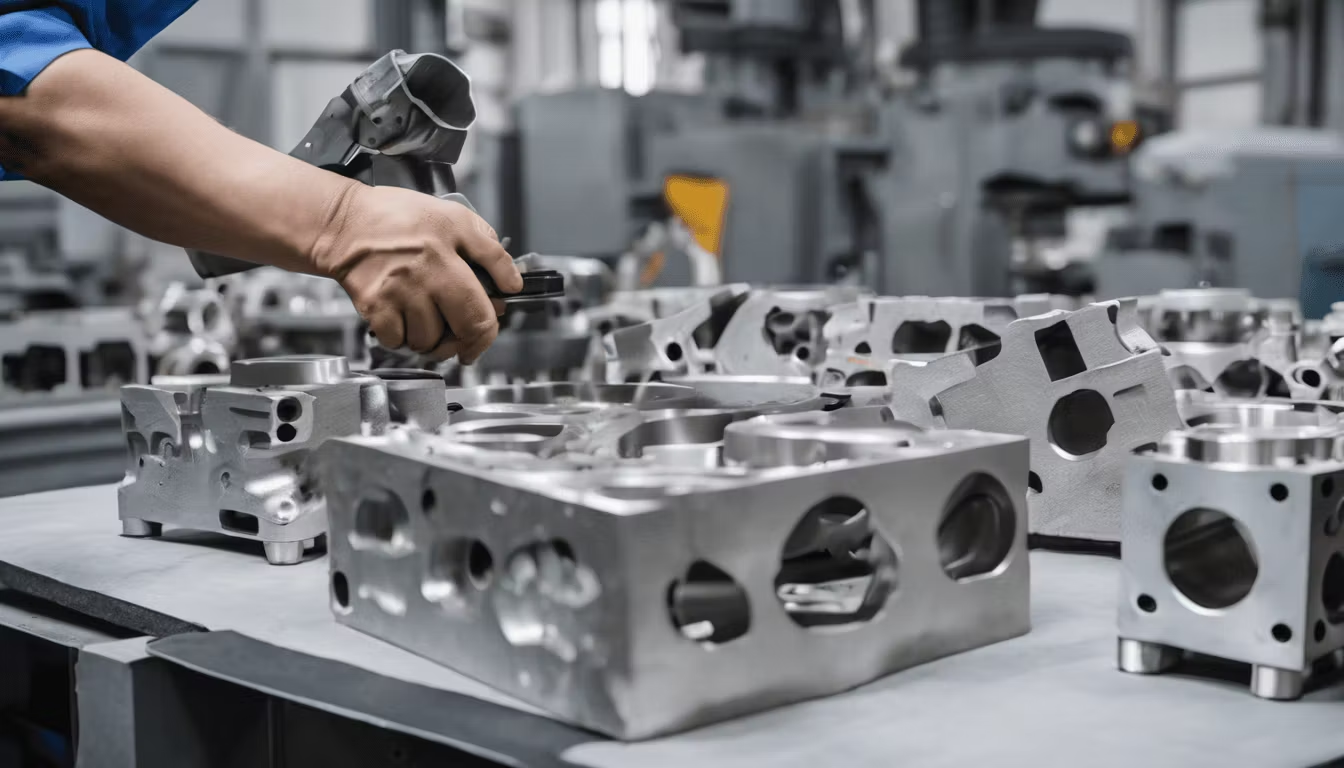
Die casting defects are structural or surface imperfections that reduce product quality, strength, and aesthetic appeal. These defects can occur during the casting process itself or may be inherited from poor-quality raw materials. The most prevalent types include:
- Casting Porosity: Gas pockets trapped within the metal matrix
- Shrinkage Cavities: Voids caused by uneven cooling and solidification
- Cold Shuts: Incomplete metal fusion creating weak zones
- Surface Roughness: Oxidation and impurity inclusions
- Dimensional Inconsistency: Variations due to alloy composition drift
While process parameters like mold temperature, injection pressure, and cooling rates play significant roles, the chemical composition and purity of your incoming aluminium directly determine your defect rate.
How Material Quality Triggers Die Casting Defects
The relationship between raw material and casting defects is direct and measurable. When you use low-grade aluminium ingots, you inherit several problems:
Dissolved Hydrogen Gas: Aluminium absorbs hydrogen during smelting. Poor-quality ingots retain excessive dissolved hydrogen, which expands during solidification, creating gas porosity in your final castings.
Iron and Silicon Contamination: Impurities from recycled or unrefined materials form brittle intermetallic compounds. These inclusions become stress concentration points, leading to premature failure under load.
Inconsistent Alloy Composition: Inferior suppliers may blend off-spec material or fail to maintain strict ADC12 composition tolerances (Al-Si 10-13%, Cu 1.5-4.5%, Mg 0.1%). This variation prevents consistent casting behavior across production runs.
ADC12 Quality Standards: What Foundries Need to Know
What Is ADC12 Aluminium Alloy?
ADC12 (Japanese standard) and A7 (Chinese standard) are die-casting specific aluminium alloys optimized for fluidity, strength, and dimensional stability. They are the industry standard for automotive transmission housings, engine blocks, pump bodies, and precision industrial components.
ADC12 composition requirements:
- Silicon: 10.0–13.0%
- Copper: 1.5–4.5%
- Magnesium: 0.1–0.3%
- Iron: 0.8% max
- Zinc: 1.0% max
- Aluminium: Balance
These tight specifications exist because even 0.5% deviation can significantly impact casting performance.
Why SUCOFINDO Testing Matters
Third-party laboratory certification through organizations like SUCOFINDO (Indonesia's leading independent testing and certification body) is not a luxury—it's a necessity. SUCOFINDO testing confirms:
- Precise elemental composition via spectrometry
- Hydrogen content levels (critical for porosity prevention)
- Mechanical properties (tensile strength, hardness, elongation)
- Microstructural quality and grain size
- Absence of prohibited contaminants
When you source ADC12 quality aluminium ingot from suppliers with SUCOFINDO certification, you eliminate the guesswork and dramatically reduce in-process scrap rates.
The Economic Impact: Defects and Production Costs
Hidden Costs of Poor Material Quality
A 2–5% defect rate might seem acceptable, but the cumulative cost is staggering. Consider a foundry producing 10,000 ADC12 castings monthly:
- Scrap Cost: 200–500 parts × material cost per unit = significant monthly loss
- Rework Labor: Machining, surface finishing, and re-inspection consume resources
- Quality Control Overhead: Increased inspection frequency and testing
- Customer Returns: Field failures damage reputation and incur warranty costs
- Production Downtime: Equipment maintenance for clogged gates and runners
Industry data shows that upgrading to premium-grade aluminium ingots reduces defect rates by 40–60%, translating to ROI within months.
Why Direct-from-Mine Sourcing Reduces Risk
Indirect sourcing through multiple middlemen introduces variability at each handoff. Direct sourcing from licensed mines eliminates the risk of mixed batches, mislabeled material, or degraded ingots from poor storage conditions. Suppliers like CV Indoalam Mineral Persada maintain full traceability from extraction through delivery, with IUP OPK licensing and RKAB approval ensuring regulatory compliance and quality consistency.
Best Practices for Sourcing High-Quality Aluminium for Die Casting
Establish Material Specifications
Work with your supplier to define written specifications beyond generic ADC12 designation. Include:
- Maximum hydrogen content (typically ≤0.15 ml/100g Al)
- Acceptable iron limits and silicon distribution
- Grain size and microstructure requirements
- Required certifications (SUCOFINDO, ISO, etc.)
Implement Incoming Inspection Protocols
Don't rely solely on supplier certificates. Conduct periodic independent testing of incoming ingot batches to verify:
- Weight and dimensional accuracy
- Visual surface quality
- Chemical composition spot-checks
- Sample casting trials before bulk production
Maintain Consistent Supplier Relationships
Frequent supplier changes introduce process instability. Long-term partnerships with reliable suppliers allow you to establish communication protocols, custom specifications, and priority allocation during market shortages.
Monitor Process Parameters Alongside Material Quality
Even premium aluminium requires proper handling:
- Store ingots in dry, temperature-controlled environments
- Minimize remelting cycles (each cycle increases hydrogen absorption)
- Use flux treatments appropriate for your alloy grade
- Maintain consistent casting parameters across shifts and production lines
Comparing Aluminium Suppliers: What to Look For
Critical Supplier Credentials
When evaluating aluminium suppliers, prioritize these qualifications:
- Mining and Trading Licenses: IUP OPK (Izin Usaha Pertambangan Operasi Produksi) confirms legal status
- Third-Party Testing: SUCOFINDO certification verifies material quality independently
- Environmental & Safety Compliance: RKAB (Rencana Kerja dan Anggaran Biaya) approval and ET certification
- Supply Capacity: Ability to fulfill contracts from 100 MT trial orders to 2.5M MT annually
- Traceability: Clear documentation from source through delivery
Beyond Price: The Total Cost of Ownership
Choosing suppliers based solely on price is a false economy. Calculate total cost of ownership including:
- Material cost per unit
- Quality assurance overhead
- Expected defect rate and rework costs
- Supplier responsiveness and delivery reliability
- Technical support and customization flexibility
A 5–10% price premium for superior material often yields 20–30% total cost savings through reduced defects and improved productivity.
Industry Case Study: Impact of Material Upgrades
A Southeast Asian automotive foundry producing transmission housings experienced a 4.2% defect rate with their previous supplier. After switching to SUCOFINDO-certified ADC12 ingots with documented hydrogen control, they achieved:
- Defect rate reduction: 4.2% → 1.8% within 60 days
- Scrap cost savings: $12,500/month
- Quality inspection labor reduction: 25%
- Customer complaint elimination (field failures ceased)
- Production efficiency improvement: 8% faster cycle times due to fewer casting irregularities
The payback period for the premium material cost was less than 90 days.
Navigating Supply Chain Challenges in Southeast Asia
Market Volatility and Sourcing Strategy
Aluminium commodity prices fluctuate based on global demand, energy costs, and geopolitical factors. Foundries should:
- Establish long-term supplier contracts with price stability clauses
- Diversify sourcing across multiple geographies (Indonesia offers stable supply with favorable trade terms)
- Build strategic inventory buffers during market lows
- Maintain relationships with suppliers offering flexible order quantities
When sourcing mineral and metal supplies across Indonesia's archipelago, working with established local trading companies eliminates import complexity and ensures consistency in quality and delivery.
Conclusion: Premium Materials Drive Superior Casting Performance
Die casting defects rarely occur in isolation. Casting porosity, surface defects, and dimensional inconsistency invariably trace back to material quality issues combined with process factors. By prioritizing high-quality aluminium ingot sourcing with third-party certification, you invest in production efficiency, customer satisfaction, and long-term profitability.
The foundries and metal casters achieving industry-leading quality metrics share one characteristic: they treat raw material sourcing as a strategic competitive advantage, not a commodity purchase.
Partner With CV Indoalam Mineral Persada for Premium Aluminium Supply
CV Indoalam Mineral Persada specializes in supplying SUCOFINDO-tested ADC12 and A7 grade aluminium ingots to foundries and metal casters across Indonesia and internationally. With IUP OPK licensing, RKAB approval, and direct sourcing from certified mines, we guarantee material consistency and traceability.
Whether you require 100 MT trial shipments to evaluate our quality or long-term contracts up to 2.5M MT annually, our technical team works directly with your operations to meet custom specifications and delivery schedules.
Reduce die casting defects by 40–60%. Eliminate quality variability. Partner with a supplier who understands foundry operations.
Contact us today for technical specifications, pricing, and sample availability. Let's discuss how premium raw materials can transform your casting performance.