Aluminium 3D Printing: Powder Metallurgy & Additive Manufacturing Guide
Introduction: The Rise of Aluminium in Additive Manufacturing
The additive manufacturing (AM) industry has revolutionized how engineers and manufacturers approach product design and production. Among the materials driving this transformation, aluminium stands out as a critical enabler for industries ranging from aerospace to automotive and consumer goods. Aluminium 3D printing has emerged as a game-changer, offering manufacturers unprecedented flexibility in creating complex geometries while maintaining the lightweight properties that make aluminium so valuable.
Unlike traditional subtractive manufacturing processes that waste material, additive manufacturing builds components layer by layer, dramatically reducing waste and lead times. For businesses investing in metal 3D printing capabilities, understanding aluminium powder specifications, processing requirements, and sourcing strategies is essential to achieving production efficiency and cost-effectiveness.
Understanding Aluminium Powder Metallurgy for 3D Printing
Powder metallurgy is the foundation of modern metal additive manufacturing. When discussing aluminium powder for AM applications, it's crucial to understand the relationship between raw material quality and final component performance.
What is Aluminium Powder Metallurgy?
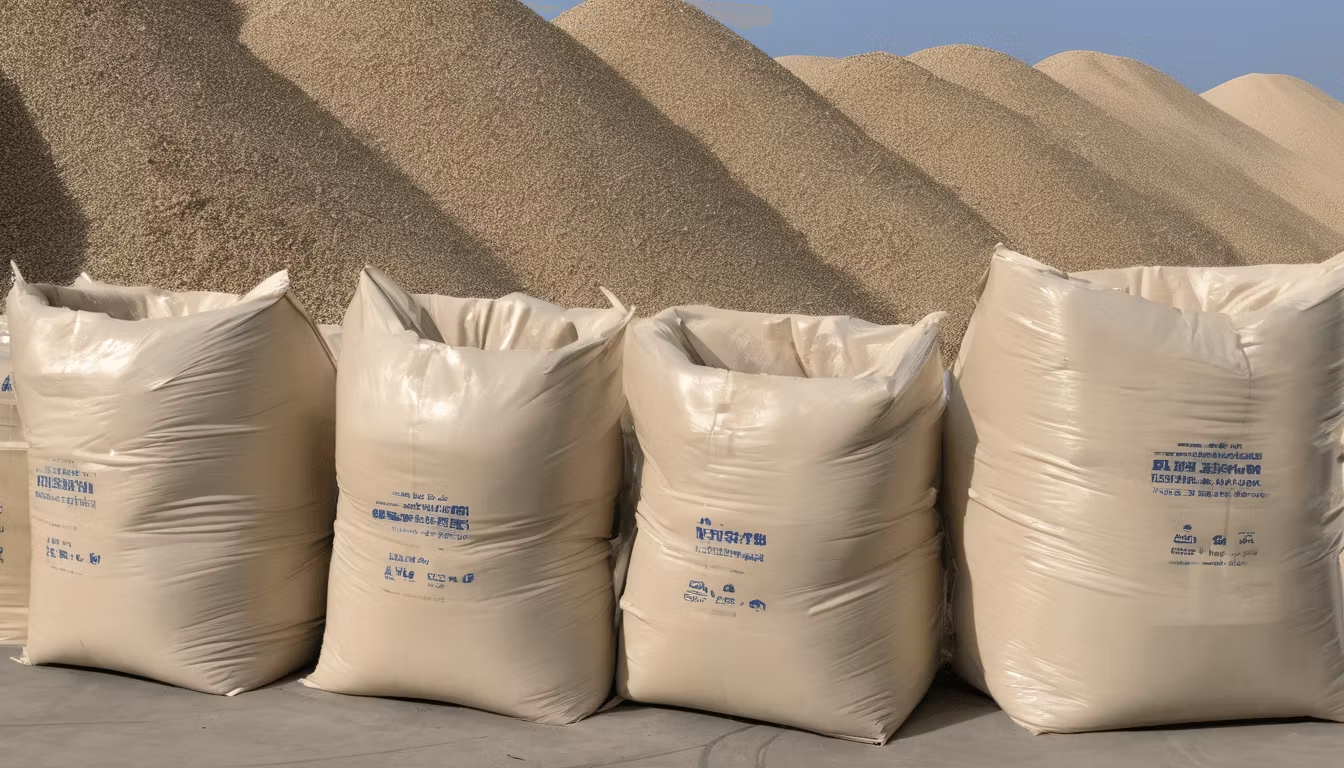
Aluminium powder metallurgy involves the production of fine aluminium particles that serve as feedstock for 3D printing systems. These powders are engineered to specific particle size distributions, typically ranging from 15 to 150 micrometers depending on the AM technology being used. The purity, morphology (shape), and flowability of aluminium powder directly impact print quality, mechanical properties, and production repeatability.
In powder metallurgy for additive manufacturing, aluminium powders are derived from high-grade aluminium ingot feedstock. The transformation from ingot to powder involves carefully controlled atomization processes—either gas atomization or water atomization—to achieve the desired specifications for different AM platforms.
Key Specifications for Aluminium AM Powders
Several critical parameters define quality aluminium powder for 3D printing applications:
- Particle Size Distribution (PSD): Most laser-based systems (SLM, DMLS) require powders in the 15-45 micrometer range, while electron beam melting (EBM) systems may use larger particles up to 150 micrometers.
- Flowability: Measured through Hall flow tests and angle of repose, ensuring consistent powder spreading during printing.
- Apparent Density: Affects packing efficiency and powder bed consolidation.
- Chemical Composition: Aluminium alloy compositions such as AlSi10Mg, Al6061, and AlCu4Mg are specifically formulated for AM applications, with tight tolerances on alloying elements.
- Oxygen Content: Lower oxygen content (typically <1.5%) is critical for preventing defects and maintaining mechanical properties.
- Sphericity: Powder particles should maintain spherical shape for optimal flowability and packing density.
Additive Manufacturing Technologies Using Aluminium Powder
Different metal 3D printing technologies have varying requirements for aluminium powder. Understanding which technology suits your production needs is fundamental to sourcing the right material.
Selective Laser Melting (SLM) and Direct Metal Laser Sintering (DMLS)
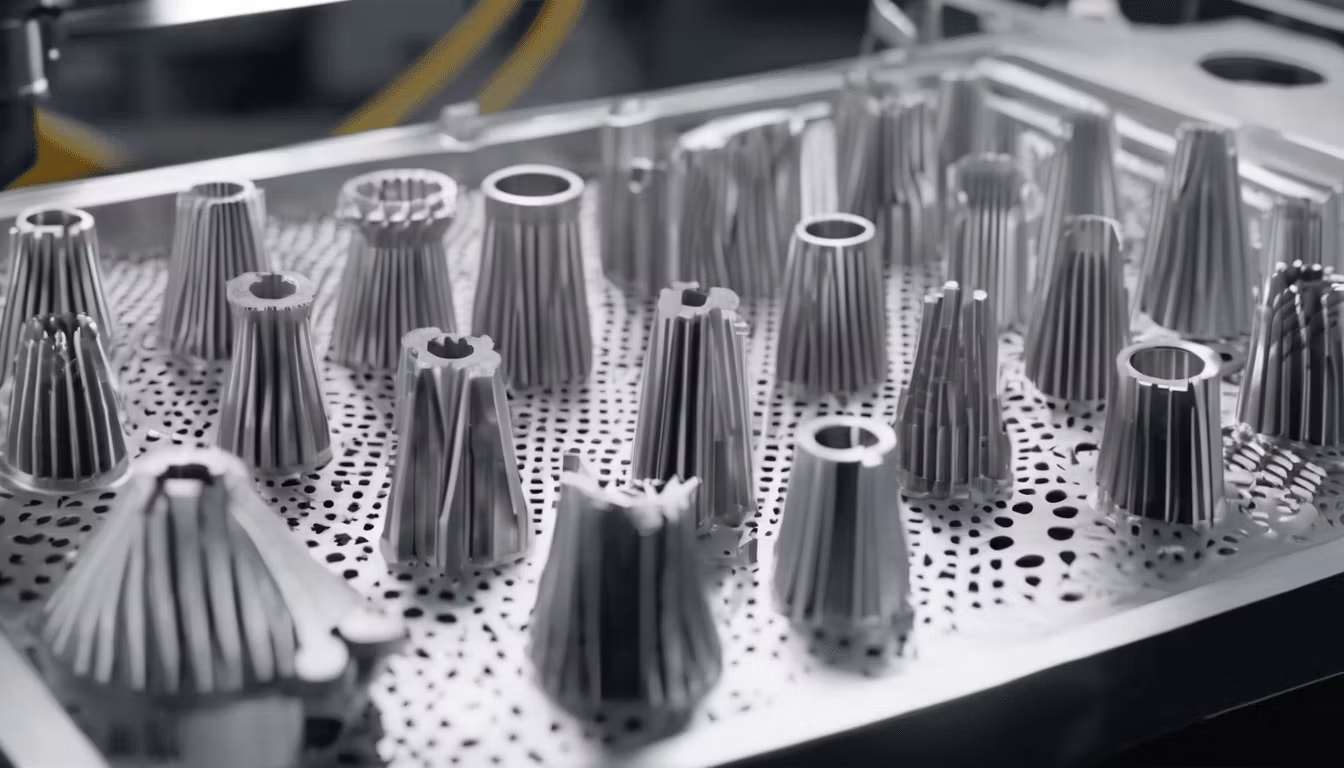
SLM and DMLS are among the most widely adopted aluminium 3D printing technologies. These processes use high-power lasers to selectively melt aluminium powder, fusing it into solid components layer by layer. The technology excels at producing intricate internal geometries, cooling channels, and lightweight structures that would be impossible or prohibitively expensive to manufacture traditionally.
For SLM/DMLS applications, aluminium powder metallurgy demands fine particle sizes (typically 15-45 micrometers) and exceptional sphericity to ensure consistent laser energy absorption and powder bed spreading. Popular alloys include AlSi10Mg (excellent for aerospace applications due to high strength-to-weight ratio) and Al6061 (preferred for engineering components requiring superior corrosion resistance).
Electron Beam Melting (EBM)
EBM technology uses electron beams instead of lasers to melt aluminium powder, operating in a vacuum chamber. This process is particularly suited for titanium and high-temperature applications, but it's also gaining adoption for aluminium AM, especially in medical and aerospace sectors. EBM typically accommodates larger powder particles (up to 150 micrometers) compared to laser-based systems, which can offer cost advantages in feedstock production.
Powder Bed Fusion (PBF) and Hybrid Systems
Emerging hybrid technologies combining multiple energy sources are expanding the capabilities of aluminium additive manufacturing. These systems often require powder specifications that balance performance across multiple processing parameters, making material consistency critical.
Material Properties and Performance Characteristics
The performance of 3D-printed aluminium components depends heavily on the quality and specifications of the aluminium powder used during manufacturing. Understanding these relationships helps buyers specify requirements and evaluate supplier capabilities.
Mechanical Properties
High-quality aluminium powders processed through proper AM techniques yield components with mechanical properties comparable to or exceeding traditionally cast or wrought aluminium. Key mechanical characteristics include:
- Tensile strength ranging from 280-500 MPa depending on alloy and processing parameters
- Yield strength typically 150-350 MPa for annealed conditions
- Elongation to fracture of 3-15%, indicating ductility levels
- Hardness values that can be tailored through post-processing heat treatment
The relationship between aluminium powder quality and final mechanical properties is direct: impurities, inconsistent particle size distribution, and high oxygen content all contribute to porosity and defects that compromise strength and fatigue resistance.
Thermal and Electrical Properties
Aluminium's inherent properties—high thermal conductivity, excellent electrical conductivity, and low density—are preserved in 3D-printed components. This makes aluminium 3D printing particularly valuable for heat sinks, electrical components, and thermal management applications in electronics and automotive sectors. The uniform microstructure achieved through additive manufacturing can actually enhance these properties compared to traditional casting methods.
Sourcing Quality Aluminium for 3D Printing: What B2B Buyers Need to Know
For businesses implementing or scaling metal additive manufacturing operations, sourcing consistent, high-quality aluminium powder is a critical supply chain decision. Here's what procurement teams should consider:
Supplier Qualification and Certification
Work with suppliers who maintain rigorous quality control certifications and testing protocols. Look for suppliers with ISO 9001 certifications, material testing documentation (including particle size analysis, chemical composition reports, and flowability data), and traceability from raw feedstock through final powder delivery.
Material Traceability and Documentation
High-quality suppliers provide complete documentation including:
- Certificates of Analysis (CoA) with particle size distribution data
- Chemical composition verification matching AM-specific alloy specifications
- Oxygen and moisture content measurements
- Flowability and density testing results
- Batch traceability and lot tracking for production auditing
Supply Chain Flexibility
As you scale 3D printing operations, you'll need suppliers capable of supporting variable demand. The best suppliers offer flexibility ranging from trial quantities (as small as 100 metric tons) to large-scale annual contracts (up to 2.5 million metric tons for integrated mineral suppliers). This flexibility allows manufacturers to test materials, optimize processes, and scale production without overcommitting capital.
Technical Support and Collaboration
Leading suppliers in the additive manufacturing space provide technical support beyond material delivery. This includes assistance with powder specifications, processing parameter optimization, troubleshooting print failures, and staying current with evolving AM technology standards.
Industrial Applications Driving Demand for Aluminium 3D Printing
Understanding the applications pushing demand for aluminium powder metallurgy helps contextualize investment decisions and supply requirements:
Aerospace and Defense
The aerospace industry represents the largest commercial driver for aluminium additive manufacturing. Engineers use metal 3D printing to produce complex brackets, manifolds, housings, and structural components that reduce weight while improving performance. The ability to consolidate multiple parts into single AM-produced components significantly reduces assembly time and improves reliability.
Automotive and Transportation
Automotive manufacturers are increasingly adopting aluminium 3D printing for prototype development, low-volume production components, and functional parts where weight reduction directly improves fuel efficiency. Engine blocks with optimized internal cooling passages, custom bracket assemblies, and complex hydraulic manifolds are becoming standard AM applications.
Medical and Healthcare Devices
The medical sector values aluminium AM for producing customized implants, surgical instruments, and diagnostic equipment where biocompatibility, precision, and minimal material waste are critical. Dental applications particularly benefit from the ability to rapidly produce customized components.
Electronics and Thermal Management
Heat sinks and thermal management components produced through aluminium additive manufacturing offer superior performance compared to traditional designs. The ability to create intricate internal cooling channels optimizes thermal performance in high-power electronics, LED systems, and computing equipment.
Sustainability Advantages of Aluminium Additive Manufacturing
Beyond performance benefits, aluminium additive manufacturing offers significant environmental advantages. The additive approach minimizes material waste—traditional subtractive machining can waste 50-90% of raw material, while AM processes waste less than 5%. Aluminium's recyclability means even powder waste can be reclaimed and reprocessed, supporting circular economy principles.
Additionally, the ability to reduce component weight through optimized geometries translates directly to lower fuel consumption in transportation applications and reduced energy requirements in operational use—often dwarfing the environmental impact of material processing and production.
Challenges and Considerations in Aluminium 3D Printing
While aluminium additive manufacturing offers tremendous advantages, several challenges require careful management:
Powder Recycling and Reuse
Aluminium powder can be recycled and reused within AM systems, but repeated melting and reprocessing gradually increases oxygen content and degrades flowability. Establishing optimal recycling ratios (typically 70-80% recycled material mixed with fresh powder) requires careful process monitoring and regular powder analysis.
Quality Consistency and Defect Prevention
Porosity and defects remain challenges in metal AM. These typically result from powder characteristics (inconsistent size distribution, high oxygen content, poor sphericity), process parameter optimization issues, or equipment maintenance problems. Rigorous powder specifications and process monitoring prevent most defect-related issues.
Cost and Scale Economics
Aluminium powder costs remain higher than traditional ingot or billet material. However, when factoring in material waste reduction, reduced machining time, design consolidation benefits, and faster time-to-market, total cost of ownership often favors AM approaches for many applications.
Future Trends in Aluminium Powder Metallurgy and Additive Manufacturing
The additive manufacturing sector continues evolving rapidly. Key trends include:
- Alloy Development: New aluminium alloys specifically engineered for AM applications are emerging, offering improved performance in high-temperature applications, improved ductility, and enhanced corrosion resistance.
- Process Automation: Fully automated powder handling, screening, and recycling systems are becoming standard, improving consistency and reducing manual contamination risks.
- Speed and Productivity: Faster printing technologies and multi-laser systems are dramatically increasing production throughput, making AM economically competitive with traditional manufacturing for larger production volumes.
- In-Situ Monitoring: Advanced sensors and AI-powered monitoring systems detect and correct process variations in real-time, improving first-pass quality and reducing scrap rates.
- Materials Standardization: Industry standards for aluminium AM powders continue maturing, with ASTM F3301, ISO 52942, and other specifications ensuring consistent material specifications across suppliers globally.
Partnering with Reliable Mineral and Metal Suppliers
Success in aluminium additive manufacturing depends fundamentally on material quality and supply chain reliability. This is where understanding your supplier's capabilities and certifications becomes essential. Leading suppliers in the metals and minerals sector maintain the infrastructure, quality systems, and technical expertise to consistently deliver materials meeting the rigorous specifications that 3D printing demands.
When evaluating potential suppliers, assess their sourcing capabilities, quality control procedures, testing and certification standards, supply chain flexibility, and technical support resources. The best suppliers view themselves as technology partners, not simply material vendors, providing guidance that helps optimize your AM processes and maximize your return on additive manufacturing investments.
Conclusion: Aluminium Additive Manufacturing as a Strategic Advantage
Aluminium 3D printing represents a fundamental shift in how manufacturers approach product design, prototyping, and production. By understanding aluminium powder metallurgy specifications, additive manufacturing processes, and material sourcing best practices, businesses can make informed decisions that enhance competitiveness and unlock new product possibilities.
The convergence of superior material properties, design flexibility, waste reduction, and accelerating technology maturation makes this an optimal time for manufacturers to explore or expand aluminium additive manufacturing capabilities. Whether you're developing aerospace components, automotive parts, medical devices, or thermal management solutions, aluminium 3D printing offers compelling advantages when executed with the right materials, processes, and partners.
For organizations seeking reliable sourcing of quality materials for advanced manufacturing applications, learning more about experienced suppliers who understand both traditional mineral processing and modern additive manufacturing requirements is an important first step. The right supplier partnership can accelerate your AM implementation timeline, improve material consistency, and provide the technical guidance needed to maximize your competitive advantage in this transformative technology space.